Dreo treats a discolored or unpleasant-smelling 774S wick as a maintenance condition first. The company recommends cleaning the wick weekly, replacing it about every three months, and using Dry Mode to reduce lingering moisture and mold risk.
Does this match what you are seeing?
Owners describe this Dreo 774S Evaporative Humidifier problem in a few different ways. If one of these sounds like yours, this guide covers it:
- Wick filter problem
- Filter hard or crusty
- Wick not getting wet
- Filter smells or looks dirty
Check these in order
- Unplug the unit and remove the wick only through the user-serviceable cleaning path.
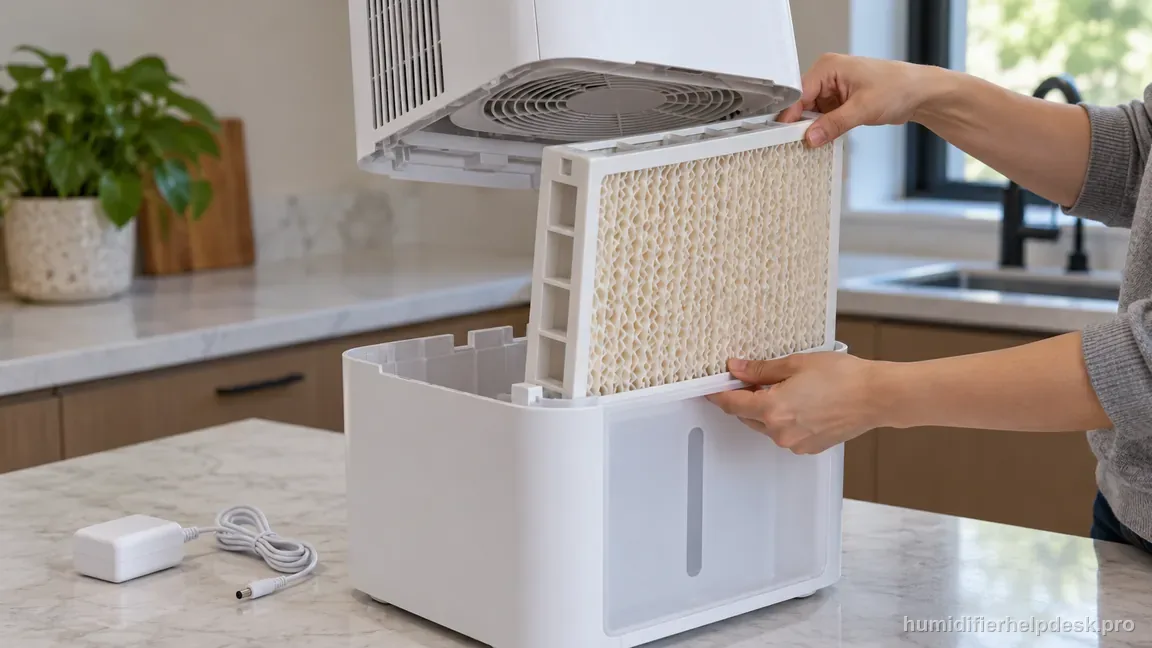
Illustrative: Unplug the unit and remove the wick through its user-serviceable cleaning path. - Wash the wick about weekly; Dreo allows hand washing or a front-load washer and advises against top-load machines or dryers.
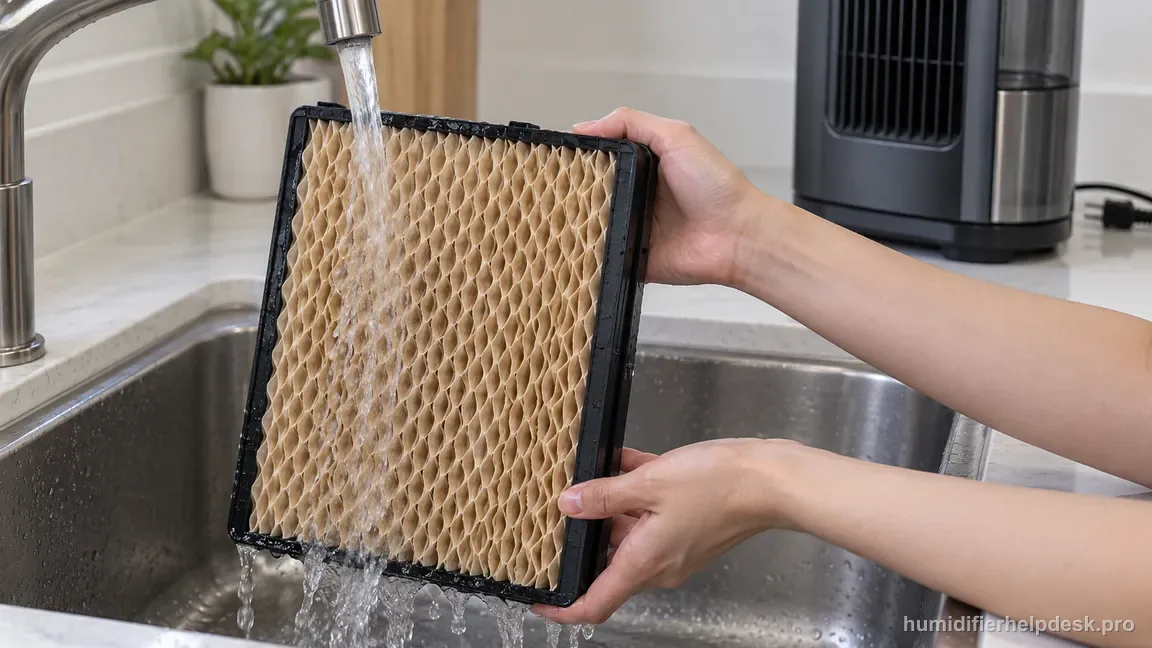
Illustrative: Wash the wick by hand or use an approved front-load cycle; do not use a top-load washer or dryer. - Wash the support frame, wick-filter frame, and cartridge while the unit is disassembled for cleaning.
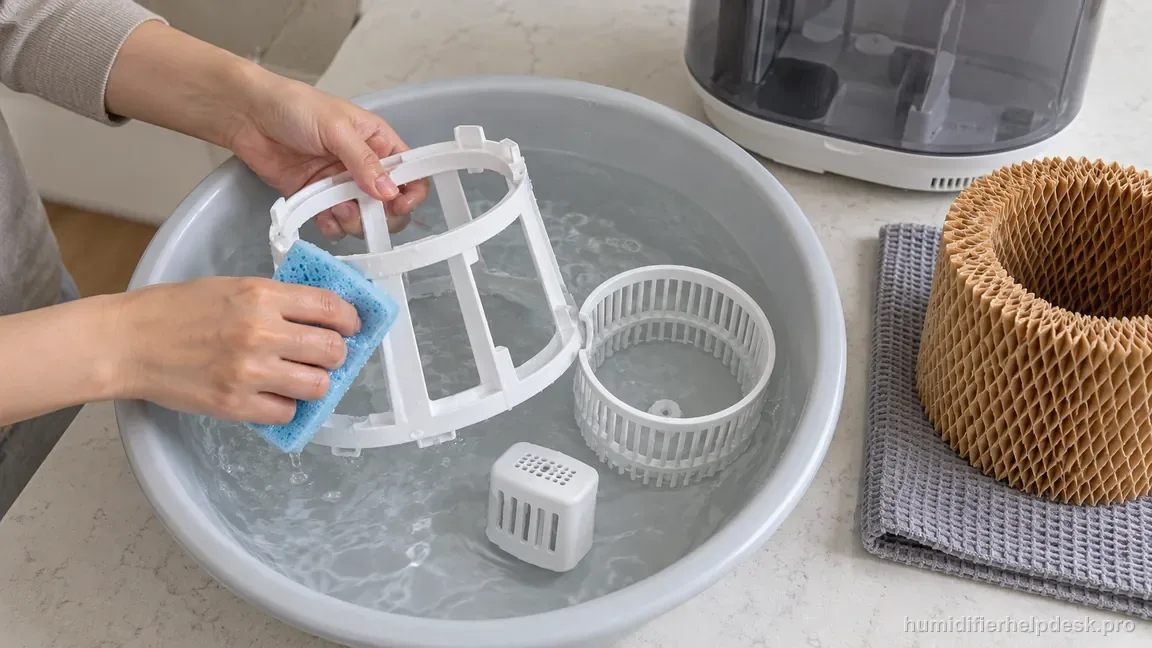
Illustrative: Wash the removable frame and cartridge parts while the unit is disassembled for cleaning. - Let components dry as directed and use Dry Mode during normal ownership to reduce moisture buildup in the wick.
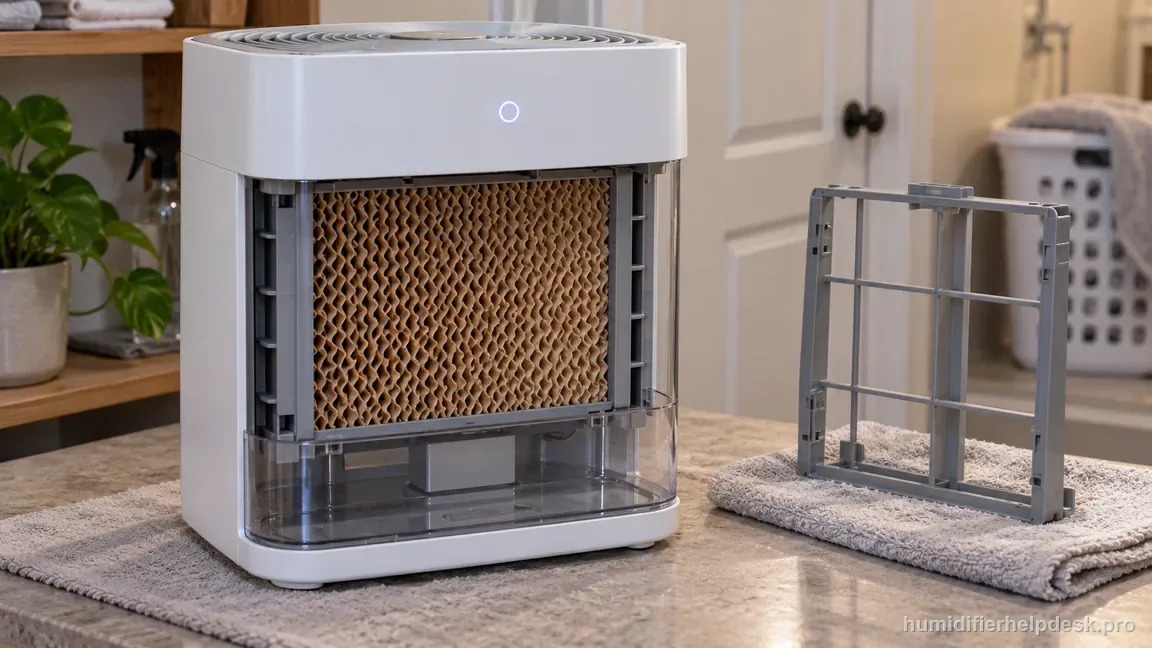
Illustrative: Dry components as directed and use Dry Mode to reduce lingering moisture between sessions. - Replace the wick at about the three-month interval or sooner if condition/performance remains poor after proper cleaning.
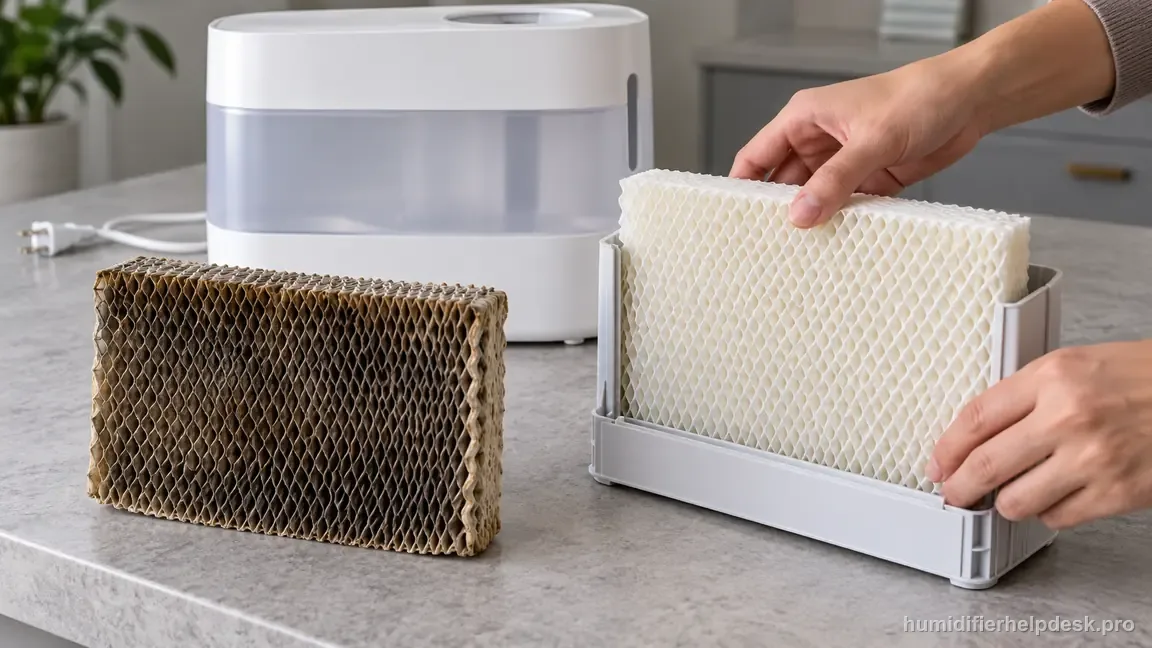
Illustrative: Replace the wick at about three months, or sooner if cleaning does not restore condition or performance.
Diagnostic decision path
A Dreo 774S wick that looks discolored or smells unpleasant is first a maintenance problem, because the wick is the wet evaporative surface that repeatedly contacts water and room air. Dreo’s product FAQ recommends cleaning the wick weekly, replacing it about every three months, and using Dry Mode to reduce lingering moisture and mold risk. The official cleaning guide adds a useful procedure boundary: the wick can be washed by hand or in a front-load washer, while top-load machines and dryers are not recommended.
- Unplug the humidifier before removing the upper body, wick, support frame, cartridge, or wick-filter frame. Keep the power adapter and powered upper body out of wash water.
- Identify the odor source before cleaning. A musty or stale smell from the wet wick belongs in this maintenance path; a burning or electrical odor from the powered body is a stop-use condition.
- If performance also dropped, note whether the wick is merely discolored, physically hardened, heavily soiled, or still wet long after shutdown. Those observations help decide whether cleaning is enough or replacement is more appropriate.
If: The wick is discolored but has no strong odor and humidification is normal
What it means: Color change alone does not prove immediate failure; the first manufacturer action is still routine weekly cleaning.
Do next: Wash the wick using Dreo’s approved method, clean the surrounding support/frame parts, dry as directed, and reassess after reassembly.
If: A musty odor improves after weekly cleaning and Dry Mode use
What it means: Lingering moisture and accumulated material on the wick were likely contributing to the smell.
Do next: Keep the weekly cleaning rhythm and use Dry Mode consistently to reduce the time the wick remains damp between sessions.
If: Odor or poor condition returns quickly after proper cleaning
What it means: The wick may be at the end of its useful service interval or retaining contamination that routine cleaning no longer removes.
Do next: Replace the wick with the compatible 774S filter, especially when it is near or beyond Dreo’s roughly three-month replacement interval.
If: The wick was washed in a top-load washer or dried in a dryer
What it means: The cleaning method falls outside Dreo’s recommendation and may deform or damage the filter structure.
Do next: Inspect fit and condition carefully; replace the wick if it no longer seats or performs normally rather than forcing a distorted filter into the frame.
If: The odor is hot, electrical, or clearly comes from the powered upper body
What it means: That is not ordinary wet-filter maintenance and may indicate an unsafe electrical condition.
Do next: Unplug immediately and contact Dreo. Do not continue running Dry Mode to see whether an electrical smell disappears.
How to interpret the retest
Discoloration and odor are related but not identical. A wick can darken from use without producing a strong smell, so the decision should consider odor, texture, performance, and service interval rather than color alone.
Dreo explicitly allows hand washing or a front-load washer for the 774S wick and advises against top-load machines or dryers. That cleaning boundary should be preserved rather than replaced by generic laundry advice.
Dry Mode is preventive maintenance, not a substitute for washing. It reduces retained moisture after operation, while weekly cleaning removes accumulated material from the wick and surrounding water-path parts.
The cartridge and wick filter are separate components. Clean or replace each according to its own role; replacing only the cartridge will not clean a musty evaporative wick.
A burning smell belongs outside this article’s ordinary maintenance path. The fastest safe decision is to identify whether the odor comes from the wet filter assembly or from powered electronics before any extended test.
Model-specific context that changes the diagnosis
Smell the wick only after power is off
Unplug and remove the wet filter before deciding where the odor comes from. If the smell is concentrated in the wick and support frame, maintenance is plausible; if it is strongest at the powered upper body or adapter, stop use.
Weekly cleaning and three-month replacement are different clocks
A wick can need washing many times before it needs replacement. Treat the replacement interval as a service-life guide, not a reason to skip weekly cleaning.
Dry Mode helps between cleanings
Using Dry Mode after normal operation can reduce how long the wick stays damp, but it does not remove deposits already on the filter. Keep the cleaning schedule even when Dry Mode is working normally.
Common mistakes that make this harder to diagnose
- Using a top-load washer or dryer even though Dreo advises against them for the wick.
- Treating a cartridge replacement as if it cleaned the evaporative wick.
- Skipping weekly cleaning because Dry Mode is enabled.
- Replacing the wick solely because of mild discoloration without checking odor, texture, performance, and age.
- Continuing to run the humidifier when the odor is burning or electrical rather than musty or stale.
The wick condition is resolved when weekly cleaning, correct drying/Dry Mode use, and normal reassembly remove the unpleasant odor and the 774S returns to normal water transfer and humidification. If the wick remains foul, damaged, deformed, or ineffective near the replacement interval, install the correct compatible wick. If the odor is electrical, hot, or comes from the powered body, leave the unit unplugged and contact Dreo rather than continuing filter maintenance.
Questions people ask about this exact symptom
Why does my Dreo 774S wick filter smell bad?
Because the wick stays wet during evaporative humidification, accumulated material and lingering moisture can create an unpleasant odor. Dreo recommends cleaning the wick weekly, replacing it about every three months, and using Dry Mode to reduce moisture buildup. Unplug before cleaning. If the smell is burning or electrical and comes from the powered body rather than the wet wick, stop using the unit and contact Dreo.
Can I wash the Dreo 774S wick filter in a washing machine?
Dreo says the 774S wick can be washed by hand or in a front-load washer. The company advises against top-load washing machines and dryers. After washing, inspect that the wick still fits its frame correctly and reassemble the support-frame water path as shown in Dreo’s guide. Continue weekly cleaning even if you use Dry Mode, because drying does not remove deposits already on the filter.
How often should I replace the 774S wick filter?
Dreo’s current FAQ recommends replacement about every three months, while weekly cleaning is still expected during that service life. Replace sooner if the wick is damaged, deformed, remains foul after proper cleaning, or performance does not recover. Do not replace a healthy wick only because its color changed slightly; consider odor, condition, fit, humidification performance, and how long the filter has been in service.
Why this path is model-specific
Dreo’s 774S FAQ recommends weekly wick cleaning, roughly three-month wick replacement, and Dry Mode for moisture/mold control. The official cleaning guide shows removal and washing of the wick, support frame, cartridge, and filter frame.
For the Dreo 774S Evaporative Humidifier, the machine type matters: it is evaporative. Its moisture output is not supposed to look like ultrasonic fog, so “I cannot see mist” by itself is not evidence of a failure.
Compare this symptom across verified models
If you are still deciding whether this behavior is normal or model-specific, use the symptom hub to compare only manufacturer-linked guides. Keep the Dreo 774S Evaporative Humidifier instructions above as the controlling path for this machine.
If the problem is still there
If the checks above do not change the symptom, use the manufacturer support path for this exact model. We intentionally stop before undocumented resets, sensor bypasses, internal mains work, or parts replacement that the consumer manual does not authorize.
What we do not recommend
Do not defeat a float, water-level sensor, overheat protection, interlock, or other safety feature. Do not open mains-powered sections for live testing. If the unit smells burned, becomes abnormally hot, smokes, sparks, has water near electrical parts, or repeatedly trips a circuit, stop using it and keep clear. Unplug it only if the plug, outlet, and surrounding area are dry and safe to reach; otherwise do not touch wet equipment and contact manufacturer support for next steps.
Primary source for this diagnosis
Source checked during the September 4, 2026 editorial review. Manufacturer documents can change; a material re-review updates this guide’s reviewed date rather than stamping unrelated pages.