A brief louder pump sound at startup can be normal on the Dreo 774S. Dreo says the pump may expel air or scale buildup from the pipe and the louder sound should disappear after about five seconds; persistent or unusual noise requires the water-path and support-frame checks.
Does this match what you are seeing?
Owners describe this Dreo 774S Evaporative Humidifier problem in a few different ways. If one of these sounds like yours, this guide covers it:
- Making unusual noise
- Loud humidifier noise
- Strange water sound
- Making noise while running
Check these in order
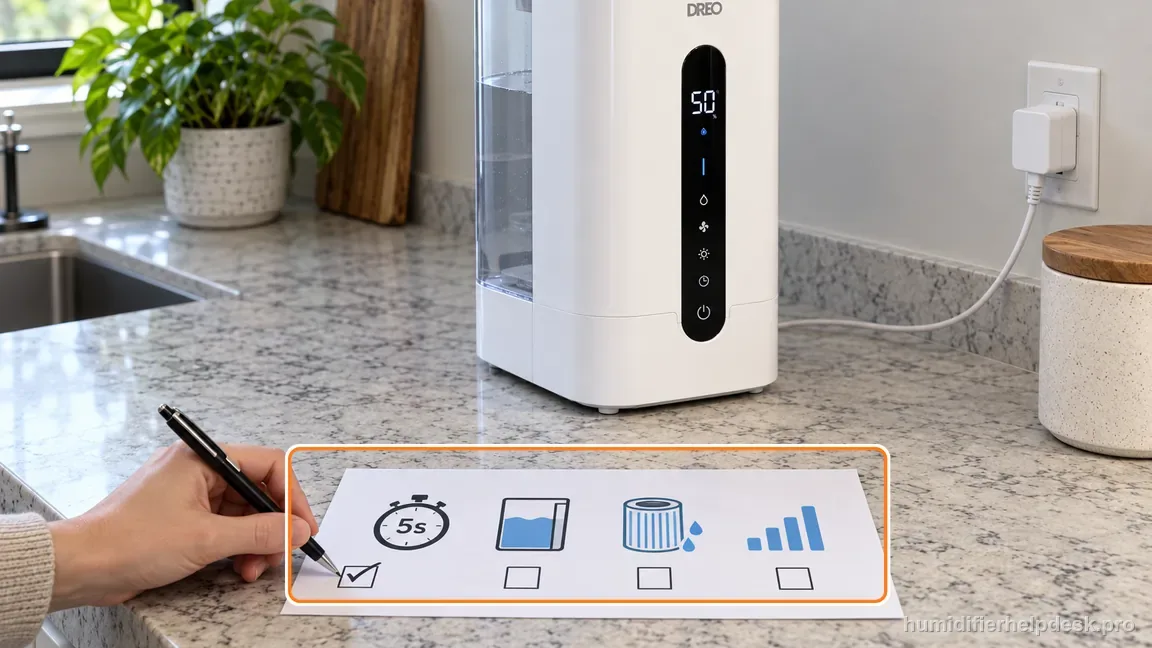
- Time the sound from startup: a roughly five-second burst that then settles matches Dreo’s documented pump behavior.
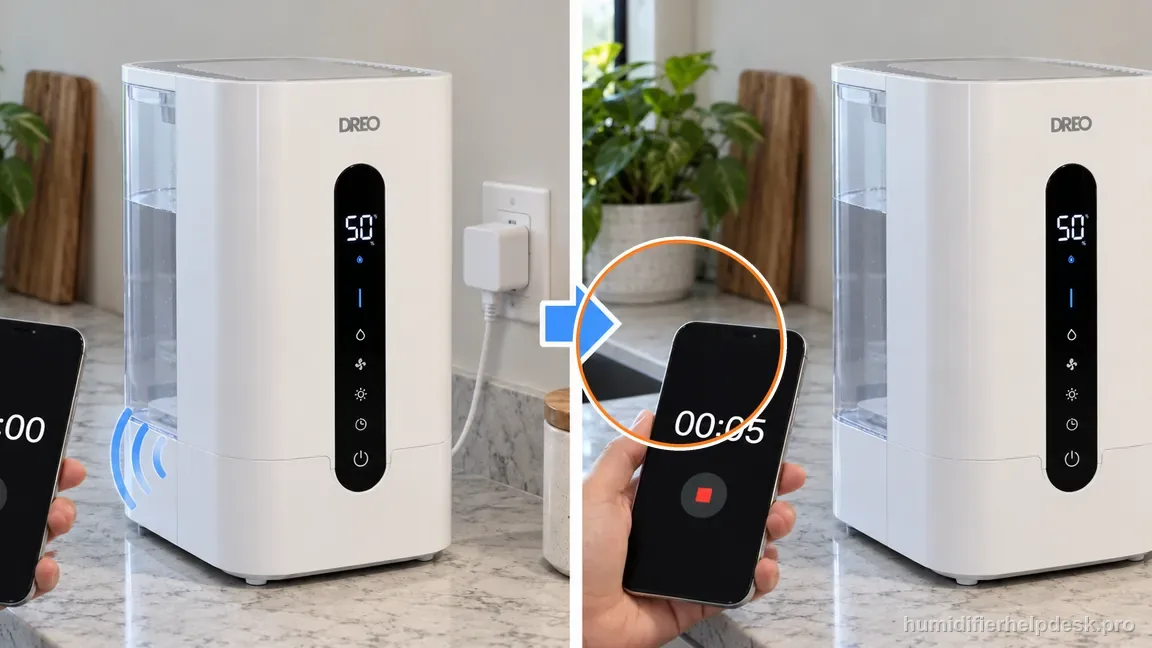
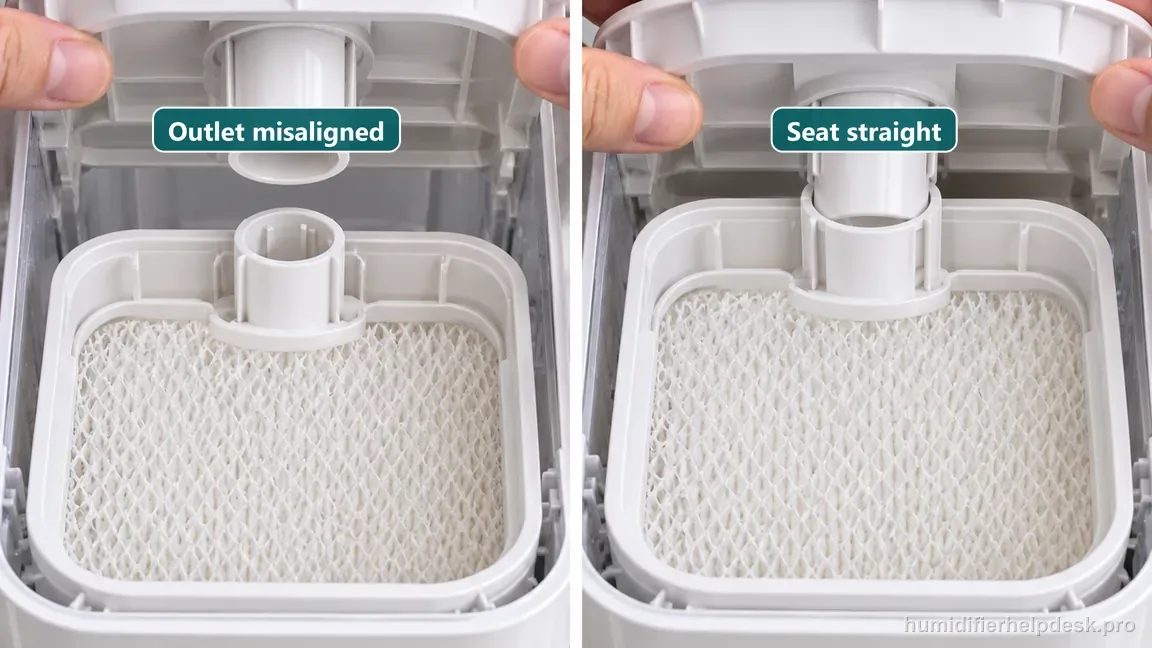
Time the startup pump sound; Dreo says the louder burst should settle after about five seconds. - Confirm the support-frame water outlet is properly inserted into the water inlet on the wick-filter frame.
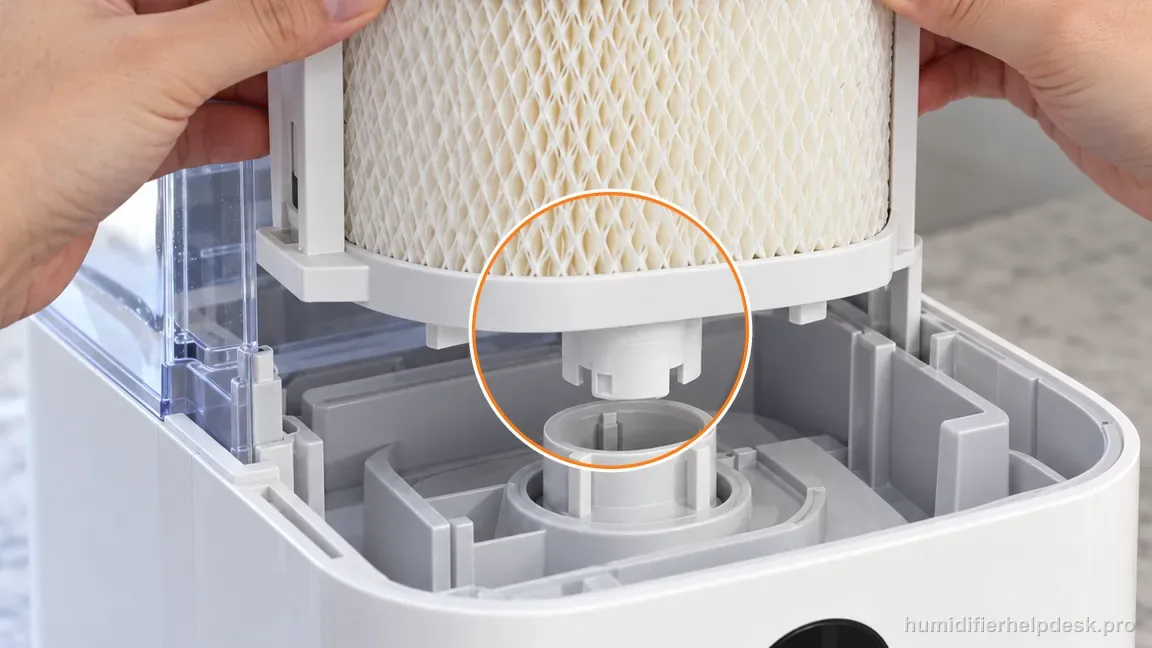
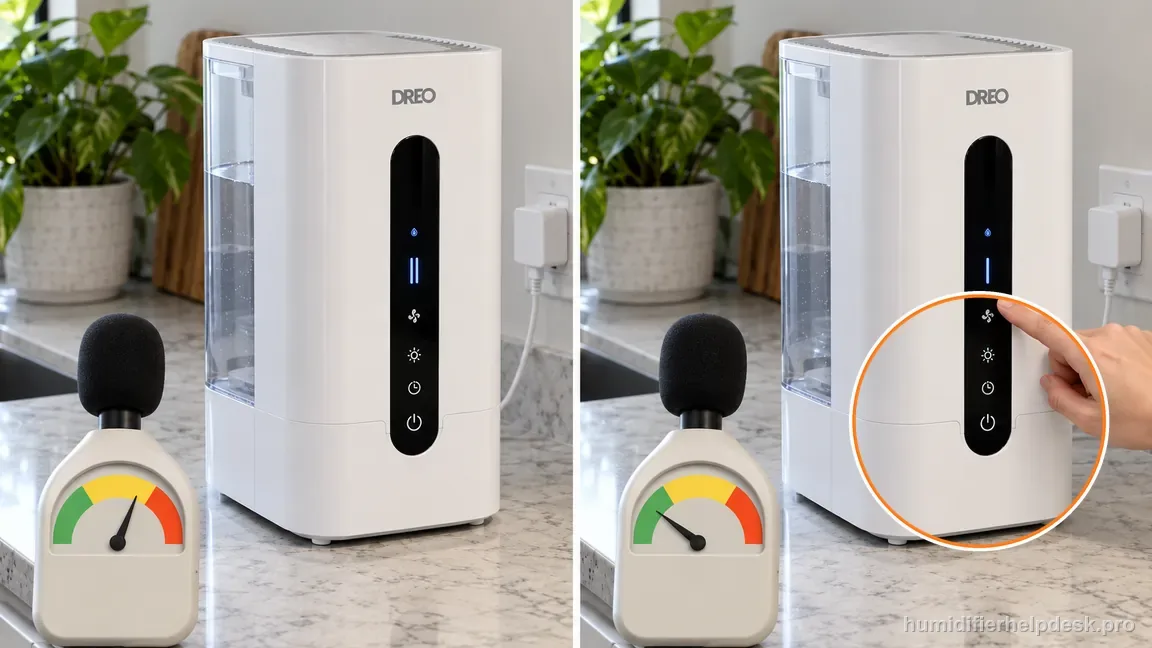
Check that the support-frame water outlet sits correctly in the wick-filter-frame inlet. - Use a lower output setting for comparison after the initial pump cycle has settled.
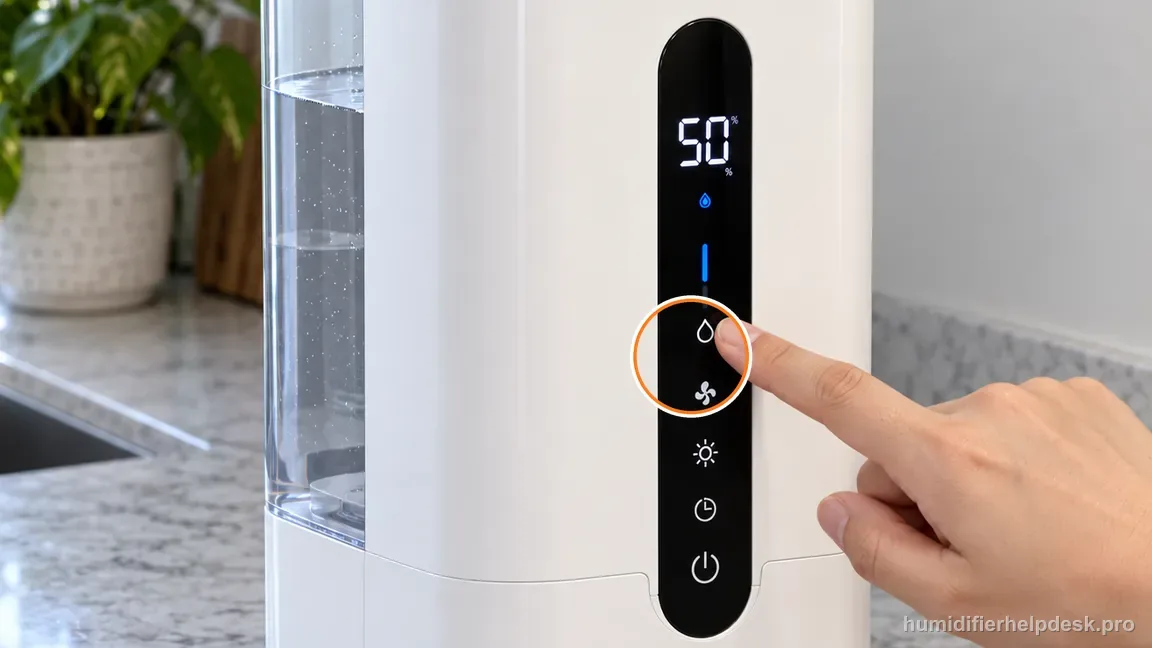
After the startup cycle settles, compare operation at a lower output setting. - If the tank has been emptied or recently refilled, empty/refill once as Dreo directs rather than repeatedly cycling power.
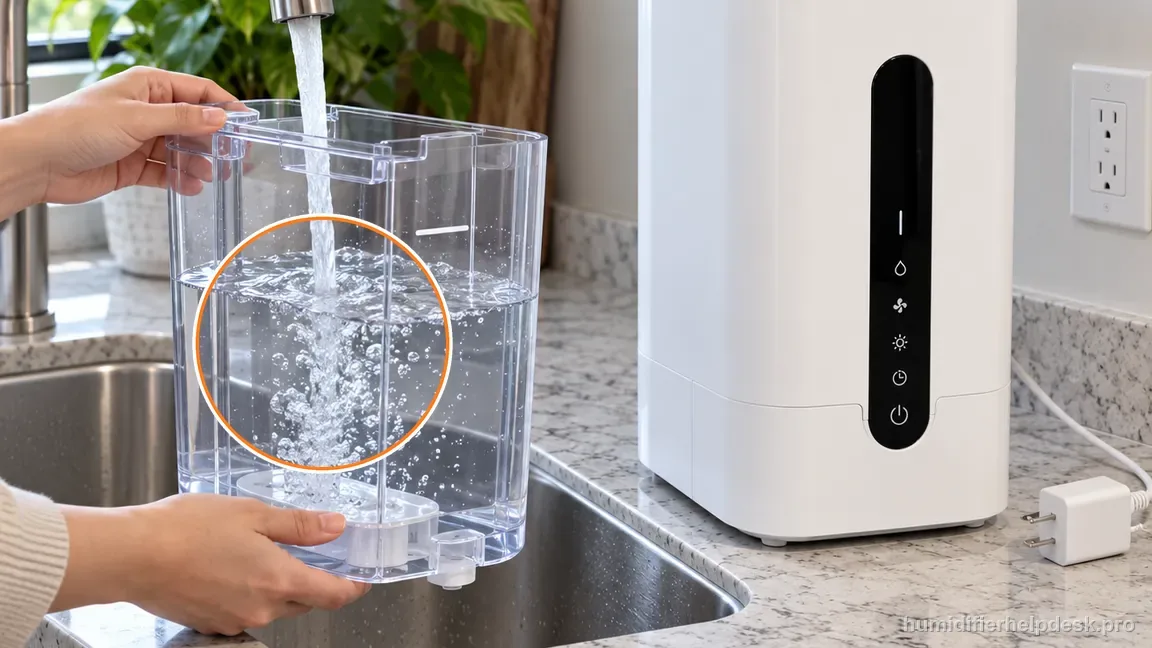
After emptying or refilling, follow the normal refill process once instead of repeatedly cycling power. - Stop the test if the sound remains very loud, grinding, prolonged, or is accompanied by failed water transfer, leakage, odor, or overheating.
Diagnostic decision path
A loud sound at Dreo 774S startup is not automatically a failed pump. Dreo’s current FAQ says the water pump can expel air or scale buildup from the pipe when the unit starts, producing a louder sound that should disappear after about five seconds. The same FAQ then gives a mechanical seating check: the water outlet on the support frame must be properly inserted into the water inlet on the wick-filter frame. The diagnosis therefore begins with duration and water-path assembly before it becomes a motor-failure assumption.
- Start with the tank filled normally and the humidifier on a flat, level surface. Keep the unit assembled exactly as shown in Dreo’s installation guide.
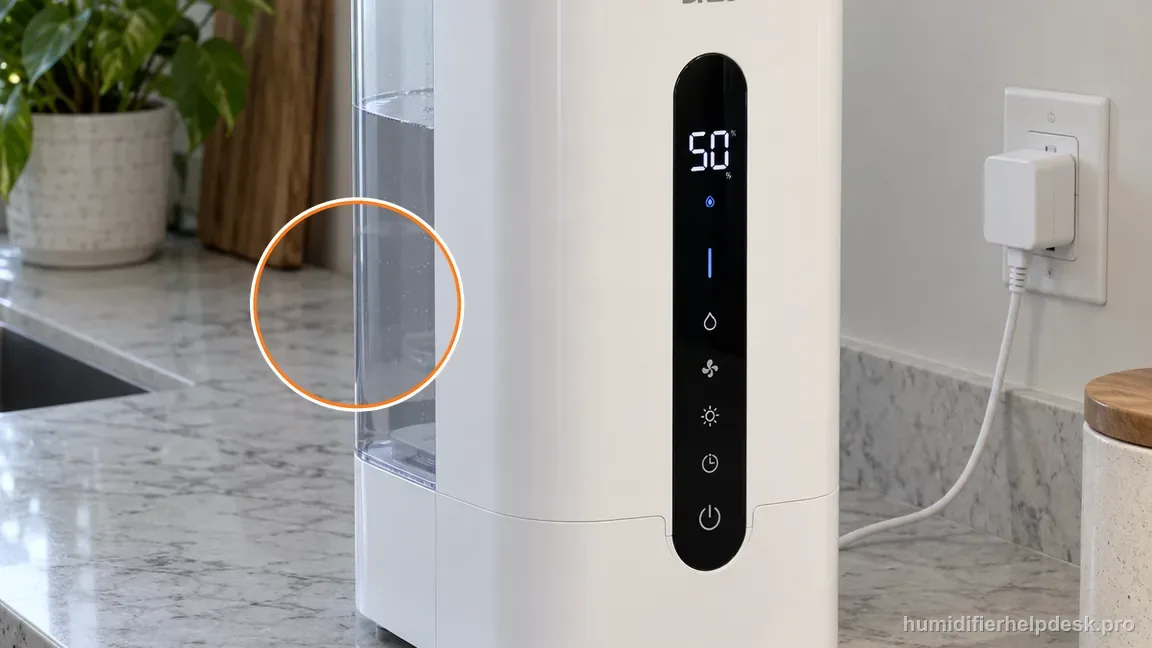
Begin with the tank filled normally and the assembled humidifier standing level. - Time the initial sound rather than describing it only as “loud.” A short burst that settles around the documented five-second window has a different meaning from a sound that continues for minutes.
- If the unit was just cleaned, recheck the support frame and wick-filter frame connection before repeated startups. Those parts are removed during maintenance and are specifically tied to the water path.
If: The louder sound lasts only about five seconds and then settles
What it means: That matches Dreo’s documented startup behavior as the pump expels air or scale buildup from the pipe.
Do next: Continue normal operation and judge the unit after the startup cycle rather than replacing parts because of the brief sound.
If: Noise continues and the support-frame outlet is not fully inserted into the wick-frame inlet
What it means: The water path is not assembled correctly and the pump may be struggling to establish normal flow.
Do next: Unplug, reseat the support frame and wick-filter frame as shown by Dreo, then perform one controlled restart.
If: The noise is reduced at a lower output setting
What it means: The operating load contributes to the perceived sound, but that does not explain an abnormal prolonged grinding or failed water transfer.
Do next: Use the lower setting for comparison and continue only if the water path and humidification are otherwise normal.
If: Noise begins after the tank was emptied and refilled
What it means: Air can be present in the water path during re-prime, which fits the startup explanation.
Do next: Follow Dreo’s refill guidance once and allow the startup cycle to settle instead of power-cycling repeatedly.
If: The sound remains very loud, grinding, or prolonged
What it means: The behavior no longer matches Dreo’s brief normal startup note and may represent a malfunction.
Do next: Stop the unit and contact Dreo, especially if the sound occurs with no water transfer, leaking, odor, or overheating.
How to interpret the retest
Duration is the key discriminator in Dreo’s guidance. “Loud for a few seconds” and “loud continuously” should not be grouped into one pump-failure diagnosis.
The support-frame outlet/wick-frame inlet connection is not an arbitrary assembly suggestion; Dreo names it in the unusual-noise FAQ. That makes reassembly after cleaning a high-value check.
Do not run repeated dry startups to “listen again.” If the pump is trying to establish a water path, repeated cycling can add wear without improving the diagnosis.
A brief pump sound is compatible with normal operation on this design. It should not be confused with fan noise, loose housing vibration, or electrical buzzing, which require a different description for support.
If noise and a dry wick occur together, prioritize water-path seating. If the wick becomes normally wet and the startup sound disappears quickly, the pump is likely doing its intended transfer work.
Model-specific context that changes the diagnosis
Use a timer, not memory
Record startup with a phone timer or count seconds. A sound that actually ends around five seconds is easy to overestimate when you are worried about a new appliance.
Inspect the connector after cleaning
Because the support frame and wick-filter frame are removed for maintenance, an unusual sound that starts immediately after cleaning strongly justifies checking their connection before assuming internal damage.
Describe the sound with water behavior
When contacting support, report whether the wick becomes wet, the tank level changes, and humidity rises. Noise plus normal water transfer is a different case from noise plus a dry wick and no humidification.
Common mistakes that make this harder to diagnose
- Calling any five-second startup pump sound a failure.
- Repeatedly power-cycling the unit to reproduce the noise.
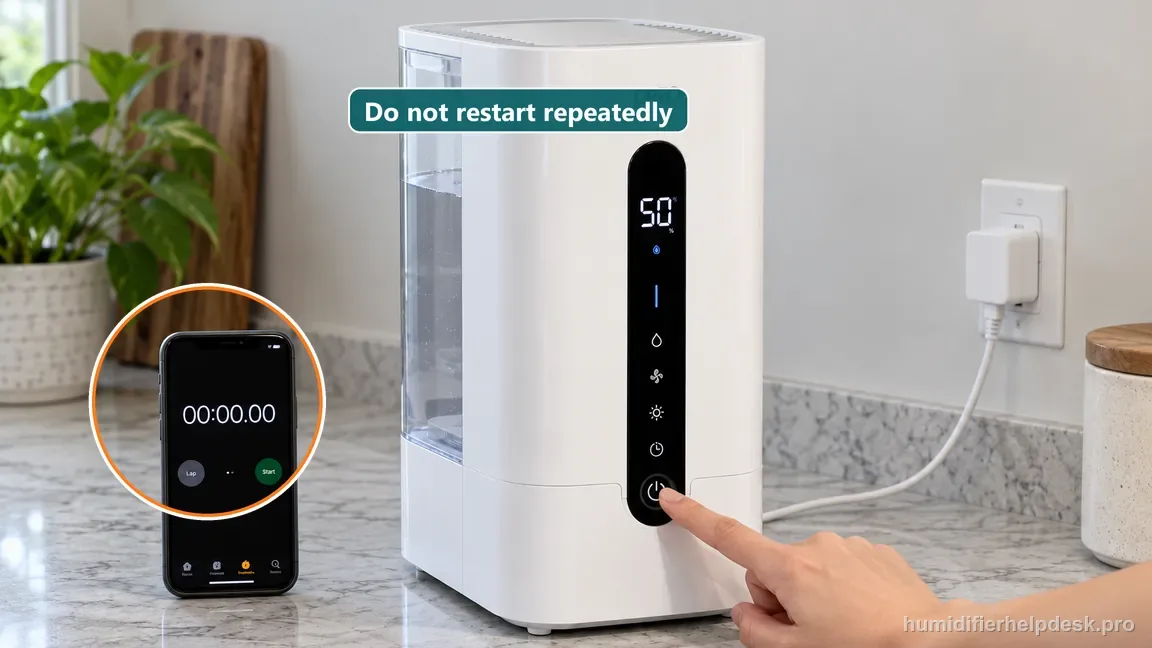
Do not repeatedly restart the humidifier just to reproduce the startup sound. - Ignoring support-frame/wick-frame seating after cleaning.
- Opening the pump or forcing the water connector.
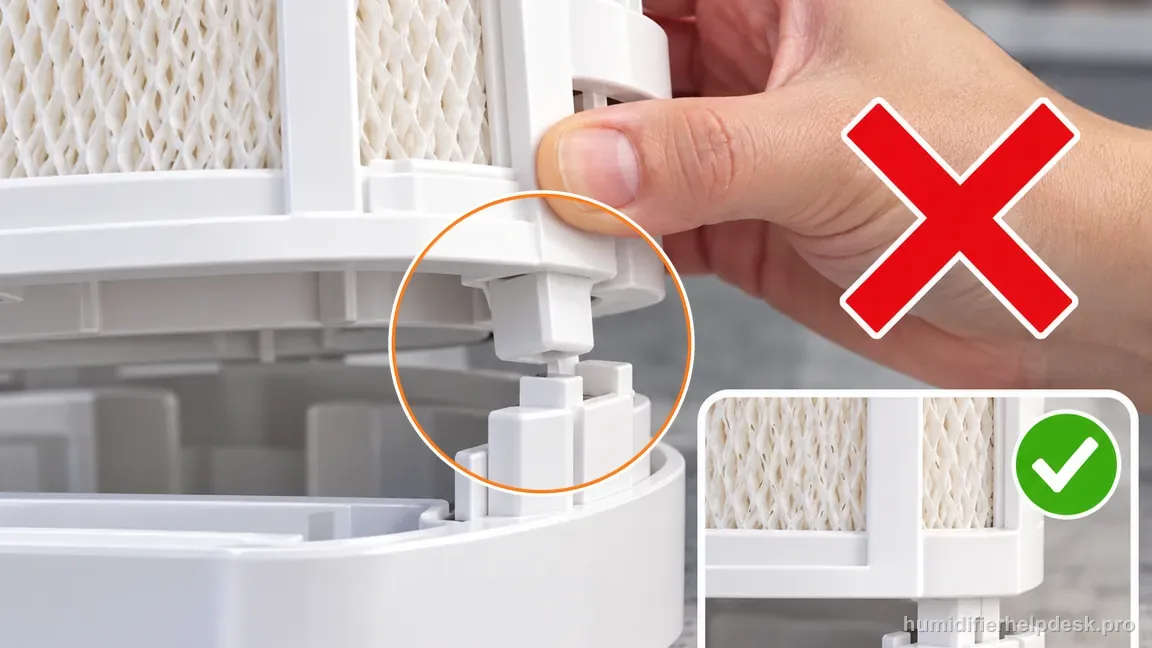
Do not force or pry the water connector; align the frames gently as designed. - Continuing to run a unit with persistent grinding, leaks, electrical odor, or failed water transfer.
The noise concern is resolved when the 774S produces only the brief startup sound Dreo documents and then settles into normal operation with a wet wick, stable airflow, and normal humidification. If the sound persists beyond the startup cycle, remains very loud or grinding, or accompanies failed water transfer, leaking, overheating, or electrical odor, the owner-service path is complete and Dreo Customer Support is the correct next step.
Questions people ask about this exact symptom
Is a loud pump sound normal when the Dreo 774S starts?
It can be. Dreo says the 774S water pump may expel air or scale buildup from the pipe at startup, causing a louder sound that should disappear after about five seconds. Time the sound and confirm it settles. If it remains very loud, grinding, or prolonged, or the wick does not receive water, check the support-frame connection and then contact Dreo if the problem persists.
Why did my 774S get noisy after I cleaned the wick?
Cleaning requires removing the wick and support-frame parts, and Dreo specifically says the support-frame water outlet should be properly inserted into the wick-filter-frame water inlet when unusual noise occurs. Unplug the humidifier, recheck that assembly, and perform one controlled restart. If the noise lasts only a few seconds and water transfer is normal, it may simply be the documented startup pump cycle.
When should I stop troubleshooting 774S pump noise?
Stop when the sound does not settle after the normal startup window, becomes very loud or grinding, or occurs with failed water transfer, a dry wick, leaking, overheating, or electrical odor. Dreo’s FAQ directs suspected malfunction to Customer Support. Do not open the pump or force the connector; document the sound duration and whether the wick becomes wet instead.
Why this path is model-specific
Dreo’s 774S FAQ says a louder startup sound can occur while the water pump expels air or scale from the pipe and should disappear after about five seconds; it also directs users to check the support-frame outlet/wick-frame inlet connection and stop for suspected malfunction.
For the Dreo 774S Evaporative Humidifier, the machine type matters: it is evaporative. Its moisture output is not supposed to look like ultrasonic fog, so “I cannot see mist” by itself is not evidence of a failure.
Compare this symptom across verified models
If you are still deciding whether this behavior is normal or model-specific, use the symptom hub to compare only manufacturer-linked guides. Keep the Dreo 774S Evaporative Humidifier instructions above as the controlling path for this machine.
If the problem is still there
If the checks above do not change the symptom, use the manufacturer support path for this exact model. We intentionally stop before undocumented resets, sensor bypasses, internal mains work, or parts replacement that the consumer manual does not authorize.
What we do not recommend
Do not defeat a float, water-level sensor, overheat protection, interlock, or other safety feature. Do not open mains-powered sections for live testing. If the unit smells burned, becomes abnormally hot, smokes, sparks, has water near electrical parts, or repeatedly trips a circuit, stop using it and keep clear. Unplug it only if the plug, outlet, and surrounding area are dry and safe to reach; otherwise do not touch wet equipment and contact manufacturer support for next steps.
Primary source for this diagnosis
Source checked during the September 4, 2026 editorial review. Manufacturer documents can change; a material re-review updates this guide’s reviewed date rather than stamping unrelated pages.