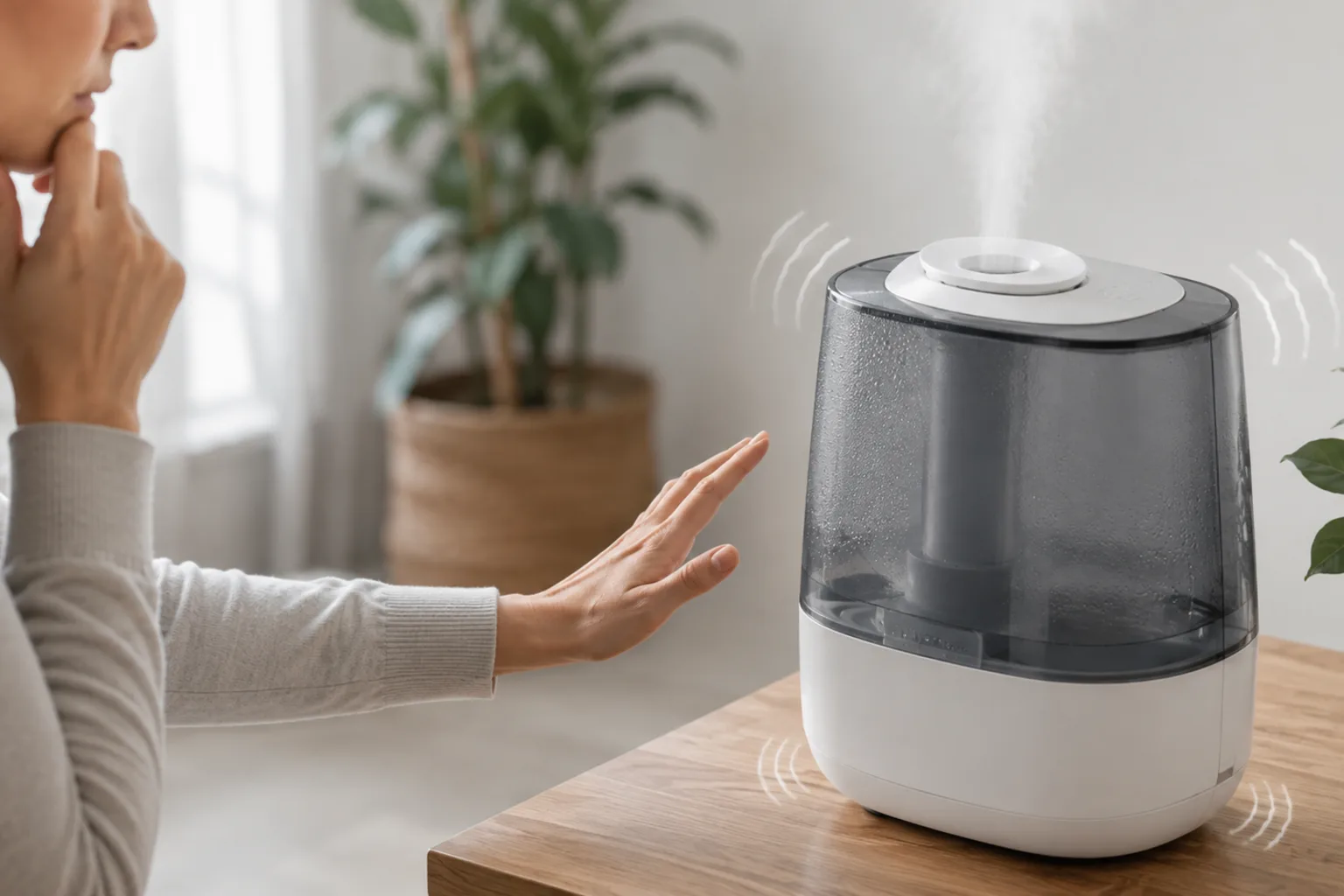
The manual points first to an uneven surface or low water level.
Does this match what you are seeing?
Owners describe this HoMedics UHE-CMTF45 problem in a few different ways. If one of these sounds like yours, this guide covers it:
- Making unusual noise
- Loud humidifier noise
- Strange water sound
- Making noise while running
Check these in order
- Place the humidifier on a flat, level, water-resistant surface.
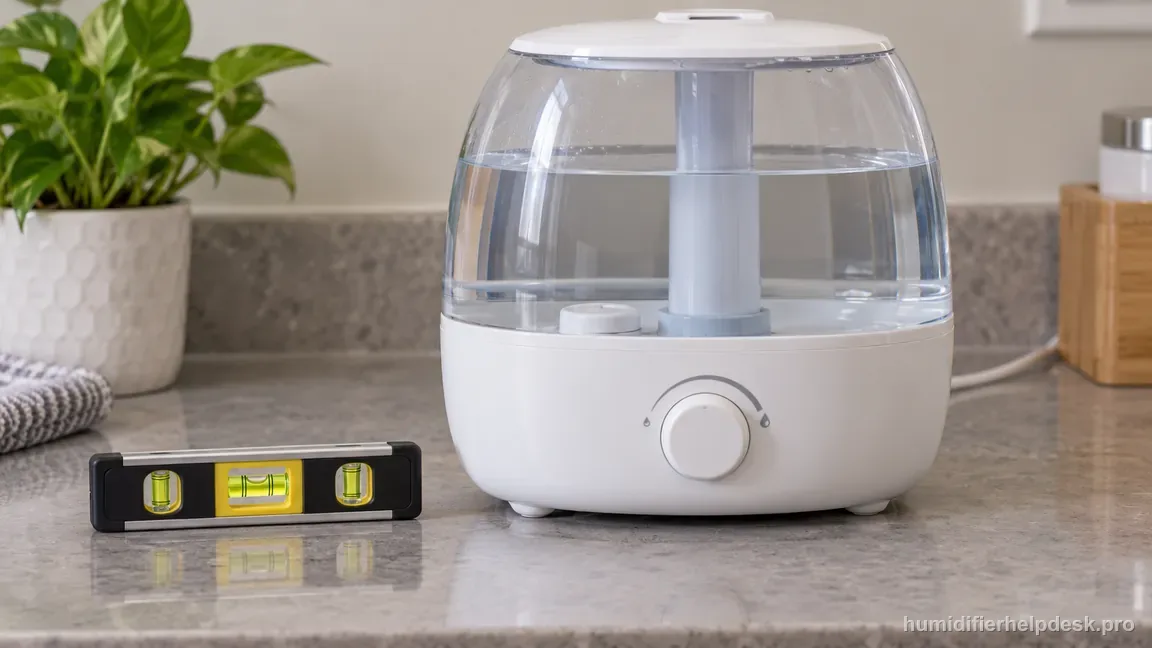
Illustrative: Set the humidifier on a flat, level, water-resistant surface to reduce noise from an uneven position. - Check and refill the tank if the water level is low.
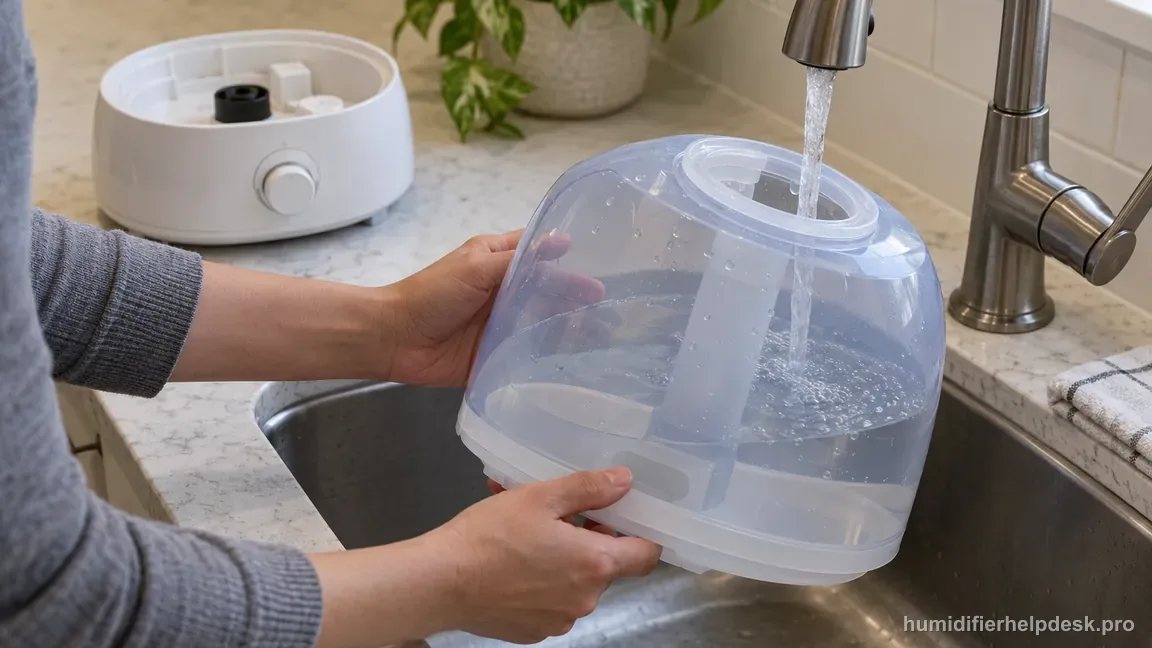
Illustrative: Refill the tank with clean water when the level is low and keep the base away from the sink. - Stop use for grinding, electrical buzzing, overheating, or burning odor.
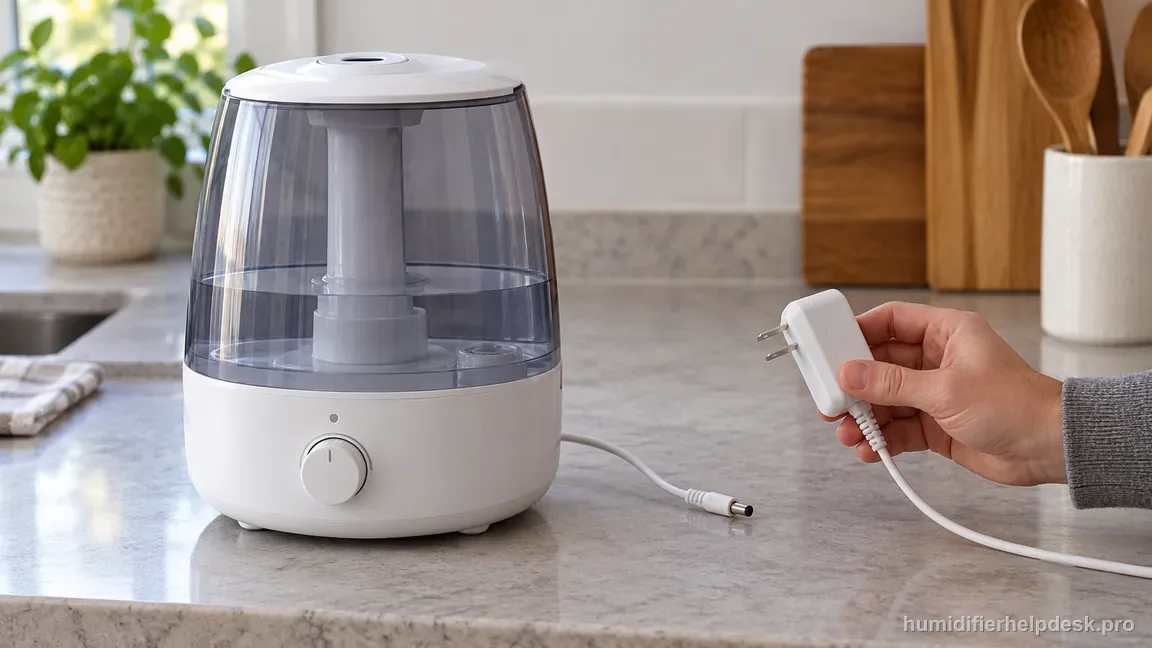
Illustrative: Stop use and disconnect power for grinding, electrical buzzing, overheating, or a burning smell.
Diagnostic decision path
The UHE-CMTF45 manual gives only two routine causes for excessive noise: an uneven surface and low water. That makes the diagnosis simple, but it also makes the safety boundary important—grinding, electrical buzzing, overheating, or burning odor should not be folded into a normal low-water noise checklist.
- Place the humidifier on a flat, level, water-resistant surface.
- Check the actual tank water level before changing any other setting.
- Listen for whether the sound is ordinary vibration/gurgle versus grinding, electrical buzzing, or a sound accompanied by heat or odor.
If: The noise decreases after the unit is leveled
What it means: Surface instability was amplifying vibration rather than indicating an internal failure.
Do next: Keep the humidifier on the stable surface and avoid trays or furniture that resonate strongly.
If: The tank is low and noise decreases after refilling
What it means: Low water was the documented cause.
Do next: Resume normal use and watch whether the same sound returns only near the low-water state.
If: The unit is level and adequately filled but the same excessive noise remains
What it means: The manual's two routine external causes have been ruled out.
Do next: Stop further disassembly and contact HoMedics for the exact model.
If: The noise is grinding/electrical or accompanied by overheating or burning odor
What it means: This is outside normal placement/low-water troubleshooting and may indicate an unsafe fault.
Do next: Unplug immediately and use manufacturer service/support guidance.
How to interpret the retest
Use a two-condition comparison before assuming the sound comes from inside the UHE-CMTF45. First run it on a firm, level, water-resistant surface, then compare the same unit on any tray or furniture that had been amplifying the noise. A large change points to surface resonance, one of the manual's documented routine causes.
Check the water level at the moment the noise is most noticeable. HoMedics specifically lists low water as a cause of excessive noise, so a sound that appears near the end of a tank and settles after refilling is different from a noise that is equally strong with a normally filled tank.
Keep ordinary water movement separate from a harsh mechanical symptom. Gentle gurgling or vibration can change with water level and surface contact, but grinding, scraping, sharp electrical buzzing, or noise accompanied by abnormal heat does not fit the manual's simple level/low-water explanation and should not be normalized.
Do not add cleaning steps merely because the unit is noisy. The UHE-CMTF45 troubleshooting table for excessive noise starts with level placement and water level, not with transducer descaling. Adding unrelated maintenance can hide whether one of the two documented causes actually corrected the sound.
When refilling is the apparent fix, continue the test long enough to see whether the same noise returns only as the tank approaches low water again. A repeatable low-water pattern is useful evidence; a constant abnormal sound across the full tank range means the routine explanation is no longer sufficient.
Escalate a persistent abnormal sound after level placement and adequate water rather than opening the powered base. HoMedics does not provide an owner repair path for the motor/electrical assembly. If there is burning odor, overheating, or a grinding/electrical sound, unplug and stop use instead of continuing the experiment.
Model-specific context that changes the diagnosis
Use the manual’s two routine causes first
For excessive noise, HoMedics gives an unusually narrow troubleshooting path: an unlevel unit or low water. That is useful because it prevents unnecessary cleaning or disassembly. Put the CMTF45 on a rigid, level, water-resistant surface, verify the water level, and change only one variable at a time. If the sound changes immediately, you have stronger evidence than a general assumption that “ultrasonic humidifiers should be silent.”
Compare the sound with the model’s normal operating profile
HoMedics rates the model for quiet ultrasonic operation, but quiet does not mean acoustically invisible. Gentle fan movement, water movement, or a small change in vibration can be normal. The concern is a sound character that does not fit the placement/low-water explanation: scraping, grinding, harsh electrical buzzing, repeated impact, or noise paired with unusual heat or odor.
Why furniture can exaggerate a normal vibration
A hollow nightstand, thin tray, or slightly uneven shelf can act like a sounding board. The humidifier may be producing only modest vibration while the furniture amplifies it into a much louder buzz. A short comparison on a stable surface is therefore more diagnostic than adding padding underneath. Do not use towels or soft material that could block airflow or create a wet surface around the appliance.
When the simple noise checklist is exhausted
If the CMTF45 is level, adequately filled, correctly assembled, and still produces a persistent abnormal mechanical or electrical sound, the owner-level diagnosis is complete. HoMedics does not give a consumer motor or powered-base repair procedure. Unplug for grinding, burning odor, abnormal heating, or electrical buzzing and use the manufacturer service path instead of opening the base.
Common mistakes that make this harder to diagnose
- Testing on a hollow or uneven furniture surface that amplifies vibration.
- Refilling without first confirming the tank was actually low.
- Treating every unusual electrical or grinding sound as normal low-water noise.
- Opening the powered base after the two simple manual checks fail.
The problem is resolved when the UHE-CMTF45 returns to normal sound after level placement or correcting low water. Persistent abnormal noise with a level, adequately filled unit—especially with heat or odor—belongs at the support/stop-use boundary.
Questions people ask about this exact symptom
Why is my HoMedics UHE-CMTF45 loud, vibrating, or rattling?
A small amount of water or fan noise can occur, but the manual specifically points to low water and an uneven surface when noise becomes excessive. A sound that improves after refilling or leveling is different from persistent grinding or electrical buzzing. Next, check “Place the humidifier on a flat, level, water-resistant surface” on the HoMedics UHE-CMTF45 and note whether the symptom changes.
Should I descale the transducer just because the humidifier is noisy?
Not as the first step for this symptom. HoMedics lists level placement and low water for excessive noise. Cleaning belongs to other symptom paths unless scale is independently visible or another documented problem is present. For the next HoMedics UHE-CMTF45 check, use “Check and refill the tank if the water level is low” and note whether the symptom changes.
When should I stop using it?
Stop and unplug if the noise is grinding, scraping, electrically harsh, or accompanied by burning odor, abnormal heat, smoke, or repeated power problems. Those symptoms fall outside the manual’s routine surface-and-water checks. Before escalating the HoMedics UHE-CMTF45, confirm “Stop use for grinding, electrical buzzing, overheating, or burning odor” and note the result.
Why this path is model-specific
The HoMedics troubleshooting table lists an unlevel unit and low water as causes of excessive noise.
For the HoMedics UHE-CMTF45, the machine type matters: it is ultrasonic. Visible mist is part of normal output when mist production is active, so a true no-mist complaint deserves model-specific troubleshooting.
This symptom appears on other humidifiers too, but the meaning and reset path can change by technology, sensor logic, and control layout. Use the exact model source above before borrowing a fix from a neighboring model.
Compare this symptom across verified models
If you are still deciding whether this behavior is normal or model-specific, use the symptom hub to compare only manufacturer-linked guides. Keep the HoMedics UHE-CMTF45 instructions above as the controlling path for this machine.
If the problem is still there
If the checks above do not change the symptom, use the manufacturer support path for this exact model. We intentionally stop before undocumented resets, sensor bypasses, internal mains work, or parts replacement that the consumer manual does not authorize.
What we do not recommend
Do not defeat a float, water-level sensor, overheat protection, interlock, or other safety feature. Do not open mains-powered sections for live testing. If the unit smells burned, becomes abnormally hot, smokes, sparks, has water near electrical parts, or repeatedly trips a circuit, stop using it and keep clear. Unplug it only if the plug, outlet, and surrounding area are dry and safe to reach; otherwise do not touch wet equipment and contact manufacturer support for next steps.
Primary source for this diagnosis
Source checked during the September 4, 2026 editorial review. Manufacturer documents can change; a material re-review updates this guide’s reviewed date rather than stamping unrelated pages.