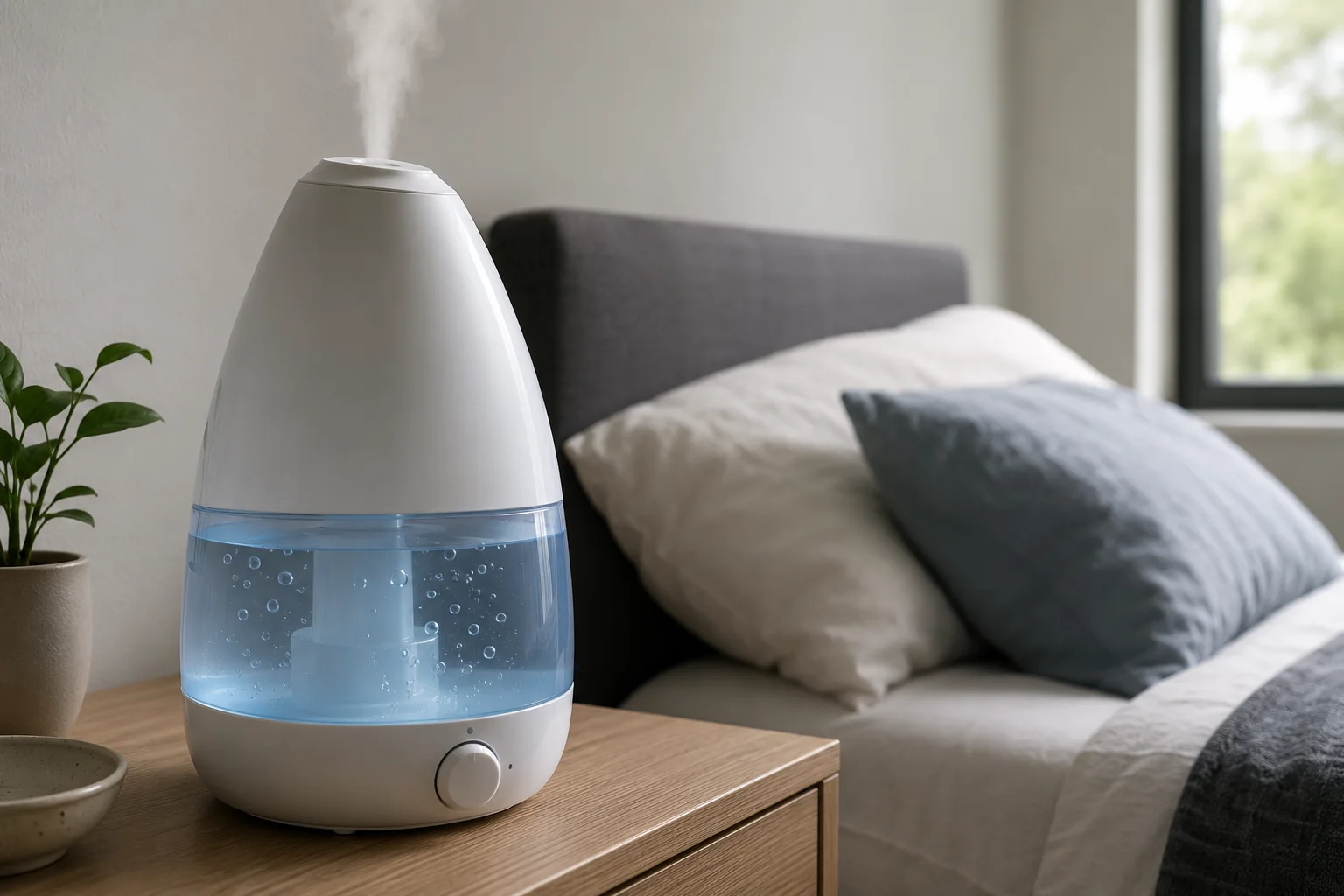
Constant gurgling or bubbling during the first hours can be normal as water feeds from the tank into the base.
Does this match what you are seeing?
Owners describe this Vicks VUL525 / VUL545 problem in a few different ways. If one of these sounds like yours, this guide covers it:
- Making unusual noise
- Loud humidifier noise
- Strange water sound
- Making noise while running
Check these in order
- Confirm the sound is water-feed gurgling rather than grinding or electrical buzzing.
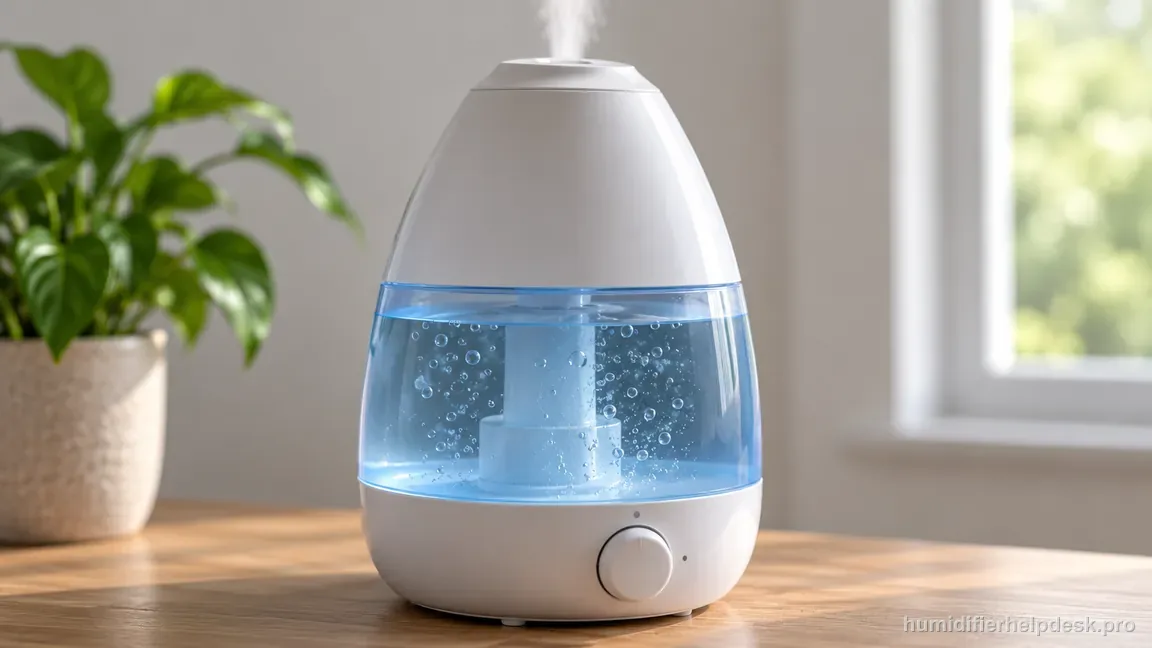
Illustrative: Gentle water-feed bubbling can be normal; stop and investigate if the sound is grinding, electrical buzzing, or paired with another fault. - Run the unit for a few hours; Vicks says the droplet/bubble sound should decrease.
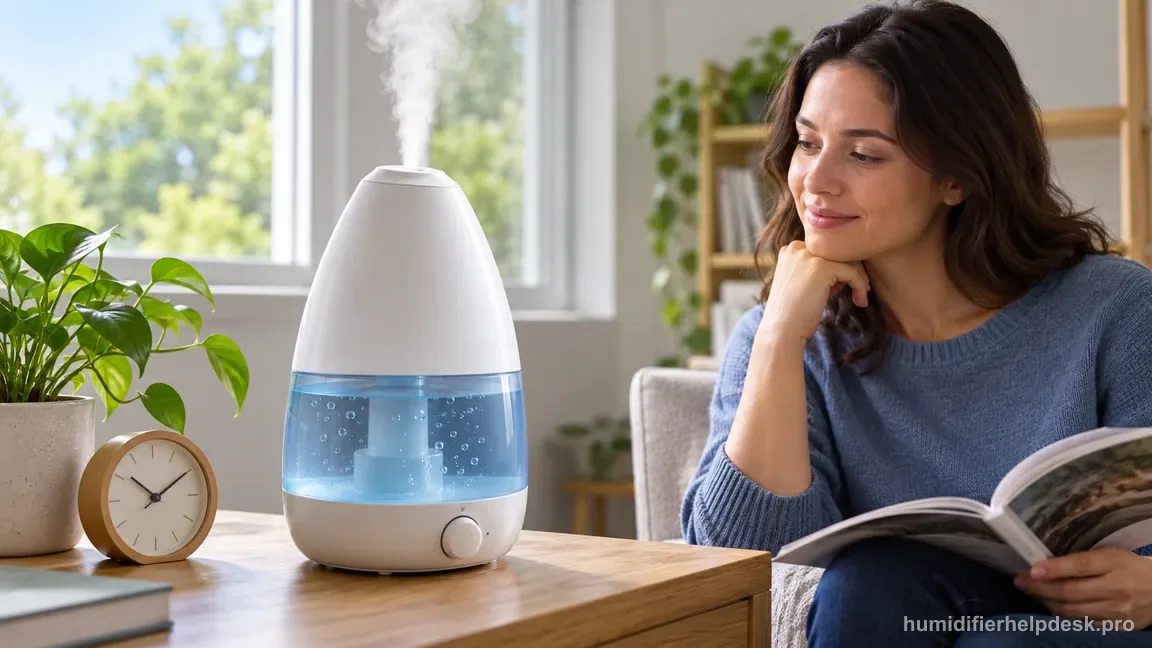
Illustrative: Let the humidifier run for a few hours during the day; Vicks says the initial droplet and bubble sounds should decrease. - If water is leaking externally or the sound is paired with overheating, stop and inspect for a separate problem.
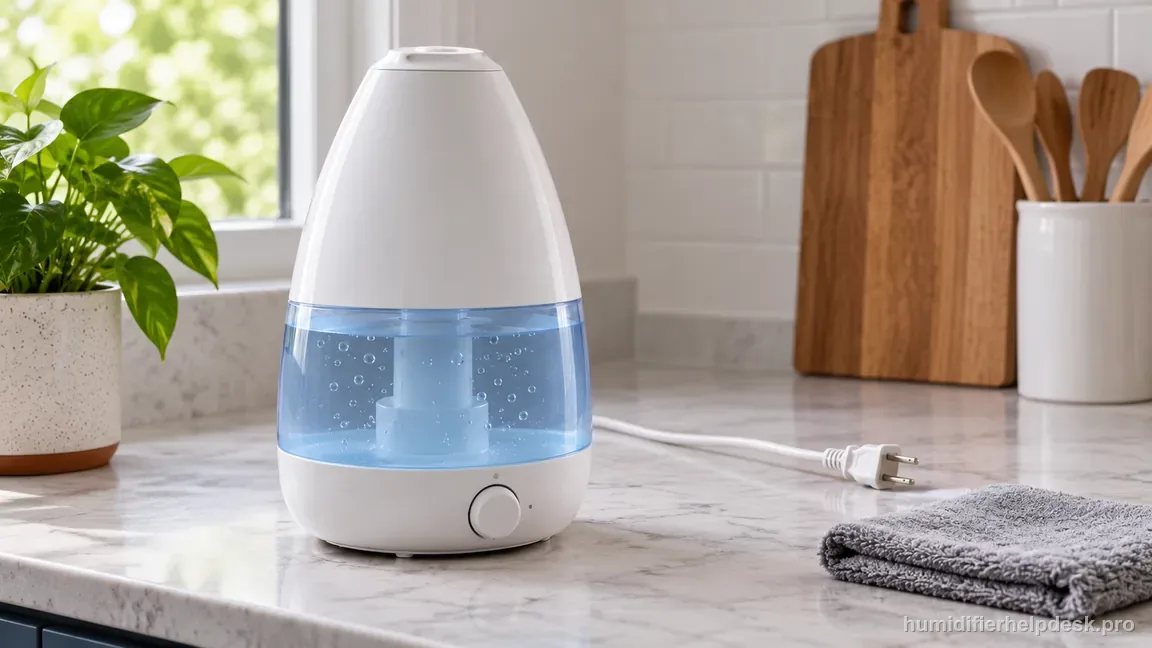
Illustrative: Stop the unit and disconnect it safely if external leakage or overheating points to a separate problem.
Diagnostic decision path
On the VUL525/VUL545 family, gurgling, bubbling, or droplet sounds during the first hours can be normal water-feed noise. Vicks specifically says this sound often decreases after the unit has run for a few hours. The useful diagnosis is to distinguish ordinary water movement from grinding, electrical buzzing, overheating, or a leak.
- Confirm the humidifier is upright on the required firm, level, water-resistant surface.
- Listen to the character of the sound before taking the unit apart.
- Check for external water around the base so a leak is not mistaken for harmless bubbling.
If: The sound is gentle gurgling/bubbling on first use
What it means: Water is settling/feed behavior is likely producing the normal sound Vicks describes.
Do next: Run the humidifier for a few hours and reassess; Vicks says the sound should decrease.
If: The gurgling becomes quieter after several hours
What it means: The pattern matches normal startup/feeding behavior.
Do next: No repair is needed; if nighttime noise matters, run the first-use period during the day.
If: The sound is accompanied by visible leaking
What it means: This is no longer just normal water-feed noise.
Do next: Turn the unit off and diagnose the separate leak/tank/cap condition before continued use.
If: The sound is grinding, harsh electrical buzzing, or paired with overheating
What it means: Those symptoms are outside the normal bubbling description.
Do next: Stop use and contact Vicks support rather than opening the powered base.
How to interpret the retest
On the next run, leave the other settings alone and look for “The sound is gentle gurgling/bubbling on first use” rather than changing several settings at once. If the Vicks VUL525 / VUL545 matches that observation, use the interpretation “Water is settling/feed behavior is likely producing the normal sound Vicks describes” and follow with “Run the humidifier for a few hours and reassess; Vicks says the sound should decrease”. First, check “Confirm the sound is water-feed gurgling rather than grinding or electrical buzzing”. If the state does not appear again, keep that result and continue with the next documented possibility for gurgling or bubbling on the Vicks VUL525 / VUL545.
For this branch, begin by asking what happens after “Run the unit for a few hours; Vicks says the droplet/bubble sound should decrease”, does the Vicks VUL525 / VUL545 show “The gurgling becomes quieter after several hours”? If you can reproduce it, the source-backed reading is “The pattern matches normal startup/feeding behavior”, so the next move is “No repair is needed; if nighttime noise matters, run the first-use period during the day”. If not, skip the action tied to that Vicks VUL525 / VUL545 possibility; record that it did not match the gurgling or bubbling complaint and test the next documented condition.
On the Vicks VUL525 / VUL545, use “The sound is accompanied by visible leaking” as the observation to check first. On the Vicks VUL525 / VUL545, the source-backed interpretation is “This is no longer just normal water-feed noise”. Make “If water is leaking externally or the sound is paired with overheating, stop and inspect for a separate problem” the only deliberate change, then repeat the same symptom test. If the observation matches, continue with “Turn the unit off and diagnose the separate leak/tank/cap condition before continued use”; if it does not, note that this Vicks VUL525 / VUL545 gurgling or bubbling path did not match and move on.
Model-specific context that changes the diagnosis
Two Vicks VUL525 / VUL545 clues that point to different fixes
The first decision comes from the observed state, not from guessing at hardware. On the Vicks VUL525 / VUL545, “The sound is gentle gurgling/bubbling on first use” supports the interpretation “Water is settling/feed behavior is likely producing the normal sound Vicks describes” and leads to “Run the humidifier for a few hours and reassess; Vicks says the sound should decrease”. “The gurgling becomes quieter after several hours” supports “The pattern matches normal startup/feeding behavior” and leads to “No repair is needed; if nighttime noise matters, run the first-use period during the day”. For the current Vicks VUL525 / VUL545 gurgling or bubbling complaint, choose the state you can actually reproduce and work from that result.
Retest the Vicks VUL525 / VUL545 without changing multiple variables
Use the next step as a controlled test, not as part of a reset spree. Try “Confirm the sound is water-feed gurgling rather than grinding or electrical buzzing” on the Vicks VUL525 / VUL545 and observe the same complaint. Only then move to “Run the unit for a few hours; Vicks says the droplet/bubble sound should decrease” and, if necessary, “If water is leaking externally or the sound is paired with overheating, stop and inspect for a separate problem”. With gurgling or bubbling on the Vicks VUL525 / VUL545, keeping the other obvious variables steady makes it easier to tell whether a documented condition was actually responsible.
Common mistakes that make this harder to diagnose
- Treating first-use bubbling as a failed motor.
- Opening the base before allowing the documented settling period.
- Ignoring a real leak because “gurgling is normal.”
- Continuing to run through electrical or overheating noises.
The concern is resolved when the bubbling/droplet sound decreases after a few hours and no leak, grinding, electrical buzzing, or overheating is present. Sounds outside that normal pattern should be escalated separately.
Questions people ask about this exact symptom
Why is my Vicks VUL525 / VUL545 making an unusual sound?
For the Vicks VUL525 / VUL545, constant gurgling or bubbling during the first hours can be normal as water feeds from the tank into the base. For this gurgling or bubbling check on the Vicks VUL525 / VUL545, start with “Confirm the sound is water-feed gurgling rather than grinding or electrical buzzing” and check the result before making another change.
What should I check first if my Vicks VUL525 / VUL545 makes an unusual or loud sound?
The useful order is “Confirm the sound is water-feed gurgling rather than grinding or electrical buzzing”, followed by “Run the unit for a few hours; Vicks says the droplet/bubble sound should decrease” if needed, and then “If water is leaking externally or the sound is paired with overheating, stop and inspect for a separate problem”. Check the Vicks VUL525 / VUL545 between steps.
When should I contact Vicks about this Vicks VUL525 / VUL545 problem?
Contact Vicks if the Vicks VUL525 / VUL545 still has the same problem after the documented checks for gurgling or bubbling. Give support the Vicks VUL525 / VUL545's current mode and the before-and-after result from the documented gurgling or bubbling checks. Do not open powered sections on the Vicks VUL525 / VUL545 or assume an internal failed part unless Vicks documents that procedure for this gurgling or bubbling case.
Why this path is model-specific
Vicks says gurgling, bubbling, or droplet sounds can be completely normal on first use and typically decrease after a few hours.
For the Vicks VUL525 / VUL545, the machine type matters: it is ultrasonic. Visible mist is part of normal output when mist production is active, so a true no-mist complaint deserves model-specific troubleshooting.
Compare this symptom across verified models
If you are still deciding whether this behavior is normal or model-specific, use the symptom hub to compare only manufacturer-linked guides. Keep the Vicks VUL525 / VUL545 instructions above as the controlling path for this machine.
If the problem is still there
If the checks above do not change the symptom, use the manufacturer support path for this exact model. We intentionally stop before undocumented resets, sensor bypasses, internal mains work, or parts replacement that the consumer manual does not authorize.
What we do not recommend
Do not defeat a float, water-level sensor, overheat protection, interlock, or other safety feature. Do not open mains-powered sections for live testing. If the unit smells burned, becomes abnormally hot, smokes, sparks, has water near electrical parts, or repeatedly trips a circuit, stop using it and keep clear. Unplug it only if the plug, outlet, and surrounding area are dry and safe to reach; otherwise do not touch wet equipment and contact manufacturer support for next steps.
Primary source for this diagnosis
Source checked during the September 4, 2026 editorial review. Manufacturer documents can change; a material re-review updates this guide’s reviewed date rather than stamping unrelated pages.