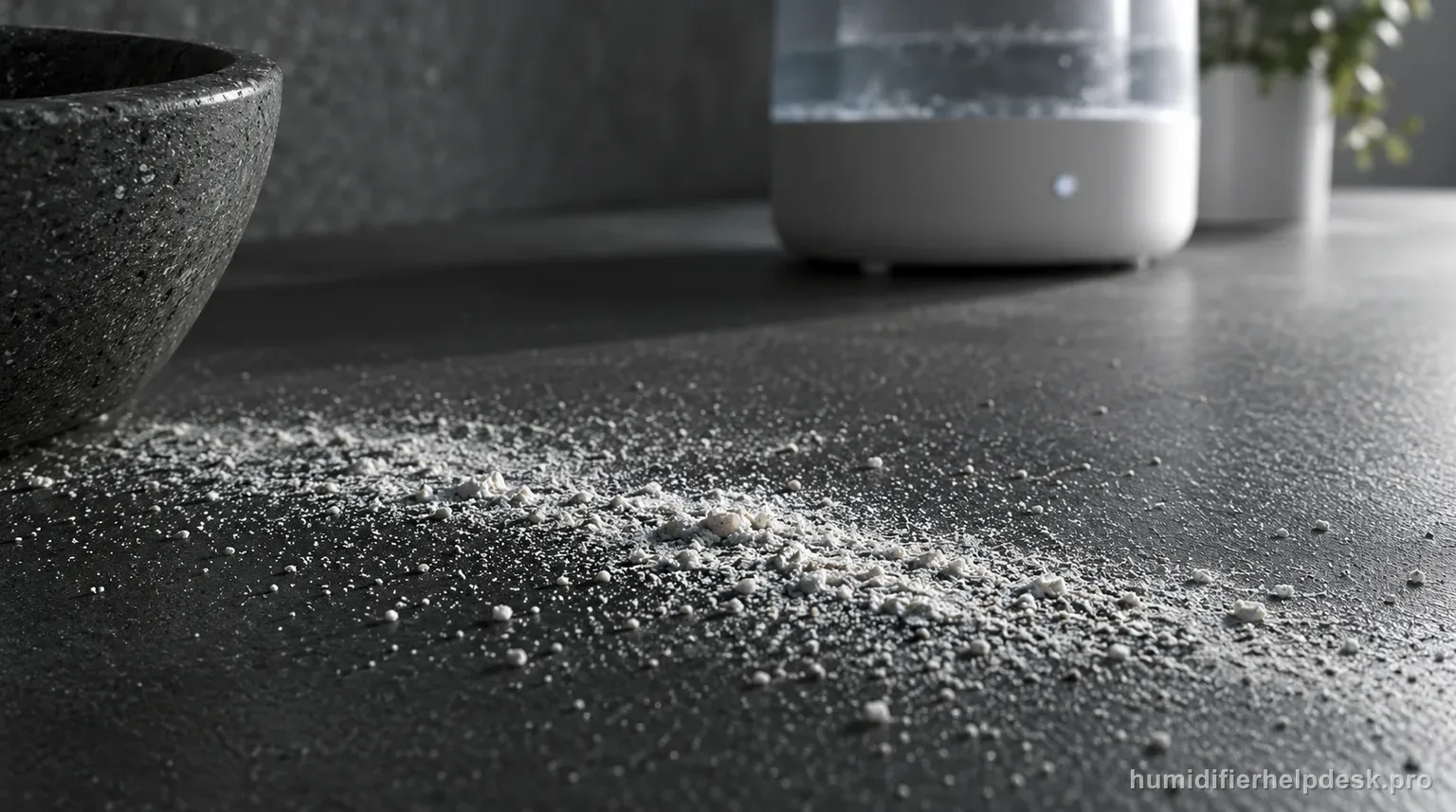
On the HM306S, white dust or film is a hard-water mineral clue. Dreo explains that calcium and magnesium in hard water can ride with the ultrasonic spray and settle near the humidifier, so the practical fix is regular descaling plus lower-mineral water rather than replacing a working atomizer.
Does this match what you are seeing?
Owners describe this Dreo HM306S Smart Humidifier problem in a few different ways. If one of these sounds like yours, this guide covers it:
- White dust
- Leaving white powder
- Mineral dust on furniture
- White residue after misting
Check these in order
- Wipe a nearby dark surface clean so only new residue from the next tank is evaluated.
- Inspect the tank/base for mineral scale and descale the HM306S according to Dreo cleaning guidance.
- Run a controlled tank with purified or distilled water while keeping the mist setting and placement otherwise similar.
- Do not add cleaners, essential oils, or treatment chemicals directly to the water as a white-dust remedy.
- If the residue is wet rather than dry and powdery, switch to the leak/condensation path instead of calling it mineral dust.
Diagnostic decision path
White dust or a pale film around a Dreo HM306S is primarily a water-mineral problem. Dreo’s live 306 Series FAQ explains that calcium and magnesium in hard water can be carried with the fine ultrasonic spray and deposited near the humidifier. The same FAQ recommends regular descaling and purified or distilled water to reduce the mineral load. That diagnosis is more useful than treating every white mark as atomizer failure, especially when the machine still produces strong mist.
- Confirm the residue is dry and powdery. Wet rings, droplets, or a spreading puddle belong to the condensation or leak path, not the white-dust path.
- Wipe one nearby dark, water-resistant surface clean before the next tank so new mineral residue can be separated from old household dust.
- Unplug the HM306S before inspecting or descaling wet parts, and use plain water only for the operating test.
If: Dry white residue increases when hard tap water is used
What it means: The observation matches Dreo’s calcium/magnesium explanation for ultrasonic white dust.
Do next: Descale the humidifier and run a controlled comparison with purified or distilled water while keeping placement and mist output similar.
If: New residue drops sharply with distilled or purified water
What it means: The water source has been isolated as the dominant cause.
Do next: Continue using lower-mineral water if practical and keep the humidifier descaled so internal buildup does not become a second problem.
If: Heavy mineral scale is visible in the tank or base
What it means: The same dissolved minerals that create room residue are accumulating inside the water path.
Do next: Follow Dreo’s cleaning/descaling guidance while unplugged, rinse completely, then establish a clean baseline with lower-mineral water.
If: The residue is wet rather than powdery
What it means: The symptom is not a clean match for mineral dust.
Do next: Check mist intensity, room humidity, placement, and the leak path before concluding that minerals are the main issue.
If: Residue remains unchanged after a clean unit and distilled-water test
What it means: The simple hard-water explanation has not been confirmed by the controlled comparison.
Do next: Inspect other room dust sources and contact Dreo if the humidifier is also behaving abnormally instead of replacing parts solely because a white material is present.
How to interpret the retest
A distilled-water comparison is valuable because it changes the mineral load without changing the humidifier hardware. If white residue drops under that condition, the result supports Dreo’s water-quality explanation directly.
Descaling and water choice solve different parts of the pattern. Descaling removes minerals already deposited in the machine; purified or distilled water reduces what enters on the next fill. Doing only one may leave the other source of residue unchanged.
Do not add acids, detergent, fragrance, or other chemicals to the operating water in an attempt to “neutralize” minerals. Cleaning solutions belong only in the documented cleaning process and must be rinsed out before the next run.
The HM306 Series page also mentions optional cartridges for reducing mineral-related buildup on some variants. Treat those as accessories rather than as proof that the machine cannot operate without one.
A strong visible plume with dry white dust is compatible with a working ultrasonic atomizer. Replacing the humidifier before testing lower-mineral water can solve the wrong problem.
Model-specific context that changes the diagnosis
Use a clean comparison surface
One wiped dark surface close to the humidifier is enough to compare one tank of hard water with one tank of lower-mineral water. Keep the mist direction and output similar so the water source is the main variable.
Old residue can survive several “fixed” tanks
White mineral dust can remain on furniture and inside the nozzle even after water quality changes. Clean the nearby surface and the humidifier first, otherwise yesterday’s residue can make today’s distilled-water test look ineffective.
Dry dust and condensation can coexist
A room can be over-humidified while hard water is also producing minerals. If you see both dry powder and wet windows, solve each symptom separately: reduce saturation/adjust placement for condensation and reduce mineral content for dust.
Common mistakes that make this harder to diagnose
- Assuming white dust proves the HM306S atomizer is defective.
- Descaling repeatedly while continuing the same high-mineral water and expecting room residue to disappear.
- Calling wet droplets “white dust” because they dry to a pale edge later.
- Adding essential oil or cleaning chemicals to the water tank as a mineral treatment.
- Judging a water-quality change without first wiping away old residue.
The white-dust complaint is resolved when a clean HM306S produces substantially less new dry residue during a lower-mineral-water test while mist output remains normal. If distilled water and proper descaling do not change the observed material, reconsider whether the residue is actually coming from the humidifier before replacing hardware; if the unit also has electrical, leak, or output faults, use the matching troubleshooting path or Dreo support.
Questions people ask about this exact symptom
Why does my Dreo HM306S leave white dust around the humidifier?
Dreo says hard water with higher calcium and magnesium can be carried in the ultrasonic spray and settle near the machine as white dust or film. Clean existing residue, descale the humidifier, and compare a tank of purified or distilled water. If new powder drops sharply while mist stays normal, water mineral content—not a broken atomizer—is the better explanation.
Will distilled water reduce HM306S white dust?
Yes, it should reduce the problem when dissolved minerals are the cause. Dreo specifically recommends purified or distilled water to help prevent scale. For a useful test, first clean nearby surfaces and descale visible buildup, then run one normal tank without changing several other conditions. This separates the water-quality variable from old residue already present in the room or humidifier.
Do I need to replace my HM306S because of white film?
Not just because of dry mineral film. Dreo treats white dust as a hard-water and scale issue and recommends descaling plus lower-mineral water. Replacement becomes a different question if the humidifier also leaks, shows electrical problems, or cannot produce mist after the documented checks. First verify the residue under a clean distilled-water comparison instead of assuming the appliance itself has failed.
Why this path is model-specific
Dreo’s live HM306/306S FAQ says hard water with elevated calcium and magnesium can create white dust or white film around the humidifier and recommends regular descaling plus purified or distilled water to reduce scale.
For the Dreo HM306S Smart Humidifier, the machine type matters: it is ultrasonic. Visible mist is part of normal output when mist production is active, so a true no-mist complaint deserves model-specific troubleshooting.
Compare this symptom across verified models
If you are still deciding whether this behavior is normal or model-specific, use the symptom hub to compare only manufacturer-linked guides. Keep the Dreo HM306S Smart Humidifier instructions above as the controlling path for this machine.
If the problem is still there
If the checks above do not change the symptom, use the manufacturer support path for this exact model. We intentionally stop before undocumented resets, sensor bypasses, internal mains work, or parts replacement that the consumer manual does not authorize.
What we do not recommend
Do not defeat a float, water-level sensor, overheat protection, interlock, or other safety feature. Do not open mains-powered sections for live testing. If the unit smells burned, becomes abnormally hot, smokes, sparks, has water near electrical parts, or repeatedly trips a circuit, stop using it and keep clear. Unplug it only if the plug, outlet, and surrounding area are dry and safe to reach; otherwise do not touch wet equipment and contact manufacturer support for next steps.
Primary source for this diagnosis
Source checked during the September 4, 2026 editorial review. Manufacturer documents can change; a material re-review updates this guide’s reviewed date rather than stamping unrelated pages.