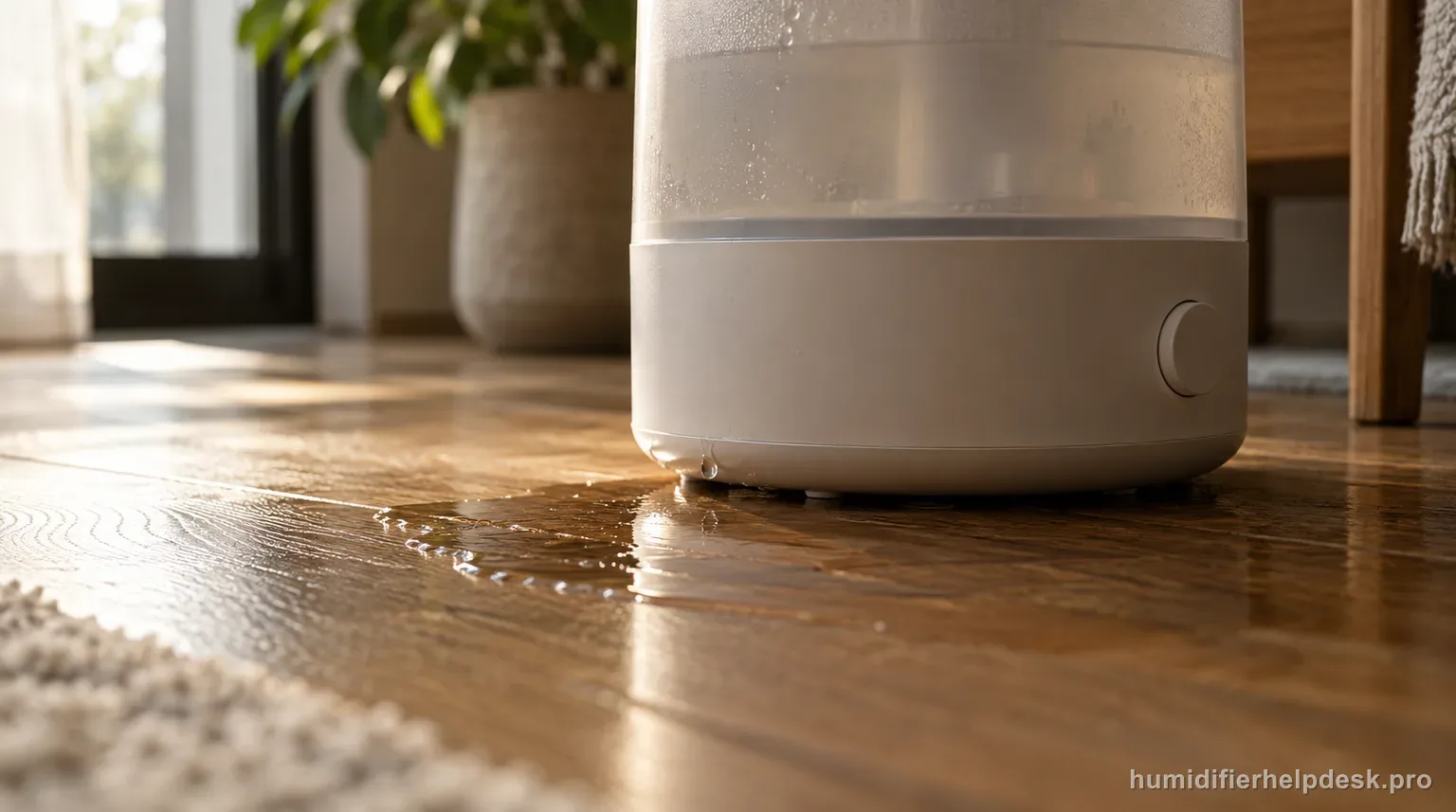
A new HM306S leak has a more specific startup path than a generic puddle diagnosis. Dreo says to remove the shipping wrap, secure the float bracket, clear particles or hair from the water valve, inspect the tank/base for visible cracks, and retest on a flat surface.
Does this match what you are seeing?
Owners describe this Dreo HM306S Smart Humidifier problem in a few different ways. If one of these sounds like yours, this guide covers it:
- Leaking water
- Water under the base
- Humidifier leaking from bottom
- Reservoir leaking or overflowing
Check these in order
- Unplug and dry the humidifier and supporting surface so the next fresh droplet can be traced.
- If the unit is new, confirm all shipping wrap has been removed.
- Check the float assembly: fix the left prong on its bracket, then slide the other prong into place so the float is secured as Dreo shows.
- Inspect the user-accessible water valve and remove visible particles or hair that could keep it from sealing.
- Inspect the tank and base separately for visible cracks or repeatable seepage.
- Retest only on a firm, flat, level, water-resistant surface.
Diagnostic decision path
Leak troubleshooting on a Dreo HM306S starts differently depending on whether the unit is new or has been used for a while. Dreo’s current HM306 Series page gives a dedicated “new humidifier leaking” sequence: remove the shipping wrap, secure the float in its bracket, clear hair or particles from the water valve, look for visible cracks, and place the machine on a flat surface. Dreo also flags tank leakage after prolonged direct essential-oil exposure as a support condition. That is more specific than a generic instruction to tighten every visible part.
- Turn the humidifier off and unplug it. Dry the tank, base exterior, and supporting surface completely so the first new droplet can be traced instead of mixed with old spill water.
- If the HM306S is new, inspect the inside exactly as shown in the setup/leak guidance and confirm that protective shipping wrap has been removed before the first wet retest.
- Keep essential oils out of the water tank. Use only the intended aroma-pad area; Dreo warns that oils placed directly in the tank can damage the plastic and lead to leakage.
If: A new unit still has shipping wrap in place
What it means: The water path or float mechanism may not be in its intended operating state.
Do next: Remove the wrap as directed, reassemble the user-accessible parts, dry the unit, and check the result before making another change.
If: The float is loose or not secured by both bracket prongs
What it means: The float cannot regulate the water path normally when its bracket is not assembled correctly.
Do next: Fix the left prong on the bracket and slide the other prong into position as Dreo describes, then confirm the float moves normally without forcing it.
If: Hair or particles are visible at the water valve
What it means: Debris can prevent the valve from sealing consistently and produce a repeatable leak.
Do next: With power disconnected, remove only visible user-accessible debris, dry the area, and perform a controlled refill test.
If: The tank or base shows a visible crack
What it means: The leak is structural rather than a placement or assembly issue.
Do next: Do not continue wet testing. A cracked water-bearing part belongs with replacement/support, especially if the crack is near the powered base.
If: The leak disappears on a firm, level surface
What it means: Placement was changing the water path or reservoir level enough to cause the complaint.
Do next: Keep the HM306S on that stable surface and avoid moving or tilting it while filled.
If: The tank leaks and essential oils were previously poured directly into it
What it means: Dreo specifically warns that prolonged oil exposure can damage the tank material.
Do next: Stop using the damaged tank and contact Dreo for the appropriate replacement path rather than sealing the crack with an improvised adhesive.
How to interpret the retest
Dreo’s current product FAQ gives a dedicated new-unit leak path: shipping wrap, float-bracket seating, water-valve debris, visible cracks, and level placement. Those checks should be completed in that order before a user assumes the powered base itself has failed.
Do not merge broad room dampness with a tank/base leak. Condensation can wet the surface around any humidifier without producing a repeatable droplet from a seam or valve. Dry everything first and watch where fresh water starts.
The float check is about correct user-accessible assembly, not bending or modifying the float. If the bracket or valve looks deformed, stop and use support rather than reshaping the mechanism.
Essential-oil damage is a material-compatibility problem, not something more cleaning can reverse. The correct prevention is to keep oils in the aroma-pad system rather than the water tank.
A level-surface retest is useful only after old water is removed. Otherwise a dry mechanical path can appear to keep leaking because water trapped under the unit is still spreading outward.
Model-specific context that changes the diagnosis
Trace the first new droplet
After drying, place a dry paper towel or wipeable surface around the base and refill only enough for a controlled observation. The location of the first new water mark is far more useful than the size of the old puddle.
New-unit setup errors deserve an early check
Because Dreo explicitly calls out shipping wrap and float-bracket seating, those two checks should happen before parts are blamed. They are quick, reversible, and specific to the model’s initial assembly state.
Keep oil and leak diagnosis separate
If essential oil was added directly to the tank, disclose that fact when contacting support because Dreo links prolonged oil exposure with tank leakage. Do not continue adding oil to reproduce the failure.
Common mistakes that make this harder to diagnose
- Powering the unit while the base and outlet area are still wet from the previous leak.
- Skipping the shipping-wrap and float-bracket checks on a brand-new HM306S.
- Pushing tools into the water valve instead of removing only visible accessible debris.
- Using sealant or glue on a cracked tank that sits above powered electronics.
- Putting essential oil directly in the water tank after a leak has already occurred.
The leak is resolved when the unit remains dry through a controlled refill and run after the documented external cause—shipping wrap, float seating, valve debris, or level placement—is corrected. A visible crack, a leaking tank during refill, oil-related tank damage, a deformed valve, or persistent water after the external checks is not a successful owner repair; keep the HM306S unplugged and use Dreo support.
Questions people ask about this exact symptom
Why is my new Dreo HM306S leaking?
Dreo gives several new-unit checks: remove the shipping wrap, make sure the float is secured by its bracket, remove visible particles or hair that may block the water valve, inspect the tank and base for cracks, and keep the humidifier on a flat surface. Dry the unit before retesting so old spill water is not mistaken for a continuing leak.
Can essential oil make the HM306S water tank crack or leak?
Dreo warns that essential oils added directly to the water tank can damage the tank material and may lead to leakage after prolonged exposure. Use only the intended aroma-pad system. If the tank already shows a crack or leaks during refill, stop using it and contact Dreo for a replacement route rather than trying to seal a water-bearing part above electronics.
When should I stop troubleshooting an HM306S leak myself?
Stop when the tank or base is cracked, the water valve appears damaged, leakage continues after the documented setup and level checks, or water reaches electrical parts. Keep the unit unplugged and contact Dreo. The manufacturer does not provide an owner procedure for opening the powered base, modifying the valve, or repairing a cracked tank with adhesive.
Why this path is model-specific
Dreo’s current HM306 Series FAQ and model troubleshooting identify shipping wrap, float-bracket seating, debris at the water valve, cracked tank/base parts, and level placement in the leak path; Dreo also warns that essential oils added directly to the tank can damage it.
For the Dreo HM306S Smart Humidifier, the machine type matters: it is ultrasonic. Visible mist is part of normal output when mist production is active, so a true no-mist complaint deserves model-specific troubleshooting.
This symptom appears on other humidifiers too, but the meaning and reset path can change by technology, sensor logic, and control layout. Use the exact model source above before borrowing a fix from a neighboring model.
Compare this symptom across verified models
If you are still deciding whether this behavior is normal or model-specific, use the symptom hub to compare only manufacturer-linked guides. Keep the Dreo HM306S Smart Humidifier instructions above as the controlling path for this machine.
If the problem is still there
If the checks above do not change the symptom, use the manufacturer support path for this exact model. We intentionally stop before undocumented resets, sensor bypasses, internal mains work, or parts replacement that the consumer manual does not authorize.
What we do not recommend
Do not defeat a float, water-level sensor, overheat protection, interlock, or other safety feature. Do not open mains-powered sections for live testing. If the unit smells burned, becomes abnormally hot, smokes, sparks, has water near electrical parts, or repeatedly trips a circuit, stop using it and keep clear. Unplug it only if the plug, outlet, and surrounding area are dry and safe to reach; otherwise do not touch wet equipment and contact manufacturer support for next steps.
Primary source for this diagnosis
Source checked during the September 4, 2026 editorial review. Manufacturer documents can change; a material re-review updates this guide’s reviewed date rather than stamping unrelated pages.