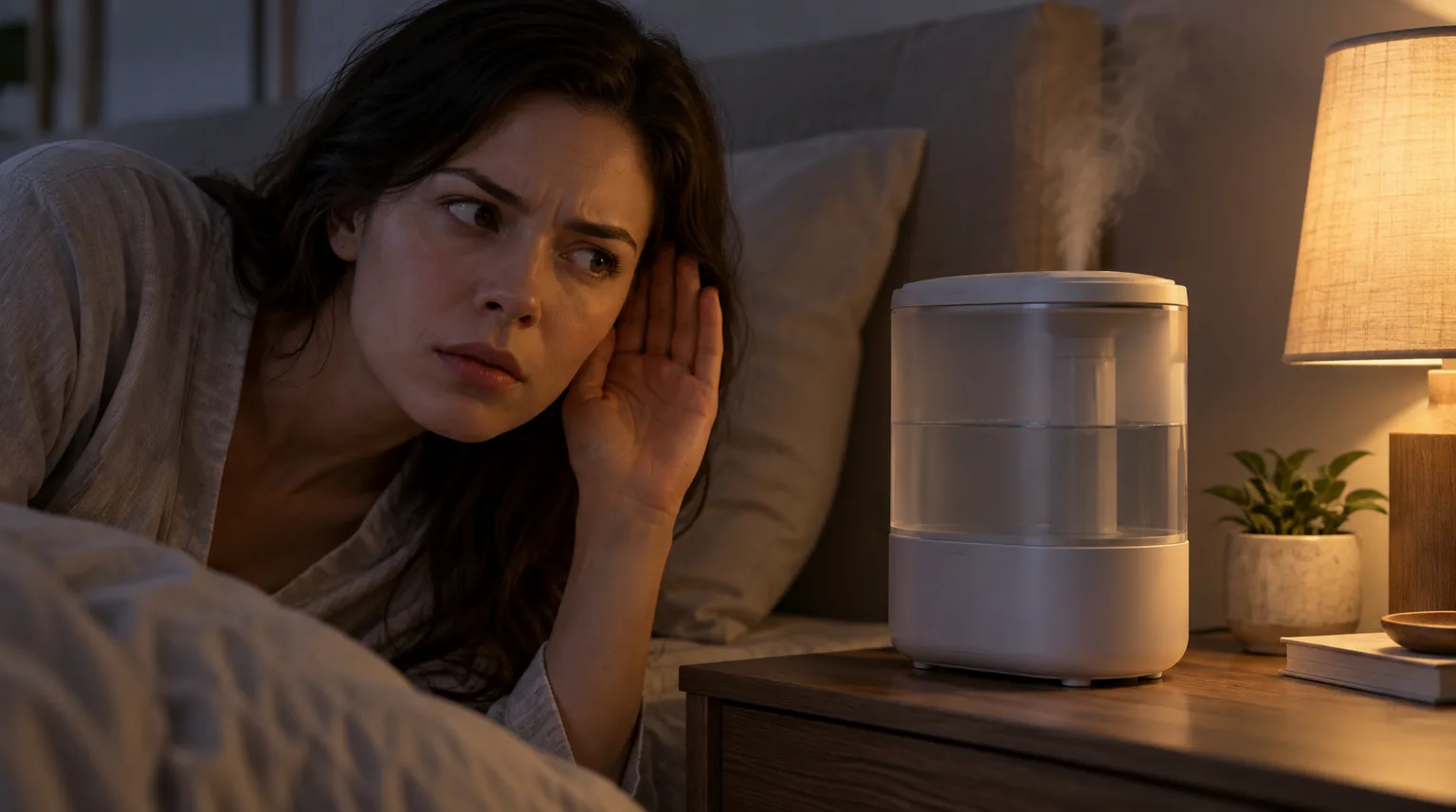
Lower the output, make sure the air inlet is not blocked by carpet, and stop if the noise suggests a malfunction.
Does this match what you are seeing?
Owners describe this Dreo HM311S problem in a few different ways. If one of these sounds like yours, this guide covers it:
- Making unusual noise
- Loud humidifier noise
- Strange water sound
- Making noise while running
Check these in order
- Lower the mist setting.
- Move the unit off carpet onto a hard, flat surface so the air inlet stays clear.
- If the noise remains abnormal, stop using the humidifier and contact Dreo support.
Diagnostic decision path
Dreo’s HM311S noise guidance first separates normal operating sound from an airflow problem created by placement. Carpet can block the inlet, and Dreo also recommends lowering mist output as a comparison. A noise that remains clearly abnormal after those checks should be escalated rather than chased inside the base.
- Move the HM311S to a hard, flat surface so the bottom air path is clear.
- Listen at more than one mist level.
- Stop immediately for burning odor, electrical arcing, or abnormal heat.
If: The sound drops after moving the unit off carpet
What it means: The inlet was being restricted by the soft surface.
Do next: Keep the humidifier on a hard, flat surface with the inlet clear.
If: The sound decreases normally at a lower mist setting
What it means: Part of the sound is tied to normal operating output.
Do next: Use the lowest output that meets the room need and continue monitoring.
If: The sound is a persistent grind, scrape, knock, or abnormal electrical buzz
What it means: That does not fit a simple blocked-inlet or output-setting explanation.
Do next: Turn the unit off and contact Dreo support.
If: The noise is accompanied by heat, smell, smoke, or sparking
What it means: The safe troubleshooting boundary has been crossed.
Do next: Unplug if safe and discontinue use.
How to interpret the retest
This interpretation applies to the Dreo HM311S only when the unit actually shows “The sound drops after moving the unit off carpet”. The Dreo HM311S source path describes that state as “The inlet was being restricted by the soft surface”. Check “Lower the mist setting”, then reproduce the same complaint under otherwise similar conditions. When the observation matches, continue with “Keep the humidifier on a hard, flat surface with the inlet clear”. If it does not match, this explanation does not fit the current Dreo HM311S unusual noise test.
On the Dreo HM311S, use “The sound decreases normally at a lower mist setting” as the observation to check first. On the Dreo HM311S, the source-backed interpretation is “Part of the sound is tied to normal operating output”. Make “Move the unit off carpet onto a hard, flat surface so the air inlet stays clear” the only deliberate change, then repeat the same symptom test. If the observation matches, continue with “Use the lowest output that meets the room need and continue monitoring”; if it does not, note that this Dreo HM311S unusual noise path did not match and move on.
For this branch, begin by asking what happens after “If the noise remains abnormal, stop using the humidifier and contact Dreo support”, does the Dreo HM311S show “The sound is a persistent grind, scrape, knock, or abnormal electrical buzz”? If you can reproduce it, the source-backed reading is “That does not fit a simple blocked-inlet or output-setting explanation”, so the next move is “Turn the unit off and contact Dreo support”. A non-match means you should not apply the action from that Dreo HM311S possibility; record that it did not match the unusual noise complaint and test the next documented condition.
On the next run, leave the other settings alone and look for “The noise is accompanied by heat, smell, smoke, or sparking” rather than changing several settings at once. If the Dreo HM311S matches that observation, use the interpretation “The safe troubleshooting boundary has been crossed” and follow with “Unplug if safe and discontinue use”. First, check “Lower the mist setting”. If the state does not appear again, keep that result and continue with the next documented possibility for unusual noise on the Dreo HM311S.
Model-specific context that changes the diagnosis
Separate the first two Dreo HM311S causes
Identify which of these two states matches the unit before trying another correction. If you can reproduce “The sound drops after moving the unit off carpet” on the Dreo HM311S, continue with “Keep the humidifier on a hard, flat surface with the inlet clear” because the documented meaning is “The inlet was being restricted by the soft surface”. If you reproduce “The sound decreases normally at a lower mist setting” instead, use “Use the lowest output that meets the room need and continue monitoring” because that state is interpreted as “Part of the sound is tied to normal operating output”. Test those two possibilities separately.
Run the Dreo HM311S checks in order
Keep the setup steady while you work through the next few checks. Start with “Lower the mist setting” and retest the Dreo HM311S. If the unusual noise complaint is unchanged, move to “Move the unit off carpet onto a hard, flat surface so the air inlet stays clear”. Use “If the noise remains abnormal, stop using the humidifier and contact Dreo support” only after judging the earlier result. Change only one thing at a time during this Dreo HM311S unusual noise retest so the result stays clear.
Common mistakes that make this harder to diagnose
- Testing the humidifier on carpet and blaming the unit for inlet-related noise.
- Running maximum output during every comparison.
- Opening the powered base to inspect a noise Dreo tells owners to escalate.
The issue is resolved when the HM311S runs with a normal steady sound on a hard surface and the noise scales reasonably with output. Persistent abnormal mechanical/electrical noise belongs to Dreo support.
Questions people ask about this exact symptom
Why is my Dreo HM311S making an unusual sound?
For the Dreo HM311S, lower the output, make sure the air inlet is not blocked by carpet, and stop if the noise suggests a malfunction. For this unusual noise check on the Dreo HM311S, start with “Lower the mist setting” and check the result before making another change. If the behavior is unchanged, continue with “Move the unit off carpet onto a hard, flat surface so the air inlet stays clear”.
What should I check first if my Dreo HM311S makes an unusual or loud sound?
Keep this sequence to one manufacturer-documented change per retest. On the Dreo HM311S, begin with “Lower the mist setting” and observe the result. Continue to “Move the unit off carpet onto a hard, flat surface so the air inlet stays clear”, then “If the noise remains abnormal, stop using the humidifier and contact Dreo support”, only if the earlier step does not change the result. Keep the comparison simple enough that each result means something.
When should I contact Dreo about this Dreo HM311S problem?
If the Dreo HM311S still has the same problem after the manual-supported checks for unusual noise, contact Dreo rather than disassembling the unit. Tell support what changed after the last unusual noise check on the Dreo HM311S, and do not bypass any protection or interlock. Do not open powered sections on the Dreo HM311S or assume an internal failed part unless Dreo documents that procedure for this unusual noise case.
Why this path is model-specific
Dreo’s HM311S FAQ specifically warns against carpet blocking the inlet and advises stopping use/contacting support for a suspected malfunction.
For the Dreo HM311S, the machine type matters: it is ultrasonic. Visible mist is part of normal output when mist production is active, so a true no-mist complaint deserves model-specific troubleshooting.
Compare this symptom across verified models
If you are still deciding whether this behavior is normal or model-specific, use the symptom hub to compare only manufacturer-linked guides. Keep the Dreo HM311S instructions above as the controlling path for this machine.
If the problem is still there
If the checks above do not change the symptom, use the manufacturer support path for this exact model. We intentionally stop before undocumented resets, sensor bypasses, internal mains work, or parts replacement that the consumer manual does not authorize.
What we do not recommend
Do not defeat a float, water-level sensor, overheat protection, interlock, or other safety feature. Do not open mains-powered sections for live testing. If the unit smells burned, becomes abnormally hot, smokes, sparks, has water near electrical parts, or repeatedly trips a circuit, stop using it and keep clear. Unplug it only if the plug, outlet, and surrounding area are dry and safe to reach; otherwise do not touch wet equipment and contact manufacturer support for next steps.
Primary source for this diagnosis
Source checked during the September 4, 2026 editorial review. Manufacturer documents can change; a material re-review updates this guide’s reviewed date rather than stamping unrelated pages.