
Check the water-pump tube, lower the fan speed, and refill the tank using the documented procedure. Stop if the noise remains abnormal.
Does this match what you are seeing?
Owners describe this Levoit Superior 6000S problem in a few different ways. If one of these sounds like yours, this guide covers it:
- Making unusual noise
- Loud humidifier noise
- Strange water sound
- Making noise while running
Check these in order
- Confirm the water-pump tube is seated in the support-frame inlet.
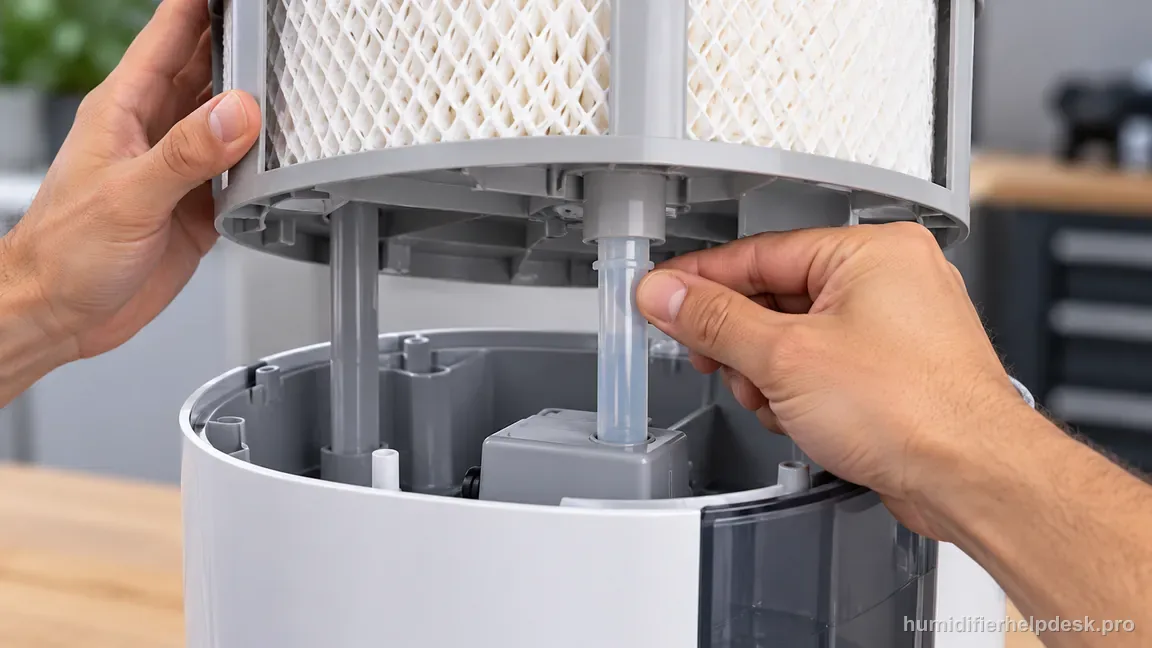
Illustrative: Unplug the unit, lift the top and support frame, then confirm the water-pump tube is fully seated in its inlet. - Lower the fan speed and listen again.
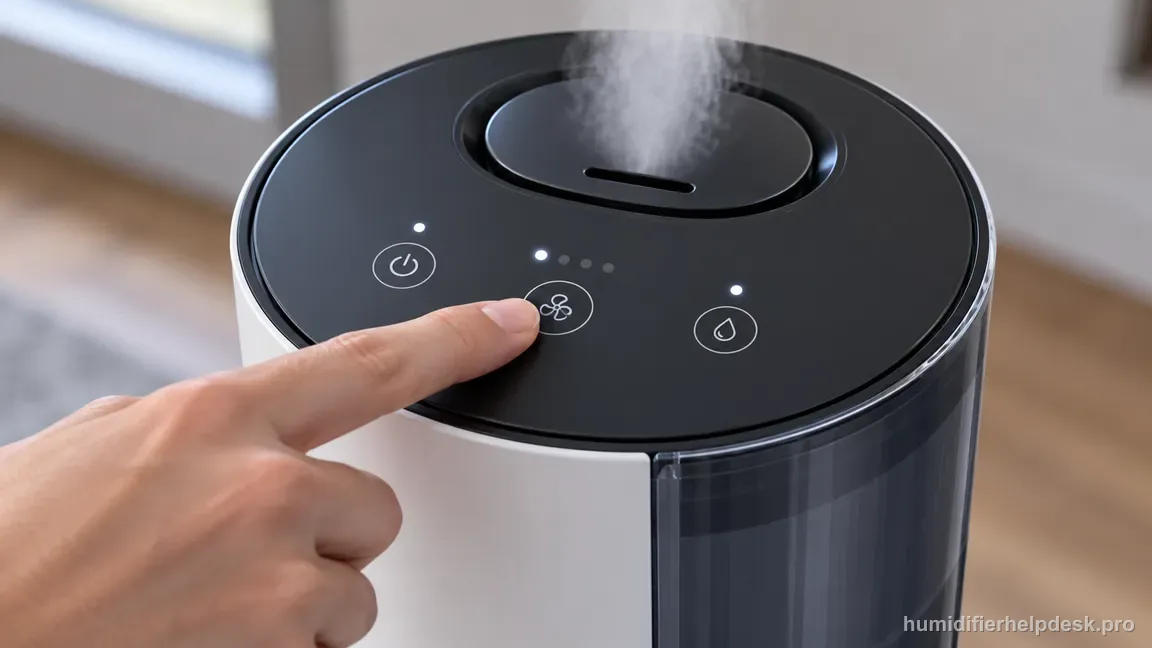
Illustrative: Select a lower fan speed on the control panel, then listen again to see whether the unusual noise changes. - Empty and refill the tank according to the manual.
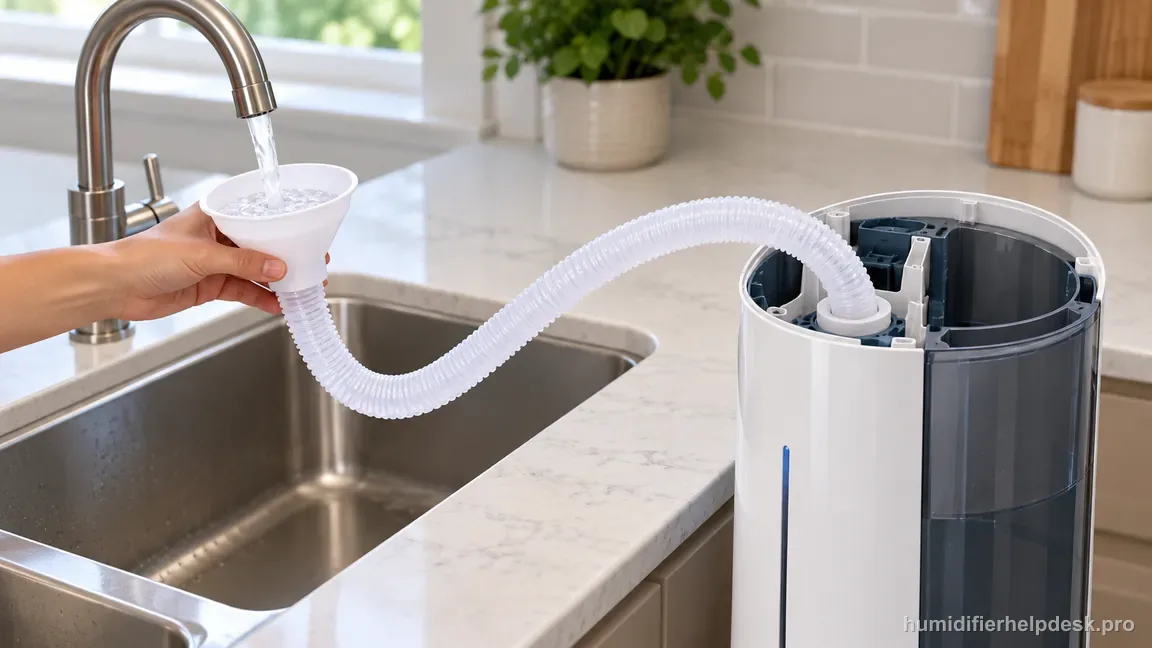
Illustrative: Empty and refill through the included hose at the support-frame inlet; do not pour water through the humidifier top. - If the unusual noise continues, stop using the humidifier and contact Levoit support.
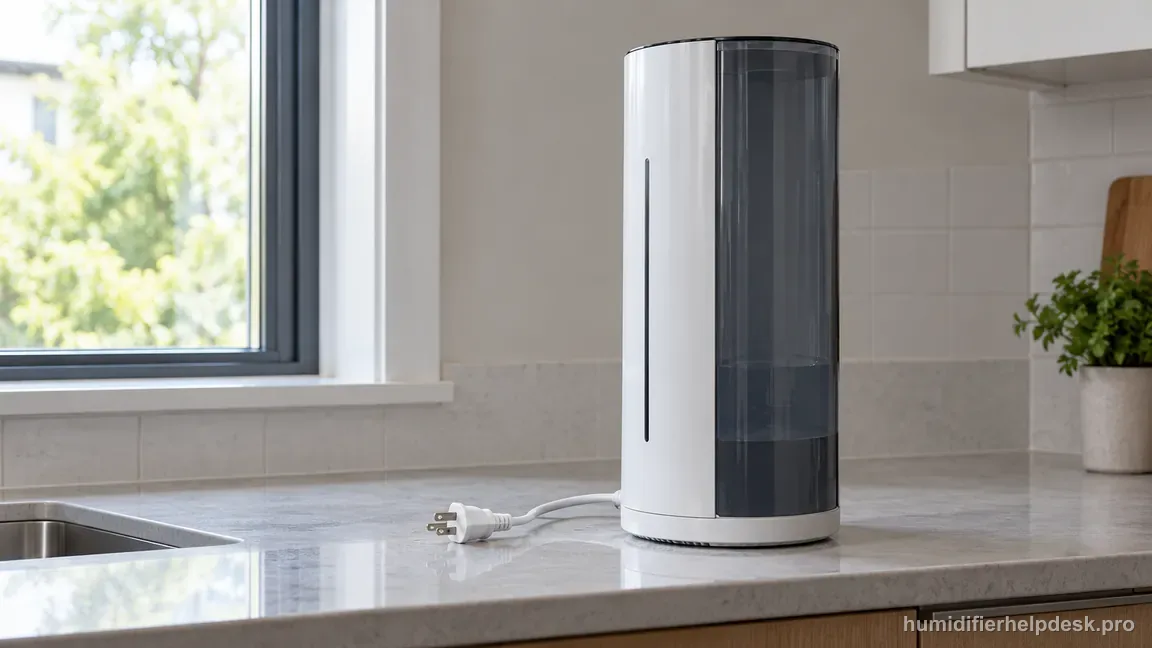
Illustrative: Stop using and unplug the humidifier if the noise remains abnormal, then contact Levoit support.
Diagnostic decision path
The Superior 6000S troubleshooting table gives a short, specific noise path: check the water-pump tube, compare fan speed, and empty/refill the tank. Those checks help separate normal high-airflow sound or water-path noise from an abnormal sound that should be escalated.
- Note whether the noise changes with fan speed.
- Turn the unit off before checking the user-removable support frame and pump-tube seating.
- Identify whether the noise began after cleaning, wick replacement, or refilling.
If: The noise began after the wick/support frame was reassembled
What it means: The water-pump tube may not be seated in the support-frame inlet as documented.
Do next: Power down and reseat the pump tube and user-removable frame parts correctly.
If: The sound becomes much quieter on a lower fan speed
What it means: A substantial portion of the sound is linked to airflow/fan setting rather than an independent mechanical fault.
Do next: Use a lower fan speed if it still provides enough humidification, and listen for any separate abnormal sound.
If: The sound is associated with the water path and persists after correct tube seating
What it means: Levoit also lists emptying and refilling the tank as a documented noise check.
Do next: Empty and refill the tank using the manual procedure, then retest without changing other variables.
If: Grinding, harsh mechanical noise, or another unusual sound remains after these checks
What it means: The documented consumer noise checks have not resolved the symptom.
Do next: Stop using the humidifier and contact Levoit rather than opening the fan/pump system.
How to interpret the retest
Begin this branch with “Confirm the water-pump tube is seated in the support-frame inlet”. Then compare the Levoit Superior 6000S with “The noise began after the wick/support frame was reassembled”. If those states line up, the documented reading is “The water-pump tube may not be seated in the support-frame inlet as documented” and then “Power down and reseat the pump tube and user-removable frame parts correctly”. If the comparison fails, step away from this Levoit Superior 6000S path and continue; that non-match helps rule out this explanation for the loud or unusual noise complaint.
Do not assign this cause until you have observed “The sound becomes much quieter on a lower fan speed”. For the Levoit Superior 6000S, use “Lower the fan speed and listen again” as the controlled test. If the same observation appears, the source meaning is “A substantial portion of the sound is linked to airflow/fan setting rather than an independent mechanical fault” and the next action is “Use a lower fan speed if it still provides enough humidification, and listen for any separate abnormal sound”. If it does not appear, record the non-match and continue through the remaining Levoit Superior 6000S checks for loud or unusual noise.
Keep the other conditions steady and compare the result around this check. Check “Empty and refill the tank according to the manual” on the Levoit Superior 6000S, then look specifically for “The sound is associated with the water path and persists after correct tube seating”. A match supports the manual's interpretation “Levoit also lists emptying and refilling the tank as a documented noise check” and sends you to “Empty and refill the tank using the manual procedure, then retest without changing other variables”. If the observation is missing, that result narrows the Levoit Superior 6000S loud or unusual noise diagnosis without jumping to an unrelated reset.
Model-specific context that changes the diagnosis
Two Levoit Superior 6000S clues that point to different fixes
Before making another change, decide which of these two states you can actually reproduce. If you can reproduce “The noise began after the wick/support frame was reassembled” on the Levoit Superior 6000S, continue with “Power down and reseat the pump tube and user-removable frame parts correctly” because the documented meaning is “The water-pump tube may not be seated in the support-frame inlet as documented”. If you reproduce “The sound becomes much quieter on a lower fan speed” instead, use “Use a lower fan speed if it still provides enough humidification, and listen for any separate abnormal sound” because that state is interpreted as “A substantial portion of the sound is linked to airflow/fan setting rather than an independent mechanical fault”. Test those two possibilities separately.
Retest loud or unusual noise after each correction
After each change, rerun the same symptom check before continuing. For the Levoit Superior 6000S, begin with “Confirm the water-pump tube is seated in the support-frame inlet”. If that does not change the outcome, continue to “Lower the fan speed and listen again”, followed by “Empty and refill the tank according to the manual” if needed. During this Levoit Superior 6000S loud or unusual noise retest, avoid changing water level, placement, mode, and cleaning state together unless the step itself requires it.
Common mistakes that make this harder to diagnose
- Assuming every high-speed airflow sound is a broken fan.
- Ignoring the pump-tube connection after cleaning or wick service.
- Opening the powered pump/fan assembly to chase an abnormal noise.
- Changing multiple assembly parts at once and losing the cause/effect of the test.
The noise complaint is resolved when correct pump-tube seating, a normal refill, and an appropriate fan speed leave only expected airflow/water sound. Persistent unusual mechanical or electrical noise is the point to stop and use Levoit support.
Questions people ask about this exact symptom
Why is my Levoit Superior 6000S making an unusual sound?
For the Levoit Superior 6000S, check the water-pump tube, lower the fan speed, and refill the tank using the documented procedure; stop if the noise remains abnormal. For this loud or unusual noise check on the Levoit Superior 6000S, start with “Confirm the water-pump tube is seated in the support-frame inlet” and check the result before making another change. If the behavior is unchanged, continue with “Lower the fan speed and listen again”.
What should I check first if my Levoit Superior 6000S makes an unusual or loud sound?
Make one supported correction at a time so the result stays interpretable. On the Levoit Superior 6000S, begin with “Confirm the water-pump tube is seated in the support-frame inlet” and observe the result. Continue to “Lower the fan speed and listen again”, then “Empty and refill the tank according to the manual”, only if the earlier step does not change the result. Keep the comparison simple enough that each result means something.
When should I contact Levoit about this Levoit Superior 6000S problem?
Escalate the Levoit Superior 6000S to Levoit if the documented checks do not resolve loud or unusual noise. When you contact support about loud or unusual noise on the Levoit Superior 6000S, report the last condition you tested, what changed, and what stayed the same; do not guess at an internal part.
Why this path is model-specific
Levoit’s troubleshooting table lists pump-tube placement, fan speed, and empty/refill checks for loud or unusual noise, then directs owners to support if it may be malfunctioning.
For the Levoit Superior 6000S, the machine type matters: it is evaporative. Its moisture output is not supposed to look like ultrasonic fog, so “I cannot see mist” by itself is not evidence of a failure.
This symptom appears on other humidifiers too, but the meaning and reset path can change by technology, sensor logic, and control layout. Use the exact model source above before borrowing a fix from a neighboring model.
Compare this symptom across verified models
If you are still deciding whether this behavior is normal or model-specific, use the symptom hub to compare only manufacturer-linked guides. Keep the Levoit Superior 6000S instructions above as the controlling path for this machine.
If the problem is still there
If the checks above do not change the symptom, use the manufacturer support path for this exact model. We intentionally stop before undocumented resets, sensor bypasses, internal mains work, or parts replacement that the consumer manual does not authorize.
What we do not recommend
Do not defeat a float, water-level sensor, overheat protection, interlock, or other safety feature. Do not open mains-powered sections for live testing. If the unit smells burned, becomes abnormally hot, smokes, sparks, has water near electrical parts, or repeatedly trips a circuit, stop using it and keep clear. Unplug it only if the plug, outlet, and surrounding area are dry and safe to reach; otherwise do not touch wet equipment and contact manufacturer support for next steps.
Primary source for this diagnosis
Source checked during the September 3, 2026 editorial review. Manufacturer documents can change; a material re-review updates this guide’s reviewed date rather than stamping unrelated pages.