
For a Classic 160 leak, unplug and dry the unit first so you can distinguish a fresh leak from spilled refill water or condensation. The manual then points to the silicone sealing ring at the outlet valve, high room humidity, water around the base, movement of a full unit, level placement, and the tank itself.
Does this match what you are seeing?
Owners describe this Levoit Classic 160 problem in a few different ways. If one of these sounds like yours, this guide covers it:
- Leaking water
- Water under the base
- Humidifier leaking from bottom
- Reservoir leaking or overflowing
Check these in order
- Unplug the unit and dry the exterior, base area, and supporting surface before the retest.
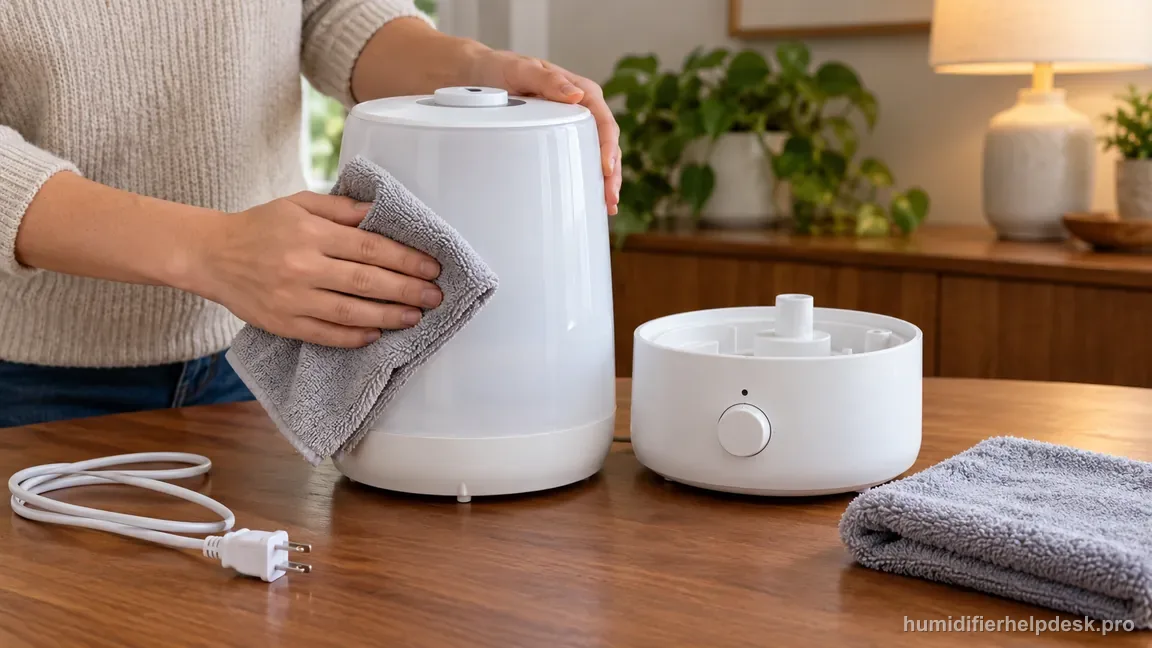
Illustrative: Dry the unit and surrounding surface before watching for fresh water. - Inspect from the outside that the silicone sealing ring around the water outlet valve is correctly positioned.
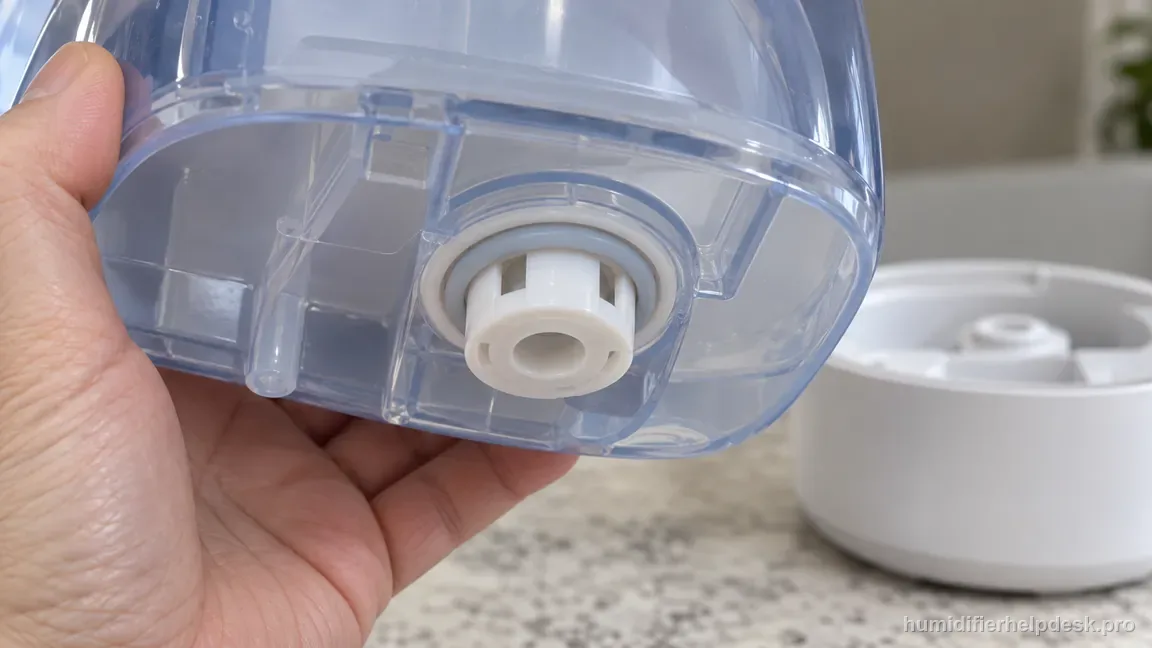
Illustrative: Check that the silicone sealing ring around the outlet valve is seated correctly; do not dismantle it. - If room humidity is high, lower output or stop and ventilate so condensation is not mistaken for a hardware leak.
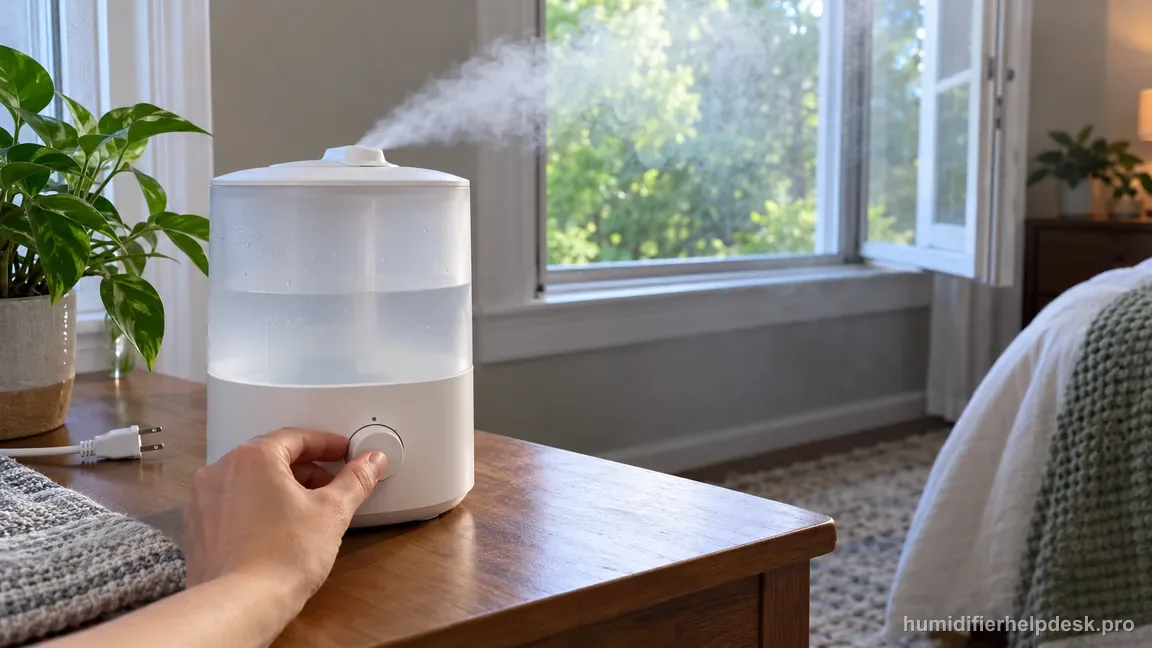
Illustrative: If room humidity is high, lower output or stop the unit and ventilate to distinguish condensation from a leak. - Keep the filled unit still and place it on a firm, flat, level surface.
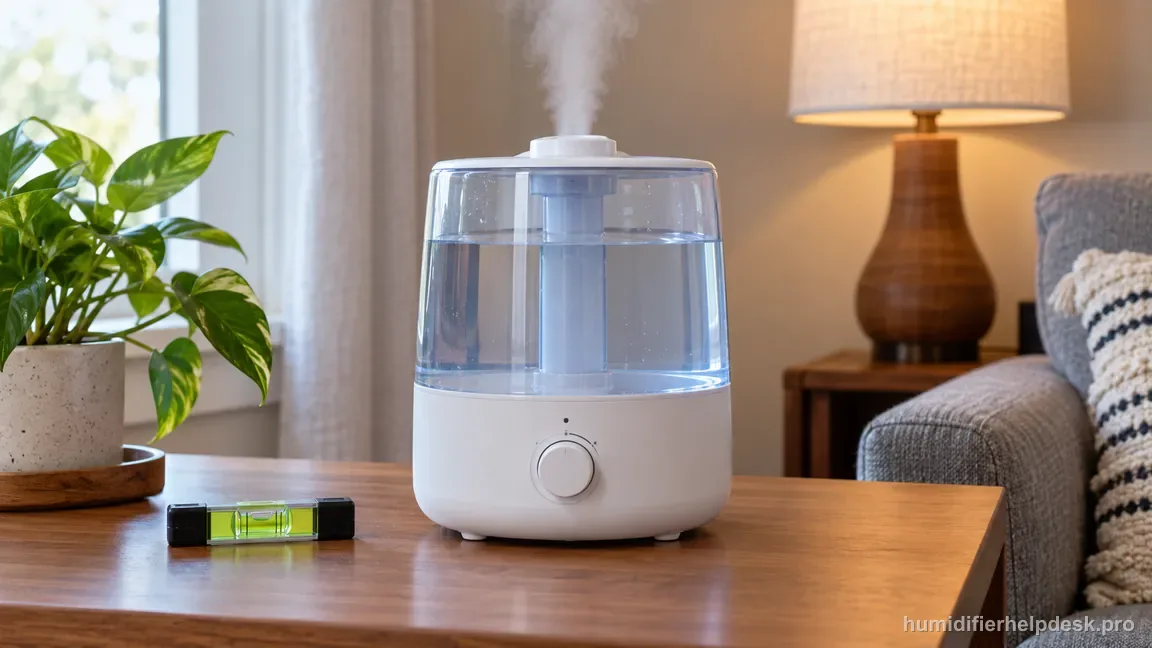
Illustrative: Keep the filled humidifier still and level during the leak test. - Check whether the tank itself produces a repeatable leak, stopping if water approaches any electrical area.
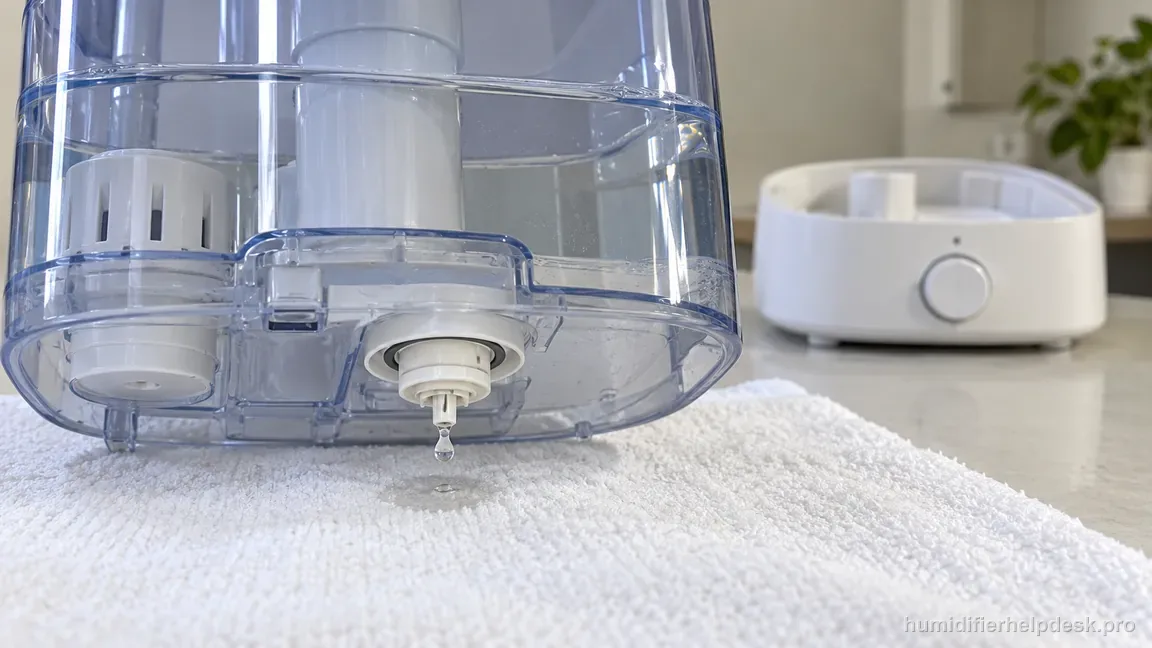
Illustrative: Check whether the tank leaks by itself; stop if water approaches electrical areas.
Diagnostic decision path
A Classic 160 leak should be diagnosed from a dry starting point. Water that was spilled during top filling, condensation from too much room humidity, and a repeatable tank or outlet-valve leak can all create the same search phrase, but they require different actions. The manual’s leak row focuses on the silicone sealing ring around the water outlet valve, high humidity, water around the base, shaking, level placement, and the tank. It does not tell the owner to open the base or borrow excess-base-water checks from the separate no-mist row.
- Switch the unit off, unplug it, and dry the tank exterior, base exterior, tabletop, and cord area before watching for fresh water.
- Use a stable, flat, water-resistant surface with the filled humidifier left stationary; do not create a leak test by tilting or shaking it.
- If water has entered the electrical base, reached the plug/outlet, or is accompanied by heat, sparking, or burning odor, stop without another powered run.
If: The first new droplet forms at the tank water-outlet valve
What it means: The manual identifies the silicone sealing ring around this valve as a specific external checkpoint.
Do next: With the unit unplugged, inspect the ring from the outside for correct placement. Do not add glue, stretch the seal, or dismantle the valve.
If: Moisture appears broadly on the table or nearby surfaces during high room humidity
What it means: The room may be receiving more mist than it can hold, creating condensation that looks like a leak.
Do next: Reduce mist or stop the unit, open the room to air exchange, redirect the nozzle away from surfaces, dry the area, and see whether localized water returns.
If: Water appears only after the humidifier is carried or rocked while full
What it means: Movement can push water through paths that are not active during normal stationary use, so the observation does not prove a defect.
Do next: Dry everything and repeat on a level surface without moving the humidifier. Avoid using motion as a diagnostic technique.
If: The tank leaks at the same point while separated from the base
What it means: A tank-side failure is more likely than condensation or water migrating from elsewhere on the assembled unit.
Do next: Keep the tank out of service and contact support for the appropriate replacement rather than improvising a patch.
If: Fresh water returns from beneath the base after the documented external causes are excluded
What it means: The problem is beyond the user-serviceable leak path and may involve a part inside the base.
Do next: Keep the Classic 160 unplugged and escalate with the observed location, seal condition, tank test, and room-humidity context.
How to interpret the retest
The manual’s leak row is narrower than the low-mist row. Do not automatically empty “excess base water” simply because that phrase appears elsewhere in the troubleshooting table; symptom rows should remain distinct unless the manual itself links them.
Condensation is evaluated by changing output and room moisture, not by replacing a tank. If the wetness disappears when humidity falls while the tank and seal remain untouched, that is useful evidence against a persistent mechanical leak.
Tank seating matters for operation, but a leak trace is strongest when old water has been removed and the first fresh droplet is observed. A large puddle after an unattended run contains much less location information.
A silicone sealing ring is an inspectable owner checkpoint, not a license to modify the valve. An improvised gasket or adhesive can change the valve geometry and create a second leak condition.
Electrical-area water is a stopping condition even when the amount looks small. Consumer troubleshooting should not involve energizing a wet base to see whether the leak becomes easier to locate.
Model-specific context that changes the diagnosis
Separate top-fill splash from an active leak
Classic 160 is designed for top filling, so water can be left on the cover, tank wall, or table during a refill. Drying before diagnosis is not cosmetic; it removes that historical water from the evidence. Only water that appears after the unit starts from dry conditions can be assigned to the current leak event with confidence.
Room humidity changes the meaning of water outside the machine
In an already humid space, visible mist can condense on cool furniture, a wall, or the humidifier itself. Lowering output and improving ventilation is therefore a legitimate diagnostic control. A leak that remains localized at a valve or tank seam after the room condition is corrected is more specific than diffuse dampness that disappears.
Support gets better evidence from a short map of the leak
Record whether water begins at the outlet-valve area, a tank seam, the top-fill area, or beneath the base; whether the tank leaks when separate; and whether the room was highly humid. Those details preserve the distinction between a replaceable tank problem, condensation, and a base problem that should not be opened by the owner.
Common mistakes that make this harder to diagnose
- Calling old refill water an active leak because the unit was not dried before the test.
- Tilting or shaking the full humidifier to make the source “show itself.”
- Assuming every puddle means a cracked tank without first checking room humidity and the outlet-valve seal.
- Opening the electrical base after external leak checks fail.
The leak complaint is resolved when the Classic 160 remains dry in a stationary retest after the specific external condition is corrected—such as proper sealing-ring placement, lower room humidity/output, level placement, or replacement of a leaking tank. A repeatable fresh leak from under the base or any water near electrical parts is not a DIY resolution; keep the appliance unplugged and use manufacturer support.
Questions people ask about this exact symptom
Why is there water around my Classic 160 even if the tank does not look cracked?
The manual’s leak path includes more than tank damage. Check the silicone sealing ring around the water outlet valve, room humidity, water left around the base, movement of the filled unit, and level placement. Dry everything before the test. If broad dampness stops after reducing mist and ventilating, condensation was more likely than a repeatable tank or base leak.
Is too much water in the base a Classic 160 leak cause?
The Classic 160 manual lists excess base water under little-or-no-mist troubleshooting, not in the water-leak row. For a leak, it points instead to the outlet-valve silicone sealing ring, high humidity, water around the base, shaking, level placement, and the tank. Keeping the symptom rows separate avoids turning one manual table into a generic list of unrelated checks.
What should I do if water leaks from under the Classic 160 base?
Unplug it and dry the area. If fresh water repeatedly returns from beneath the base after the tank, sealing ring, room humidity, handling, and level surface have been checked, stop owner troubleshooting. Do not open or re-energize a wet electrical base. Record the leak location and whether the tank leaks separately, then contact Levoit for service or replacement guidance.
Why this path is model-specific
The Classic 160 troubleshooting table lists the outlet-valve silicone sealing ring, high relative humidity, excess water around the base, shaking, level placement, and a leaking tank for water-leak complaints.
For the Levoit Classic 160, the machine type matters: it is ultrasonic. Visible mist is part of normal output when mist production is active, so a true no-mist complaint deserves model-specific troubleshooting.
This symptom appears on other humidifiers too, but the meaning and reset path can change by technology, sensor logic, and control layout. Use the exact model source above before borrowing a fix from a neighboring model.
Compare this symptom across verified models
If you are still deciding whether this behavior is normal or model-specific, use the symptom hub to compare only manufacturer-linked guides. Keep the Levoit Classic 160 instructions above as the controlling path for this machine.
If the problem is still there
If the checks above do not change the symptom, use the manufacturer support path for this exact model. We intentionally stop before undocumented resets, sensor bypasses, internal mains work, or parts replacement that the consumer manual does not authorize.
What we do not recommend
Do not defeat a float, water-level sensor, overheat protection, interlock, or other safety feature. Do not open mains-powered sections for live testing. If the unit smells burned, becomes abnormally hot, smokes, sparks, has water near electrical parts, or repeatedly trips a circuit, stop using it and keep clear. Unplug it only if the plug, outlet, and surrounding area are dry and safe to reach; otherwise do not touch wet equipment and contact manufacturer support for next steps.
Primary source for this diagnosis
Source checked during the September 4, 2026 editorial review. Manufacturer documents can change; a material re-review updates this guide’s reviewed date rather than stamping unrelated pages.