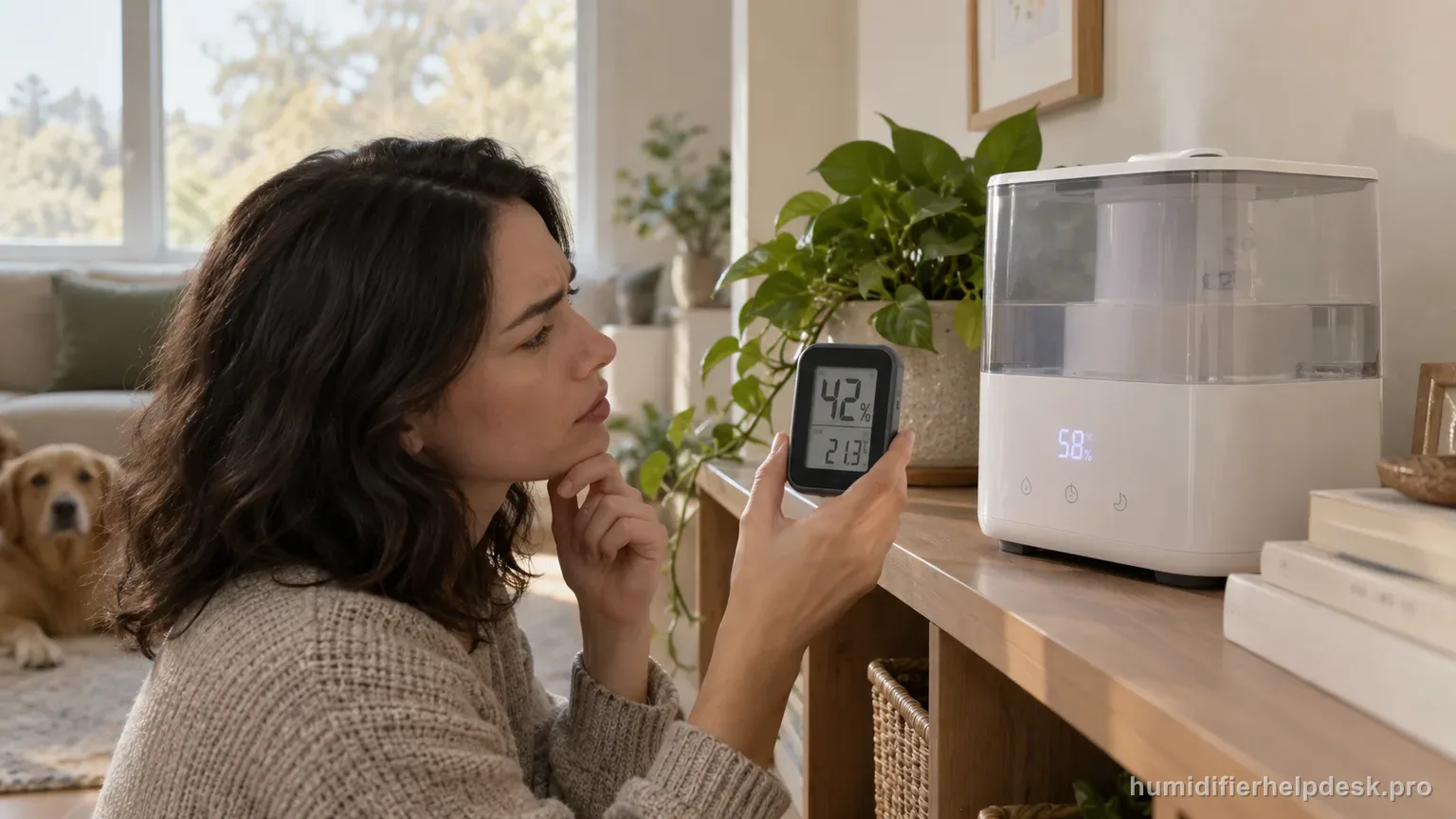
The LV600S sensor can be biased by room size, wall/corner placement, dust, or mist/moisture near the sensor inside the aroma-box area.
Does this match what you are seeing?
Owners describe this Levoit LV600S problem in a few different ways. If one of these sounds like yours, this guide covers it:
- Humidity reading wrong
- Humidity sensor inaccurate
- Humidity display too high
- Humidity display too low
Check these in order
- Keep the humidifier at least 12 in / 30 cm from walls and out of tight corners.
- Aim the nozzles away from the aroma-box/sensor area.
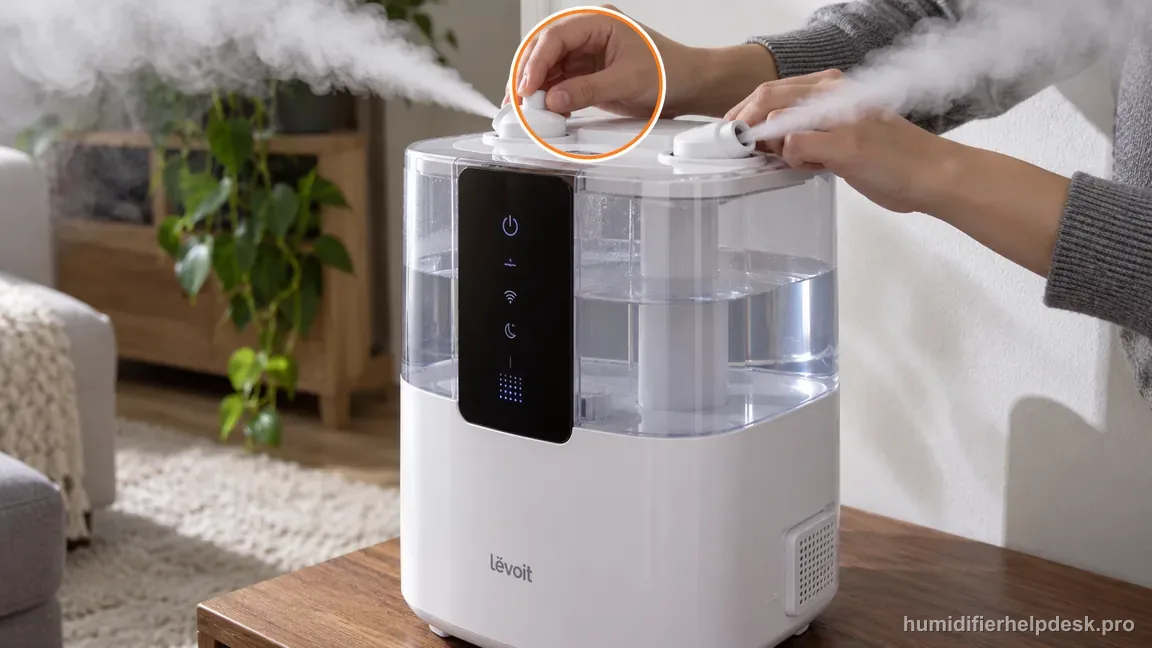
Aim both nozzles away from the aroma-box and humidity-sensor side. - Turn the humidifier off, remove the aroma box, and let the sensor area air-dry if moisture may have collected.
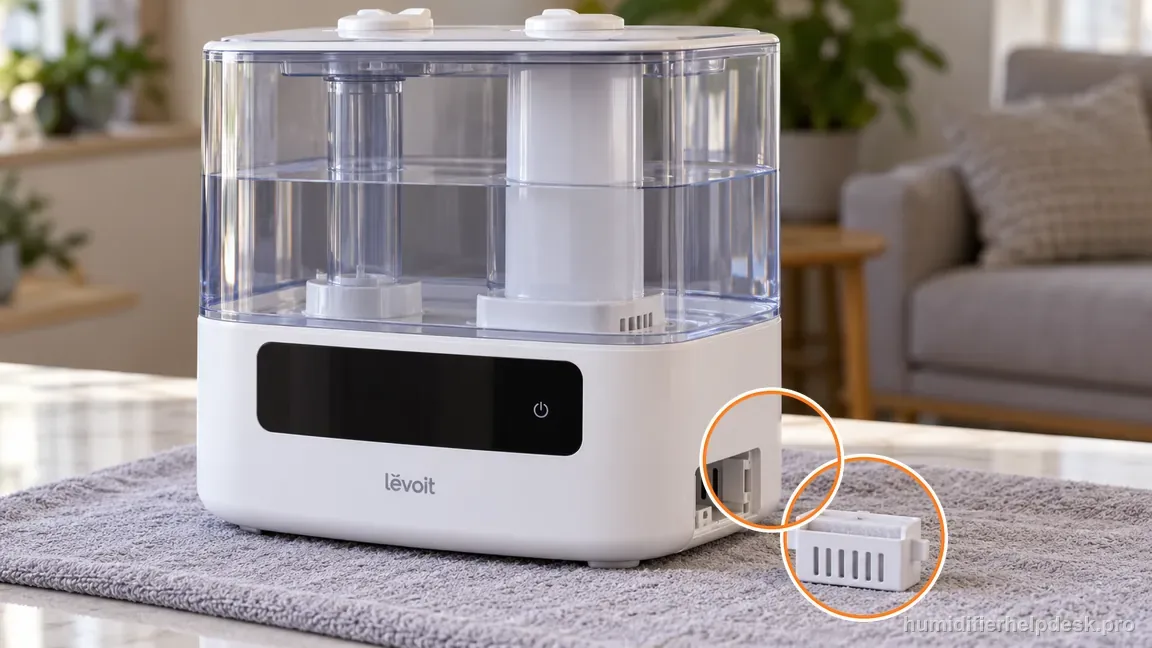
Turn off and unplug the humidifier, remove only the aroma box, and let the accessible sensor area air-dry. - Avoid dusty placement and compare readings after the room air mixes.
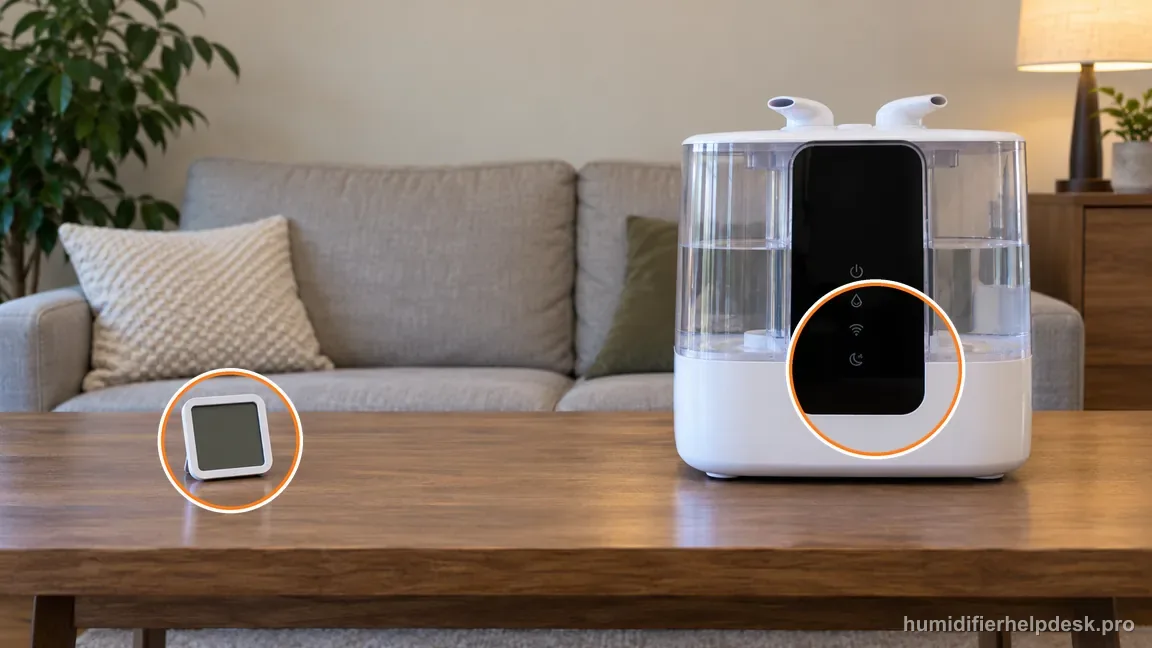
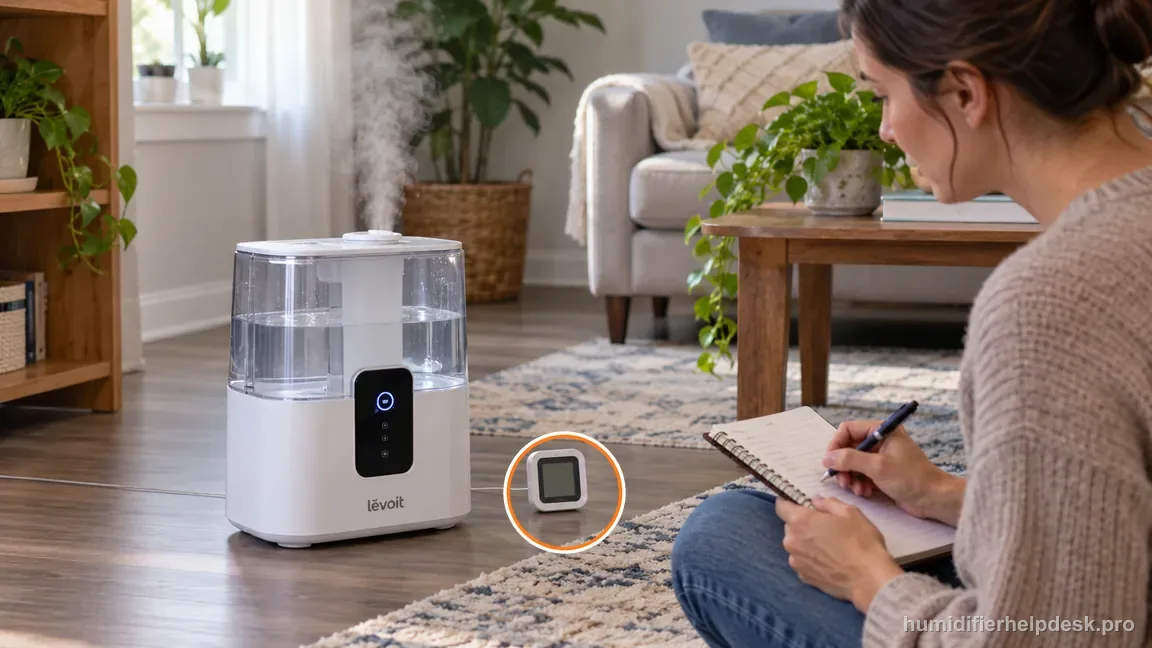
Compare at the same height in stable room air away from direct mist, windows, and vents.
Diagnostic decision path
LV600S humidity errors are often placement errors before they are sensor failures. Levoit lists room-size limits, walls/corners, dust, and moisture around the sensor in the aroma-box area. That means the best diagnosis is to normalize placement and dry/clean the sensor environment before comparing readings. LV600S has one of the clearest placement-based sensor checks in the Levoit manuals: wall/corner proximity, dust, and moisture near the aroma-box sensor can all distort RH. That makes a placement reset more valuable than immediately comparing calibration numbers.
- Move the LV600S at least 12 in / 30 cm from walls and out of tight corners.
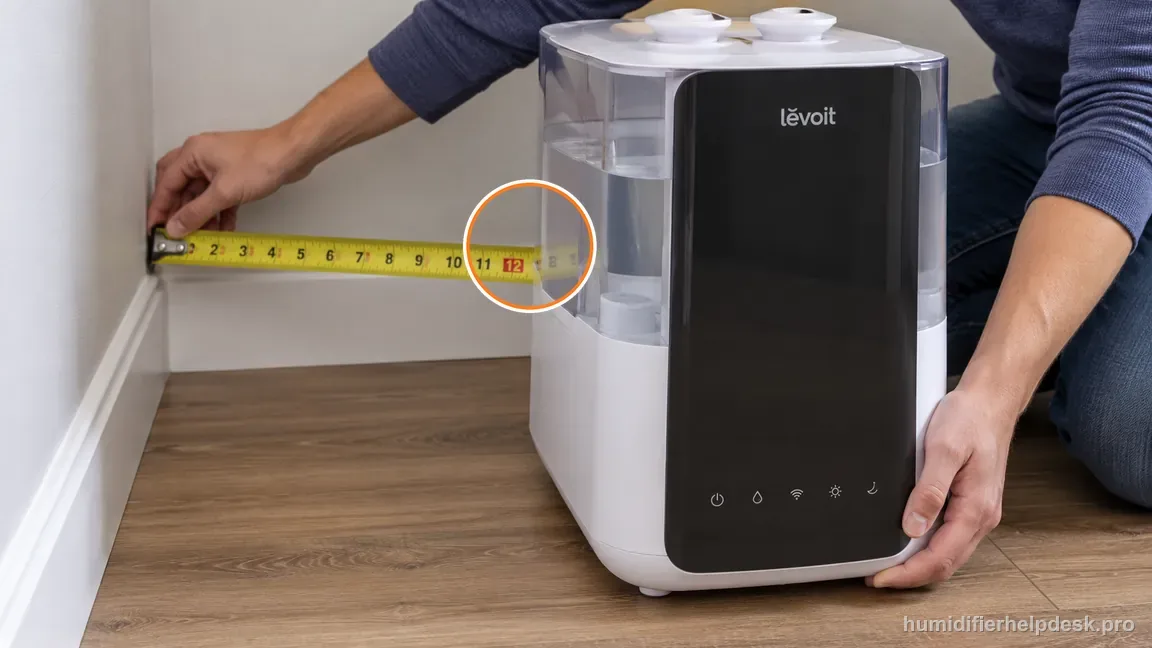
Move the LV600S at least 12 in / 30 cm from walls and out of tight corners. - Aim mist away from the aroma-box/sensor side.
- Compare only after the room has had time to mix rather than immediately after misting.
If: The reading improves after moving the unit away from a wall/corner
What it means: Placement was biasing the local air sampled by the sensor.
Do next: Keep the humidifier in the better-ventilated location.
If: The sensor area is damp or recently exposed to mist
What it means: Local moisture can make the reading temporarily unrepresentative.
Do next: Turn the unit off, remove the aroma box, let the sensor area air-dry, then retest.
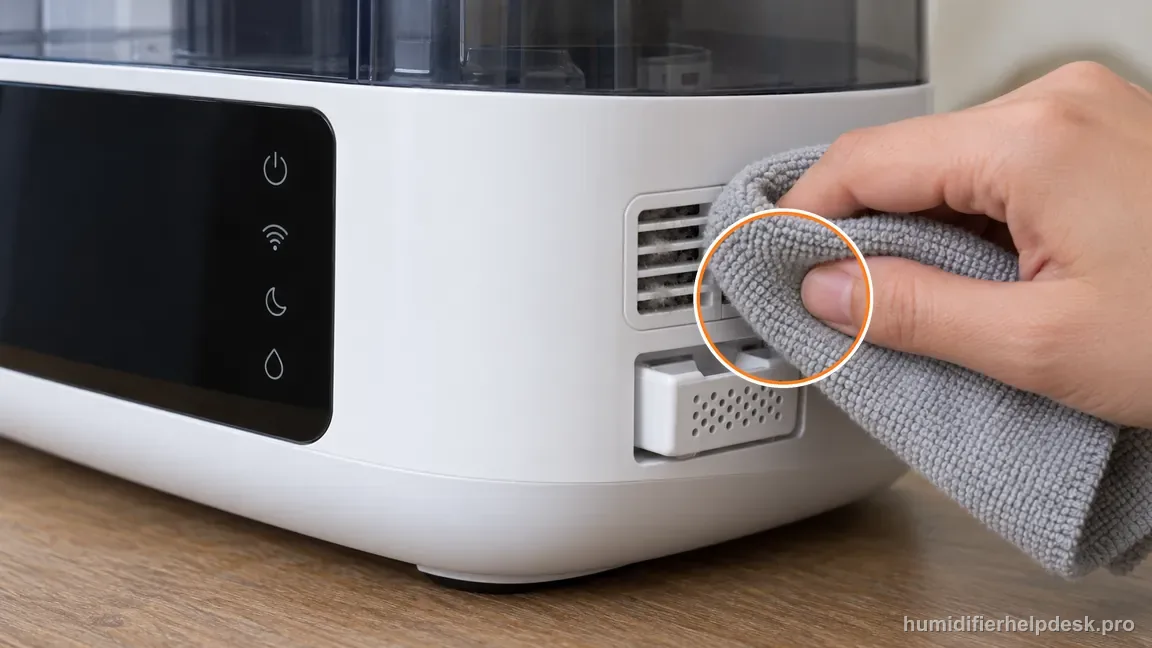
If: Dust is present around the sensor area
What it means: Contamination may interfere with normal sensing.
Do next: Clean the accessible area as directed and compare again after the room stabilizes.
If: A large stable mismatch remains under the same room conditions
What it means: Placement, moisture, and dust no longer explain the error.
Do next: Use Levoit support rather than attempting internal sensor calibration.
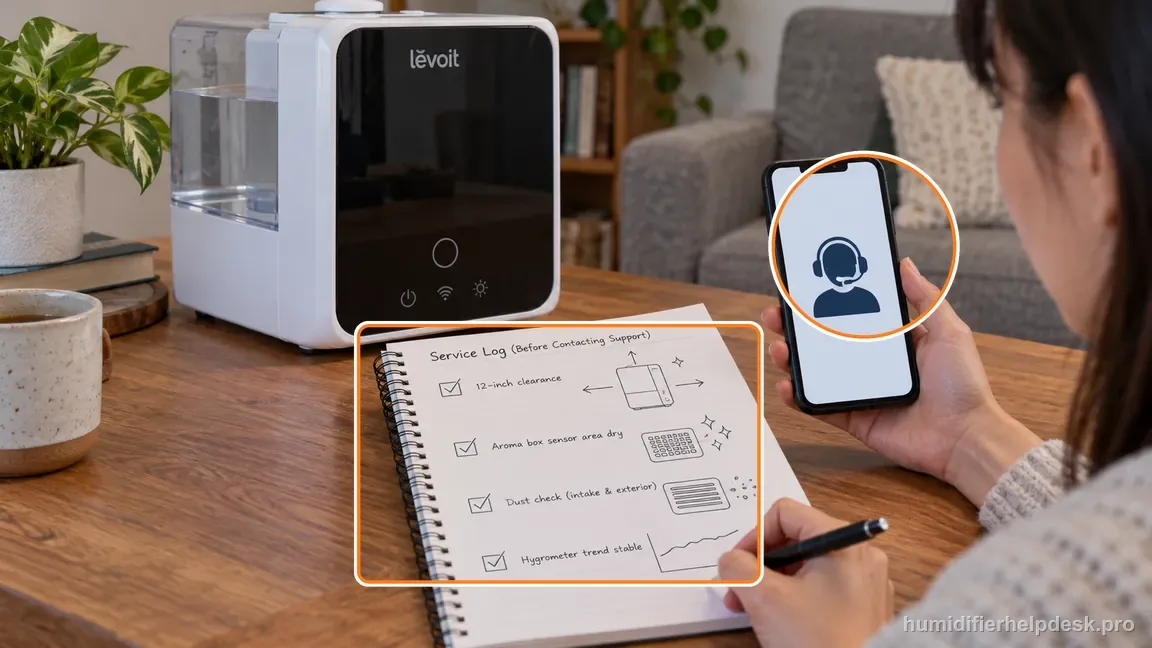
If: The documented checks are complete, but the same symptom remains after a controlled retest
What it means: The owner-facing evidence on this page no longer explains the repeat symptom.
Do next: Document the 12-inch clearance, aroma-box sensor drying, dust check, and reference-meter trend before escalating the LV600S reading to Levoit.
How to interpret the retest
Treat the LV600S humidity number as a local sensor reading first, not as a laboratory measurement of every point in the room. Levoit specifically lists room-size conditions, walls/corners, dust, and moisture around the sensor as reasons the displayed percentage can look wrong. Placement and sensor environment therefore belong before any sensor-failure theory.
Move the humidifier at least 12 in / 30 cm from walls and out of a tight corner, then allow room air to mix before comparing readings. A sensor sitting in a stagnant pocket can legitimately see different air from a hygrometer across the room. Change placement first without simultaneously changing target humidity or mist level.
Aim the mist nozzles away from the aroma-box/sensor area. If the plume repeatedly feeds moisture back toward the sensor, the LV600S can sample air that is wetter than the room as a whole. A reading that becomes more plausible after redirecting the nozzle points to local mist exposure rather than a broken sensor.
If moisture may have collected near the sensor, turn the humidifier off, remove the aroma box as the manual directs, and let the area air-dry before retesting. Do not probe or wipe inside the sensor with tools. The diagnostic goal is simply to remove local moisture bias and see whether the displayed humidity stabilizes afterward.
Dusty placement can also affect the sensor environment. Keep the surrounding air path reasonably clean and unobstructed, then compare the LV600S with another hygrometer only after both have had time to sit in the same general room conditions. Do not expect two sensors in different micro-locations to match instantly or exactly.
The issue is resolved when the reading becomes stable and reasonably consistent with room conditions after placement, nozzle direction, drying, and dust checks. If the displayed value remains clearly implausible under controlled conditions, contact Levoit for the exact LV600S rather than opening the aroma-box electronics or attempting calibration not provided by the manual.
Pull the LV600S at least 12 in / 30 cm away from walls and out of a corner before comparing it with another hygrometer. Aim both nozzles away from the aroma-box/sensor side, remove the aroma box if needed, and let a damp sensor area air-dry. These are model-specific external checks and should be completed before support is asked to evaluate the sensor.
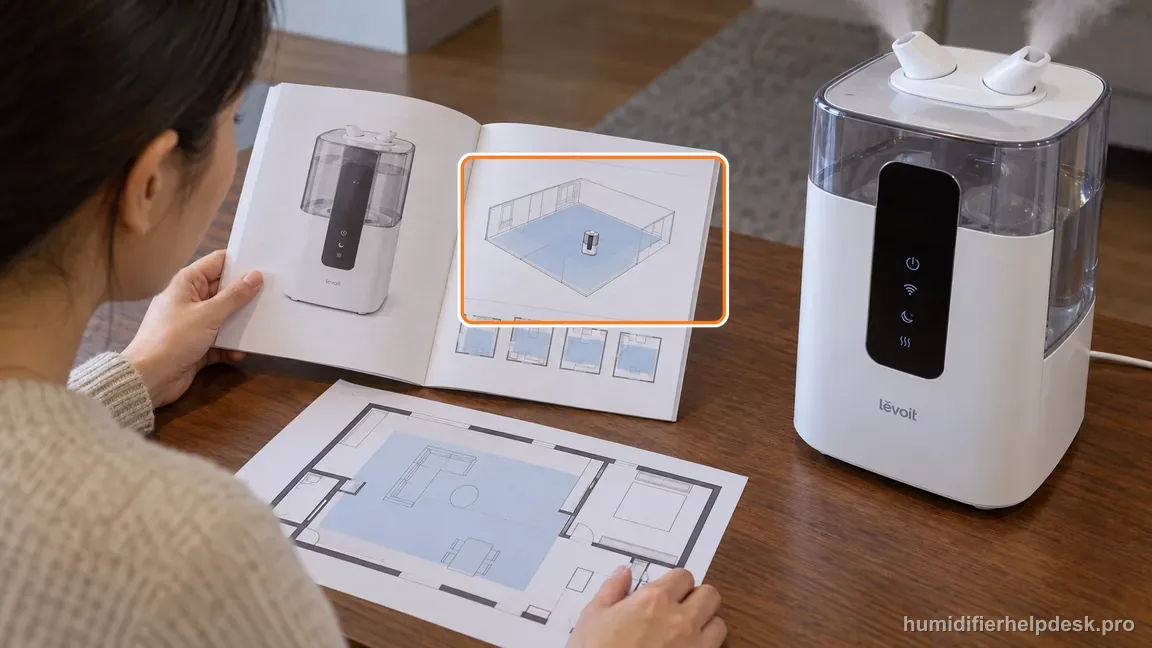
The LV600S serves a much larger stated space—about 430–753 ft² / 40–70 m²—than Dual 200S, so do not copy the smaller model’s room-size assumptions. Even in a room within range, put the reference hygrometer in the same general zone and wait after changing placement. A stable trend is more useful than demanding exact digit-for-digit agreement.
Model-specific context that changes the diagnosis
The aroma-box side is part of the LV600S sensor diagnosis
Levoit places the humidity sensing area around the aroma-box side of the base. If mist is directed back toward that area, the unit can sample wetter air than the room average. Point the nozzles away, let the area dry, and retest. Do not insert tools into the sensing area or attempt an internal calibration that the owner manual does not provide.
Twelve inches of wall clearance is not cosmetic
The manual specifically says wall or corner placement can prevent a proper room-humidity reading. Move the LV600S at least 12 in / 30 cm from the wall and give surrounding air room to circulate. If the displayed percentage becomes more plausible afterward, keep the better placement; the change itself is evidence that the old microclimate was biasing the sensor.
Dust is a separate cause from moisture
A dry sensor can still read poorly if its environment is dusty. Clean only the accessible area according to normal maintenance and avoid placing the LV600S where dust is constantly drawn around the sensor. After cleaning/relocation, compare again under stable conditions. A persistent large mismatch after wall, moisture, plume, and dust checks is the point to use Levoit support.
Common mistakes that make this harder to diagnose
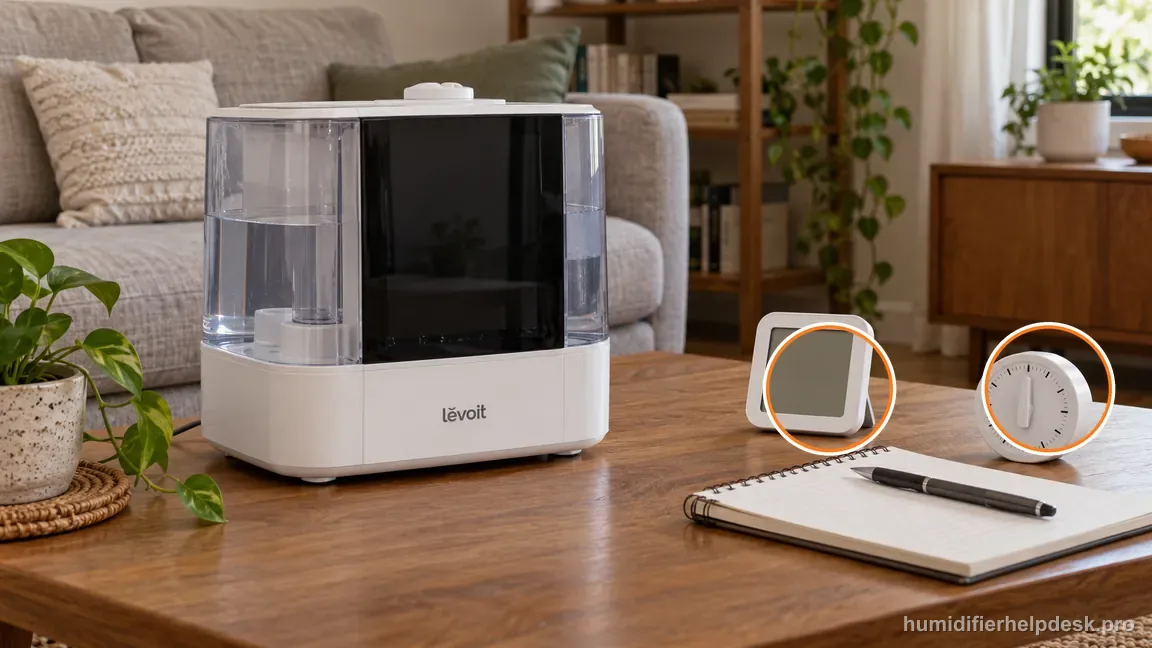
- Putting the comparison hygrometer across the room in a different microclimate.
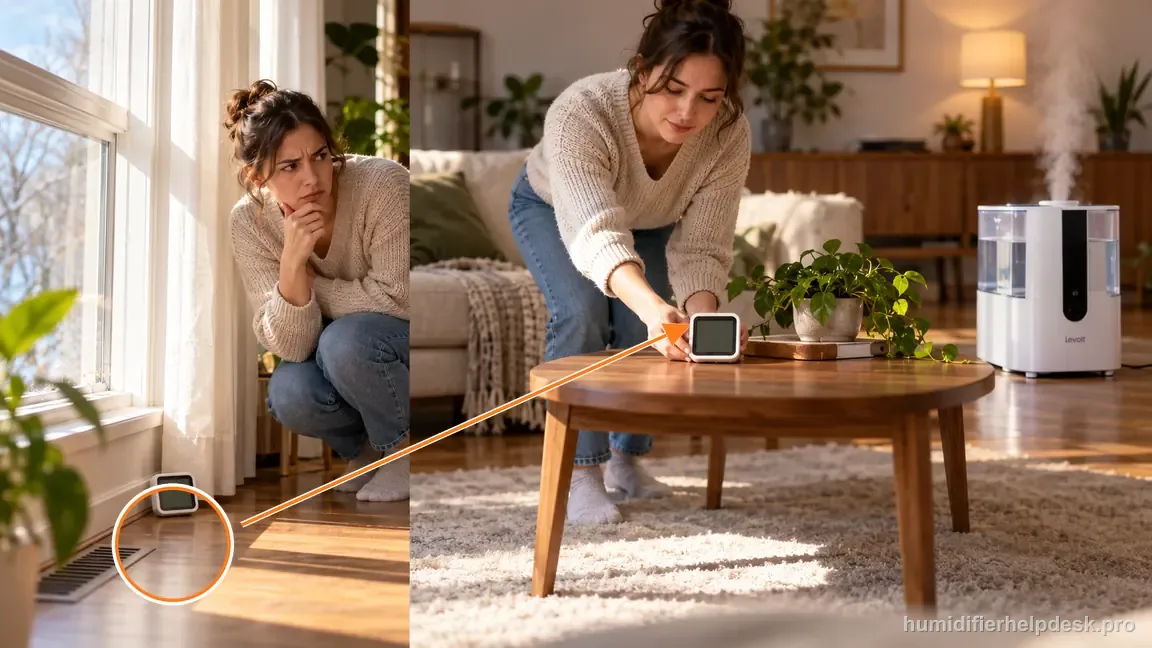
Do not compare readings from different microclimates beside windows, vents, or floor drafts. - Aiming mist toward the sensor and interpreting the resulting high reading as a failed sensor.
- Trying to calibrate or replace the sensor before correcting placement.
The reading is acceptable when it tracks room changes consistently after correct placement and a dry sensor environment. A persistent large mismatch after those controls is the escalation point.
Questions people ask about this exact symptom
Why does my Levoit LV600S show a different humidity than my hygrometer?
Placement can make the two sensors sample different air. Move the LV600S at least 12 in / 30 cm from walls or corners, aim the nozzles away from the aroma-box sensor area, let any moisture there air-dry, and avoid dusty placement. Compare again only after the room stabilizes, with the reference meter in the same general zone.
Can the LV600S humidity sensor get wet from its own mist?
Yes, local moisture around the sensor is one of Levoit’s documented causes of an incorrect percentage. Turn the humidifier off, let the sensor area dry, and redirect the nozzles so mist does not settle near the aroma box. If the reading normalizes after drying, that is stronger evidence than an immediate assumption of sensor failure.
How far should the LV600S be from a wall for a humidity test?
Levoit specifically calls out placement within 12 in / 30 cm of a wall or in a corner as a condition that can distort the reading. Move the unit beyond that clearance, allow air to circulate, and compare trends again. If the value remains obviously wrong after moisture, dust, and placement checks, contact Levoit rather than opening the sensor area.
Why this path is model-specific
Levoit lists effective room size, sensor moisture, nearby walls/corners, and dust as causes of incorrect humidity readings on the LV600S.
For the Levoit LV600S, the machine type matters: it is hybrid. Visible mist is part of normal output when mist production is active, so a true no-mist complaint deserves model-specific troubleshooting.
This symptom appears on other humidifiers too, but the meaning and reset path can change by technology, sensor logic, and control layout. Use the exact model source above before borrowing a fix from a neighboring model.
Compare this symptom across verified models
If you are still deciding whether this behavior is normal or model-specific, use the symptom hub to compare only manufacturer-linked guides. Keep the Levoit LV600S instructions above as the controlling path for this machine.
If the problem is still there
If the checks above do not change the symptom, use the manufacturer support path for this exact model. We intentionally stop before undocumented resets, sensor bypasses, internal mains work, or parts replacement that the consumer manual does not authorize.
What we do not recommend
Do not defeat a float, water-level sensor, overheat protection, interlock, or other safety feature. Do not open mains-powered sections for live testing. If the unit smells burned, becomes abnormally hot, smokes, sparks, has water near electrical parts, or repeatedly trips a circuit, stop using it and keep clear. Unplug it only if the plug, outlet, and surrounding area are dry and safe to reach; otherwise do not touch wet equipment and contact manufacturer support for next steps.
Primary source for this diagnosis
Source checked during the September 4, 2026 editorial review. Manufacturer documents can change; a material re-review updates this guide’s reviewed date rather than stamping unrelated pages.