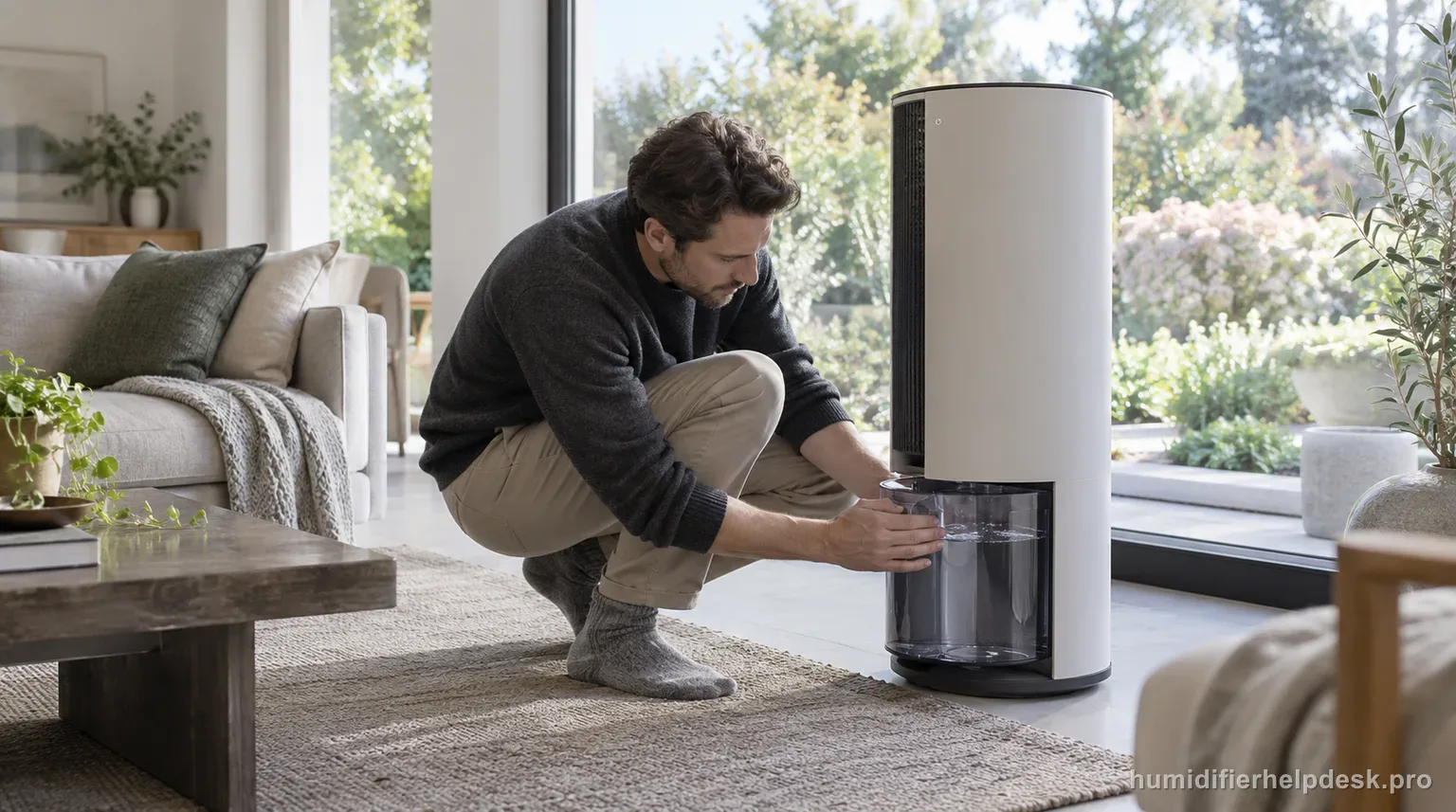
On the Large Room model, slow tank use is not automatically a failure. The manual says evaporation slows when room humidity is already high; in a dry room, blocked airflow becomes the next check.
Does this match what you are seeing?
Owners describe this Canopy Large Room Humidifier problem in a few different ways. If one of these sounds like yours, this guide covers it:
- Water not draining from tank
- Tank full but base is dry
- Water not feeding into reservoir
- Water level not going down
Check these in order
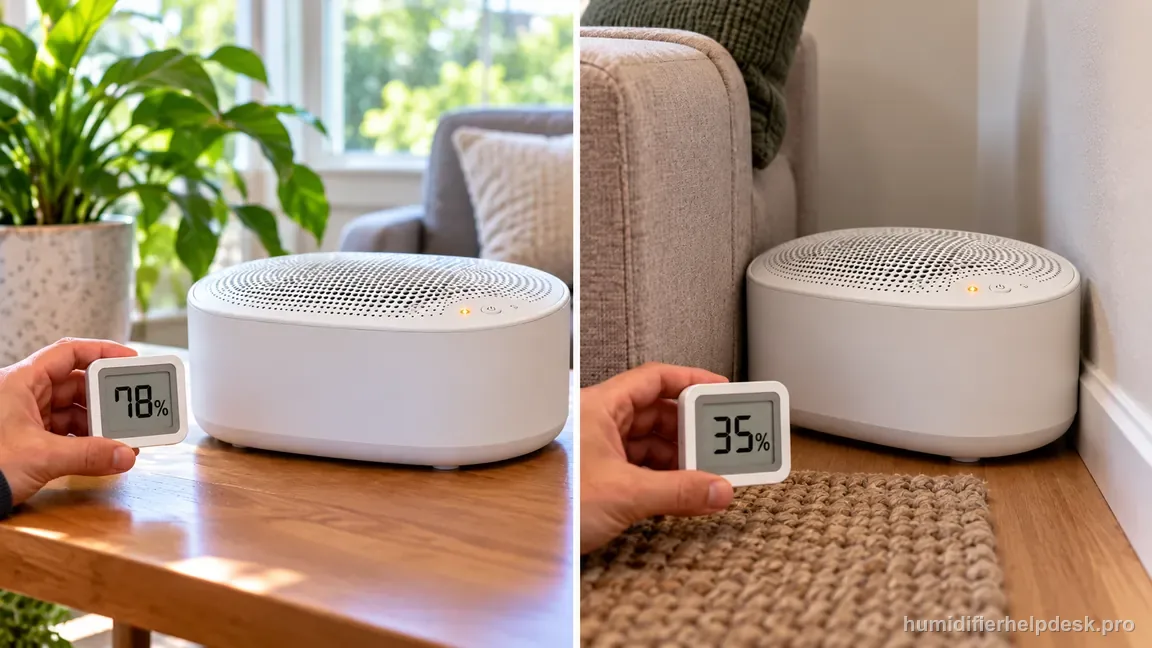
- Compare the room humidity with the recommended range before judging water use.
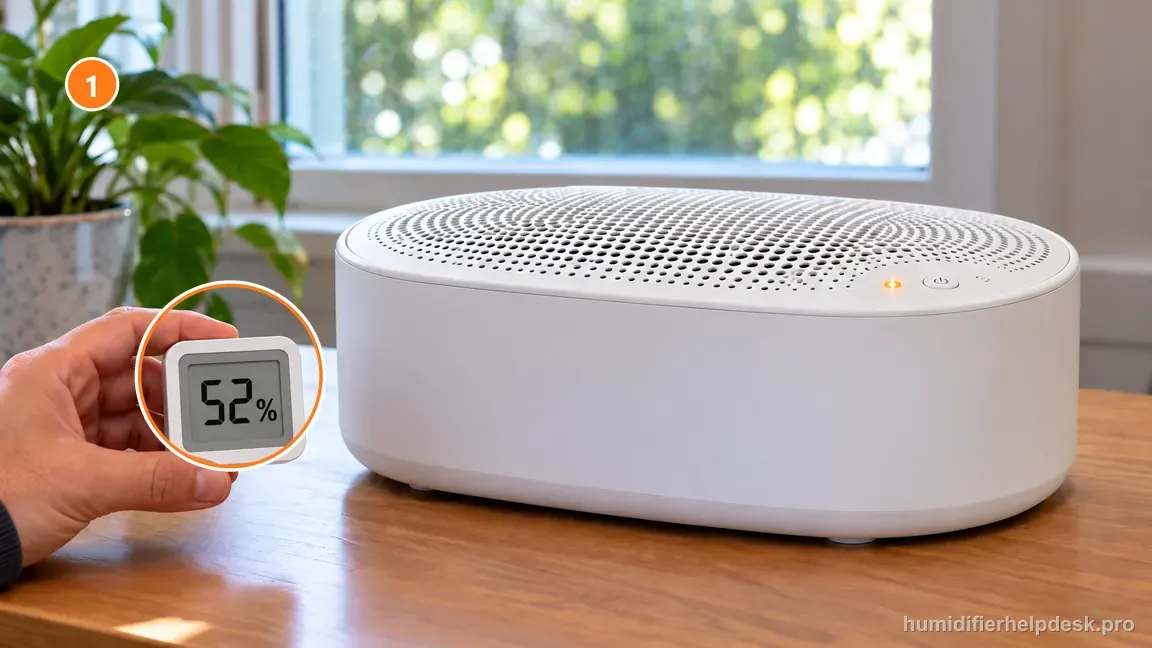
A 52% RH reading is within the 40–60% target range; compare room humidity before judging tank use. - If humidity is already above the high end of the range, expect lower output.
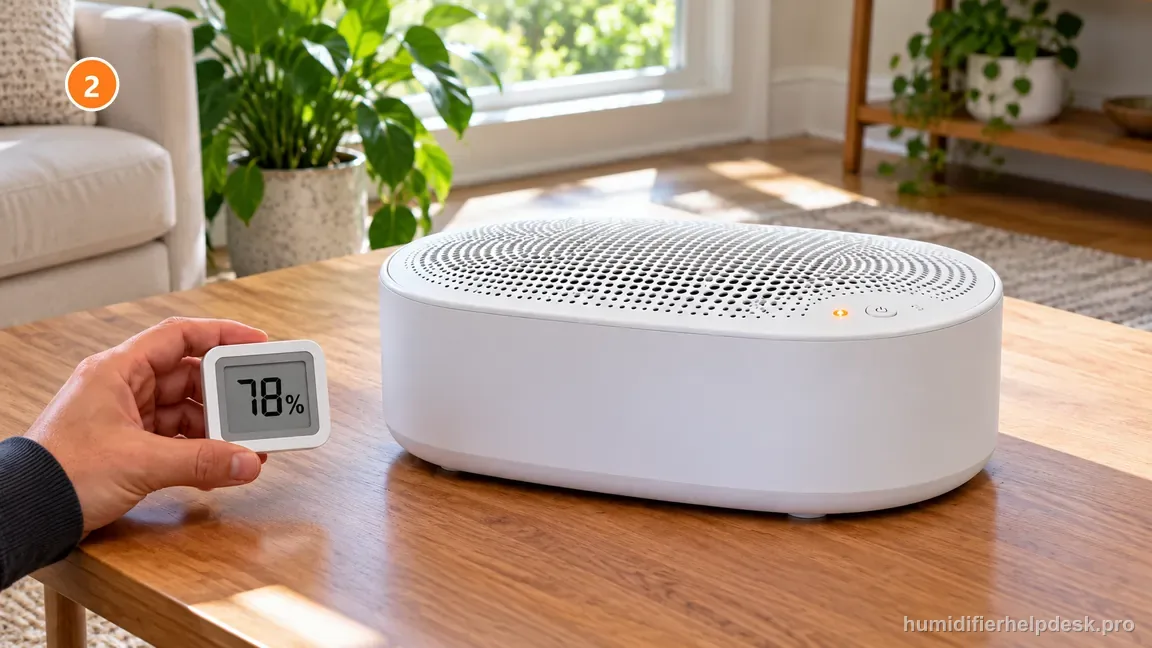
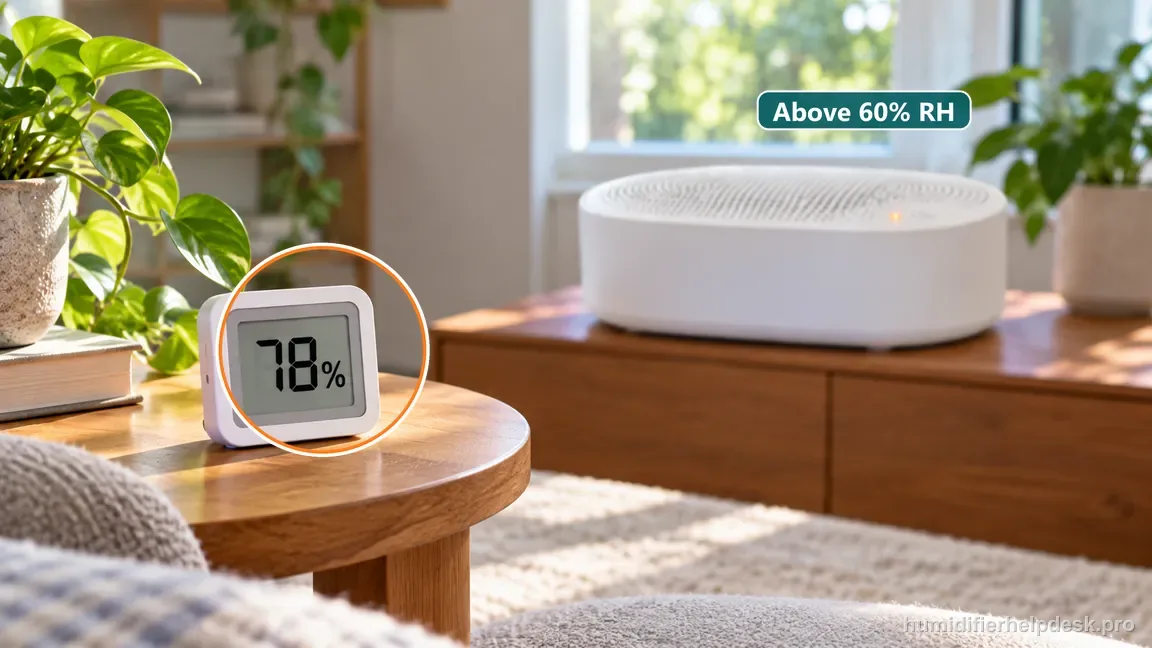
When room humidity is above the recommended range, expect evaporation and tank draw to slow. - If the room is dry, clear dust or obstruction from the fan airflow path.
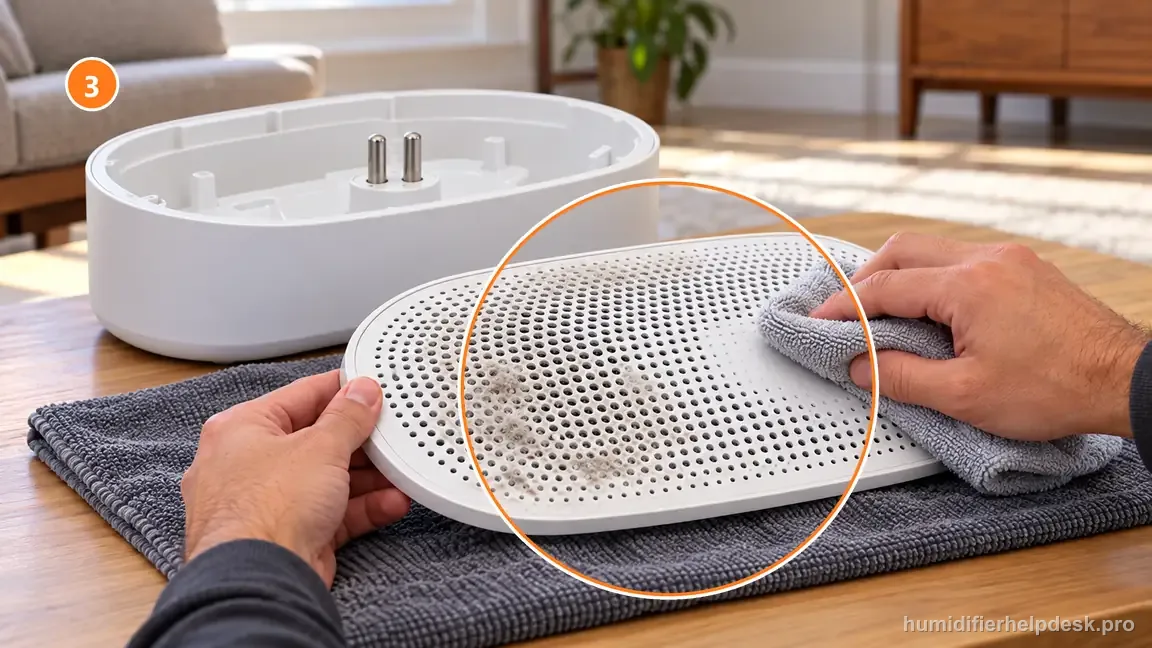
Unplug the unit and wipe dust from the removable grille without pushing debris into the fan opening. - Clean the probes/filter and keep the unit on a clear, level surface.
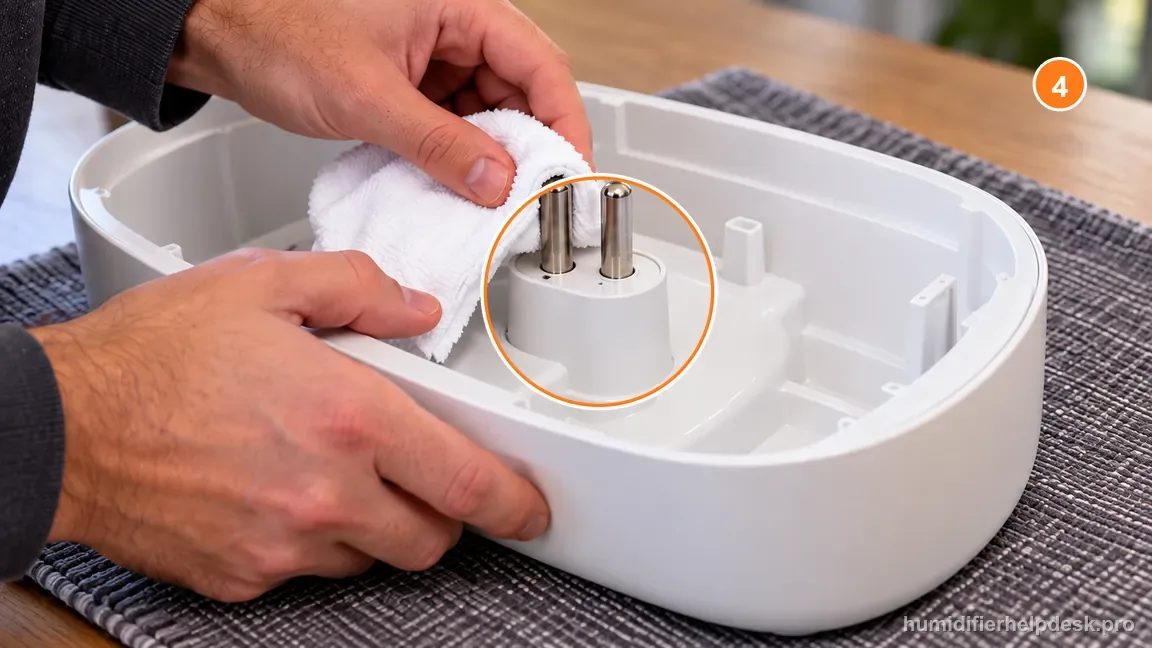
Disconnect power before gently wiping mineral residue from both external water-sensing probes.
Diagnostic decision path
Large Room tank use is an evaporation-rate signal, not a simple on/off test. Canopy notes that water consumption changes with room humidity, so a barely changing tank can be normal in already-humid air; the same symptom in a dry room requires an airflow/filter/water-detection check.
- Measure or estimate room humidity before interpreting slow tank use.
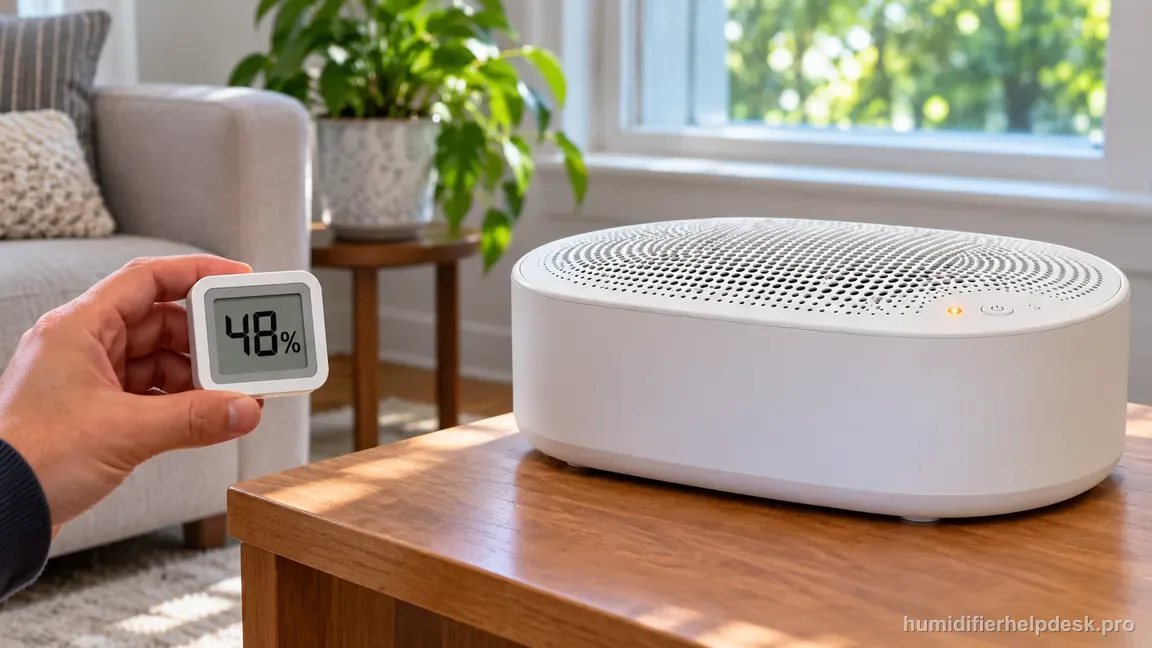
Measure room humidity before interpreting the tank level or changing the humidifier. - Confirm the Large Room fan is running and its airflow path is clear.
- Check filter condition and normal tank/tray assembly before touching the water probes.
If: Room humidity is already near the high end of the comfortable range
What it means: The humidifier has less moisture to add, so evaporation and tank draw can slow.
Do next: Monitor RH and comfort rather than forcing higher fan use just to consume water.
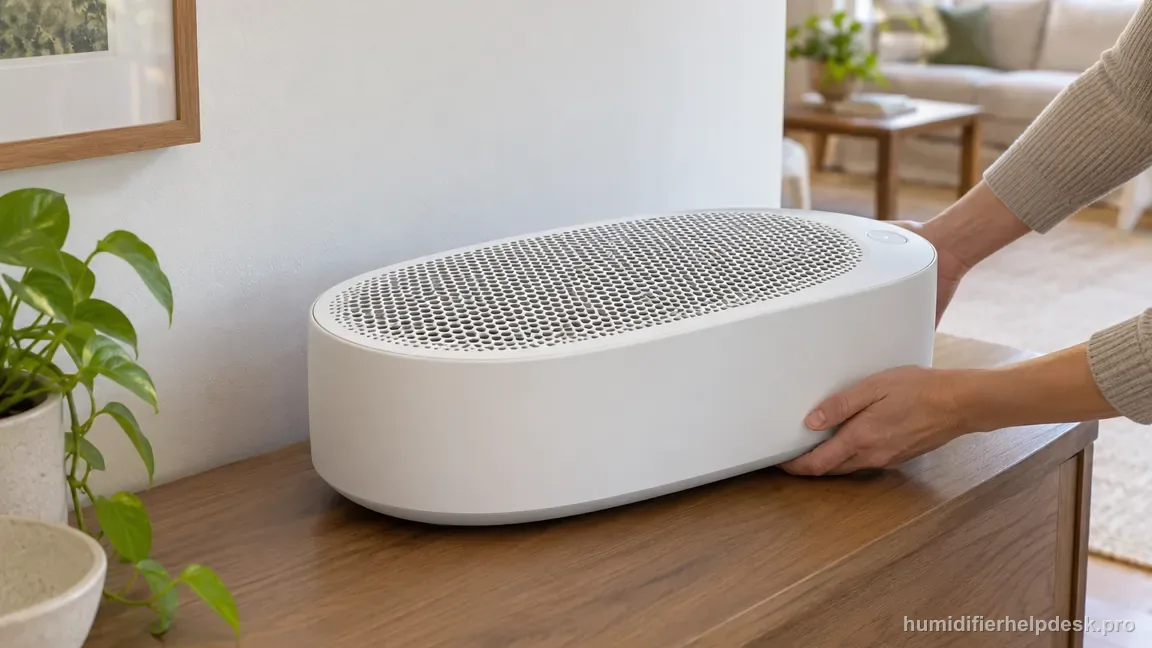
If: The room is dry but fan airflow is weak or obstructed
What it means: The evaporative surface cannot move much moisture into the room without sufficient air movement.
Do next: Clear dust/obstructions and place the unit so the fan can move room air freely.
If: Airflow is normal but the filter stays too dry
What it means: Water is not reaching the evaporative media as expected.
Do next: Check/clean the water-level probes and water-contact parts, then verify the tank/tray are installed correctly.
If: The filter is wet and airflow is normal but tank draw remains unusually low in a dry room
What it means: The simple environmental, airflow, and water-detection causes have been ruled out.
Do next: Use Canopy support rather than altering the fan or probe system.
Read water use against room conditions before calling it a failure
An emptying-time estimate is not a reliable pass/fail test by itself. Canopy describes an evaporative unit whose water use changes with room humidity; compare a controlled run and airflow condition instead.
Room already humid
What you see
A separate hygrometer shows humidity near or above the target range.
What it means
Evaporation and water use can slow as the room becomes more humid.
Next step
Treat slower use as plausible; avoid adding a guessed runtime threshold.
Room is dry but tank barely changes
What you see
A dry room and a stable, level tank surface are confirmed.
What it means
Now inspect airflow and filter position rather than comparing with another model.
Next step
Clear external airflow obstruction and ensure the filter is correctly seated.
Water use changes after moving the unit
What you see
Output improves away from a wall or blocked intake.
What it means
Placement was limiting air exchange.
Next step
Keep clear space around the intake/outlet and repeat the same observation period.
No change after checks
What you see
Humidity is low, airflow is clear, and probes/filter are clean.
What it means
The documented owner checks are exhausted.
Next step
Give Canopy the room humidity, start/end tank level, and fan setting for support.
How to interpret the retest
On the next run, leave the other settings alone and look for “Room humidity is already near the high end of the comfortable range” rather than changing several settings at once. If the Canopy Large Room Humidifier matches that observation, use the interpretation “The humidifier has less moisture to add, so evaporation and tank draw can slow” and follow with “Monitor RH and comfort rather than forcing higher fan use just to consume water”. First, check “Compare the room humidity with the recommended range before judging water use”. If the state does not appear again, keep that result and continue with the next documented possibility for water level not dropping on the Canopy Large Room Humidifier.
Anchor this branch to one observation. After “If humidity is already above the high end of the range, expect lower output”, does the Canopy Large Room Humidifier show “The room is dry but fan airflow is weak or obstructed”? If it does, the manual-supported interpretation is “The evaporative surface cannot move much moisture into the room without sufficient air movement”, so the next move is “Clear dust/obstructions and place the unit so the fan can move room air freely”. If the state is absent, do not use the action from that Canopy Large Room Humidifier possibility; record that it did not match the water level not dropping complaint and test the next documented condition.
On the Canopy Large Room Humidifier, use “Airflow is normal but the filter stays too dry” as the observation to check first. On the Canopy Large Room Humidifier, the source-backed interpretation is “Water is not reaching the evaporative media as expected”. Make “If the room is dry, clear dust or obstruction from the fan airflow path” the only deliberate change, then repeat the same symptom test. If the observation matches, continue with “Check/clean the water-level probes and water-contact parts, then verify the tank/tray are installed correctly”; if it does not, note that this Canopy Large Room Humidifier water level not dropping path did not match and move on.
Model-specific context that changes the diagnosis
Separate the first two Canopy Large Room Humidifier causes
Start with what the unit actually does, not with an internal-part theory. On the Canopy Large Room Humidifier, “Room humidity is already near the high end of the comfortable range” supports the interpretation “The humidifier has less moisture to add, so evaporation and tank draw can slow” and leads to “Monitor RH and comfort rather than forcing higher fan use just to consume water”. “The room is dry but fan airflow is weak or obstructed” supports “The evaporative surface cannot move much moisture into the room without sufficient air movement” and leads to “Clear dust/obstructions and place the unit so the fan can move room air freely”. For the current Canopy Large Room Humidifier water level not dropping complaint, choose the state you can actually reproduce and work from that result.
Retest water level not dropping after each correction
Change one documented condition, then compare the result with the original symptom. Try “Compare the room humidity with the recommended range before judging water use” on the Canopy Large Room Humidifier and observe the same complaint. Only then move to “If humidity is already above the high end of the range, expect lower output” and, if necessary, “If the room is dry, clear dust or obstruction from the fan airflow path”. With water level not dropping on the Canopy Large Room Humidifier, keeping the other obvious variables steady makes it easier to tell whether a documented condition was actually responsible.
Common mistakes that make this harder to diagnose
- Using visible fog as the performance test on an evaporative Large Room unit.
- Ignoring room humidity and assuming every slow tank is a feed fault.
- Blocking the fan path with furniture or placing the unit too tightly against a wall.
- Trying to bridge or bypass water probes to make the fan run differently.
The tank-use concern is resolved when evaporation speed matches room humidity and normal airflow/filter wetting. Slow consumption in already-humid air is expected; persistent low draw in dry air after clean probes, wet filter, and clear airflow should be escalated.
Questions people ask about this exact symptom
Why is the water level in my Canopy Large Room Humidifier not dropping?
On the Large Room model, slow tank use is not automatically a failure; the manual says evaporation slows when room humidity is already high; in a dry room, blocked airflow becomes the next check. For this water level not dropping check on the Canopy Large Room Humidifier, start with “Compare the room humidity with the recommended range before judging water use” and check the result before making another change.
What should I check first if my Canopy Large Room Humidifier has a water level that is not dropping?
Check room humidity first. If the room is already near or above the recommended range, slower water use can be normal. If the room is dry, inspect fan airflow and clear dust or obstruction, then verify normal filter and water contact. Retest after each step; water use should be judged together with airflow and room-humidity change, not tank level alone.
When should I contact Canopy about this Canopy Large Room Humidifier problem?
Contact Canopy if the Canopy Large Room Humidifier still has the same problem after the documented checks for water level not dropping. Give support the Canopy Large Room Humidifier's current mode and the before-and-after result from the documented water level not dropping checks. Also note whether the water level moved during the final retest.
Why this path is model-specific
The Large Room user manual explains that tank-emptying time depends on room humidity and directs owners to check fan airflow when humidity is low but water use remains slow.
For the Canopy Large Room Humidifier, the machine type matters: it is evaporative. Its moisture output is not supposed to look like ultrasonic fog, so “I cannot see mist” by itself is not evidence of a failure.
This symptom appears on other humidifiers too, but the meaning and reset path can change by technology, sensor logic, and control layout. Use the exact model source above before borrowing a fix from a neighboring model.
Compare this symptom across verified models
If you are still deciding whether this behavior is normal or model-specific, use the symptom hub to compare only manufacturer-linked guides. Keep the Canopy Large Room Humidifier instructions above as the controlling path for this machine.
If the problem is still there
If the checks above do not change the symptom, use the manufacturer support path for this exact model. We intentionally stop before undocumented resets, sensor bypasses, internal mains work, or parts replacement that the consumer manual does not authorize.
What we do not recommend
Do not defeat a float, water-level sensor, overheat protection, interlock, or other safety feature. Do not open mains-powered sections for live testing. If the unit smells burned, becomes abnormally hot, smokes, sparks, has water near electrical parts, or repeatedly trips a circuit, stop using it and keep clear. Unplug it only if the plug, outlet, and surrounding area are dry and safe to reach; otherwise do not touch wet equipment and contact manufacturer support for next steps.
Primary source for this diagnosis
Source checked during the October 13, 2026 editorial review. Manufacturer documents can change; a material re-review updates this guide’s reviewed date rather than stamping unrelated pages.