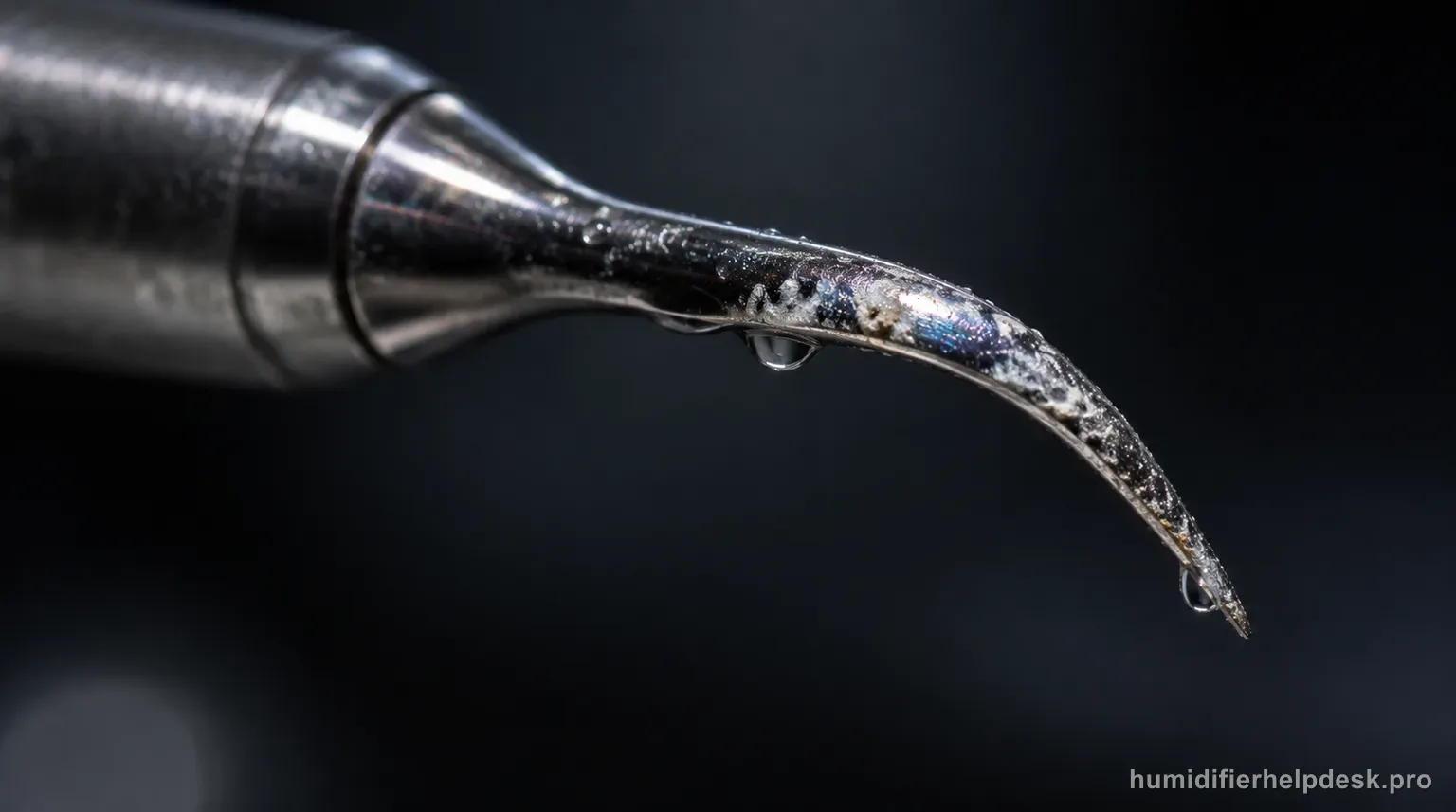
Carepod says colored spots on the wand can come from minerals or impurities in the water. Clean the lower water-contact portion regularly with a soft sponge or toothbrush and keep the upper plug/connector area dry.
Does this match what you are seeing?
Owners describe this Carepod One problem in a few different ways. If one of these sounds like yours, this guide covers it:
- Colored or mineral spots on humidifier wand
- Colored or mineral spots on humidifier wand troubleshooting
- Problem Colored or mineral spots on humidifier wand
- Help for Colored or mineral spots on humidifier wand
Check these in order
- Unplug the Carepod One and remove the wand before cleaning.
- Clean only the lower water-contact portion with a soft sponge or toothbrush; keep the upper plug section out of water.
- For stubborn buildup, follow Carepod’s brief bottom-only boiling-water dip guidance rather than submerging the wand.
- Switch to filtered or distilled water and watch whether deposits return more slowly.
Diagnostic decision path
Colored, chalky, or mineral-looking spots on the Carepod One wand are often a water-quality and cleaning issue rather than evidence that the electronics have failed. Carepod says minerals or impurities in water can leave deposits and recommends regular cleaning of the lower water-contact portion with a soft sponge or toothbrush. For stubborn buildup, its support instructions describe an extremely brief dip of the bottom portion in boiling water. The important boundary is the upper plug/connector section: keep it dry and never turn a lower-wand cleaning step into full immersion of the electrical connection.
- Unplug the Carepod One and remove the wand before inspecting or cleaning mineral deposits.
- Identify which part is stained: the lower water-contact area can be cleaned, while the upper plug/connector area should remain dry.
- Use a soft sponge or toothbrush rather than a metal scraper or abrasive pad that can damage the wand surface.
- Photograph a persistent unusual discoloration before cleaning if you may need Carepod support to distinguish normal mineral residue from damage.
If: The spots wipe or brush away from the lower water-contact portion
What it means: The observation is consistent with removable mineral or impurity deposits.
Do next: Rinse the cleaned lower section as directed, keep the connector dry, and shorten the interval before the next routine cleaning.
If: Buildup remains after gentle brushing on the lower end
What it means: A harder deposit may need the additional procedure Carepod documents for the bottom of the wand.
Do next: Follow Carepod's brief 1–2 second bottom-only boiling-water dip exactly; do not immerse the upper portion or prolong the exposure.
If: Deposits return quickly with ordinary tap water
What it means: The water source is continuously introducing minerals or impurities to the ultrasonic water path.
Do next: Switch to filtered or distilled water and compare the rate of new deposits over the next several fills.
If: Discoloration is on or inside the top plug/connector area
What it means: That location falls outside the normal lower-wand washing zone and should not be soaked or brushed with water.
Do next: Keep the connector dry and ask Carepod support how to proceed if the mark cannot be safely inspected externally.
If: The wand is cracked, connector is damaged, or mist operation becomes abnormal after cleaning
What it means: The complaint is no longer just cosmetic mineral residue.
Do next: Stop using the damaged component and contact Carepod rather than extending cleaning, scraping the surface, or attempting an electrical repair.
How to interpret the retest
Deposit color can vary with water chemistry, so color alone is less useful than location, texture, whether it removes with gentle cleaning, and how quickly it returns.
The boiling-water instruction is intentionally narrow. Treat 1–2 seconds on the bottom portion as a manufacturer-specific exception, not permission to boil or soak the whole wand.
A regular weekly cleaning interval can prevent a light film from becoming the kind of hard buildup that requires more aggressive handling.
Changing to filtered or distilled water is also a diagnostic comparison: slower recurrence supports a mineral/impurity explanation without requiring a laboratory test of the residue.
Do not mix several cleaners in an attempt to remove color. The support guidance centers on mechanical cleaning, controlled water contact, and better source water.
Model-specific context that changes the diagnosis
Draw a wet-zone boundary before cleaning
Think of the wand as two zones. The lower portion is designed to contact tank water and is the area Carepod tells owners to clean. The upper plug/connector is not part of that washing instruction and should be protected from immersion.
Use recurrence as information
If deposits come back much more slowly after switching from mineral-heavy tap water to filtered or distilled water, that change supports Carepod's water-quality explanation. It also helps set a realistic maintenance interval for the home.
Stop escalating once the surface is clean
A spotless wand does not need additional boiling, scraping, or chemicals. More aggressive treatment after the deposit is gone only increases the chance of damaging a component that was functioning normally.
Common mistakes that make this harder to diagnose
- Submerging the entire wand because the lower end is allowed to contact water.
- Using a metal tool or abrasive pad to scrape away mineral color.
- Turning a 1–2 second bottom-only boiling-water dip into a prolonged soak.
- Continuing with the same mineral-heavy water while repeatedly deep-cleaning the wand instead of testing filtered or distilled water.
Treat the mineral-spot issue as resolved when the lower wand is clean enough for normal operation, the upper plug area has stayed dry, mist output remains normal, and new deposits are manageable with routine maintenance. A slower return after switching water sources confirms that prevention is working. Persistent discoloration by itself is less concerning than cracking, connector damage, or a change in operation. If the mark is in the electrical connection area or the wand appears damaged, stop extending the cleaning procedure and use Carepod support.
Questions people ask about this exact symptom
Why does my Carepod One wand have colored spots?
Carepod says colored spots can be deposits from minerals or other impurities in the water. Unplug the humidifier and clean the lower water-contact portion with a soft sponge or toothbrush, while keeping the top plug/connector dry. If deposits return quickly, switch to filtered or distilled water. A stain near the electrical connector, physical damage, or abnormal operation should not be treated as an ordinary soak-and-scrub cleaning problem.
Can I put the Carepod One wand in boiling water to remove minerals?
Only follow the narrow procedure Carepod describes for stubborn buildup: a brief 1–2 second dip of the bottom portion. Do not immerse the whole wand and do not expose the top plug/connector section to water. Start with gentle sponge or toothbrush cleaning first. Prolonged boiling, full immersion, or improvised chemical cleaning goes beyond the manufacturer's support guidance and can turn a mineral-maintenance issue into component damage.
How often should I clean mineral buildup from the Carepod One wand?
Carepod recommends cleaning the lower portion regularly, with its support guidance describing weekly care for mineral or impurity deposits. The practical interval depends on your water. If a visible film returns quickly, filtered or distilled water can reduce the mineral load and make the routine easier. Clean only the water-contact zone, stop when the deposit is removed, and keep the top connector area dry throughout the process.
Why this path is model-specific
Carepod support says colored wand spots may be mineral deposits or water impurities, recommends weekly lower-wand cleaning, describes a 1–2 second bottom-only boiling-water dip for buildup, and recommends filtered or distilled water.
For the Carepod One, the machine type matters: it is ultrasonic. Visible mist is part of normal output when mist production is active, so a true no-mist complaint deserves model-specific troubleshooting.
Compare this symptom across verified models
If you are still deciding whether this behavior is normal or model-specific, use the symptom hub to compare only manufacturer-linked guides. Keep the Carepod One instructions above as the controlling path for this machine.
If the problem is still there
If the checks above do not change the symptom, use the manufacturer support path for this exact model. We intentionally stop before undocumented resets, sensor bypasses, internal mains work, or parts replacement that the consumer manual does not authorize.
What we do not recommend
Do not defeat a float, water-level sensor, overheat protection, interlock, or other safety feature. Do not open mains-powered sections for live testing. If the unit smells burned, becomes abnormally hot, smokes, sparks, has water near electrical parts, or repeatedly trips a circuit, stop using it and keep clear. Unplug it only if the plug, outlet, and surrounding area are dry and safe to reach; otherwise do not touch wet equipment and contact manufacturer support for next steps.
Primary source for this diagnosis
Source checked during the September 5, 2026 editorial review. Manufacturer documents can change; a material re-review updates this guide’s reviewed date rather than stamping unrelated pages.