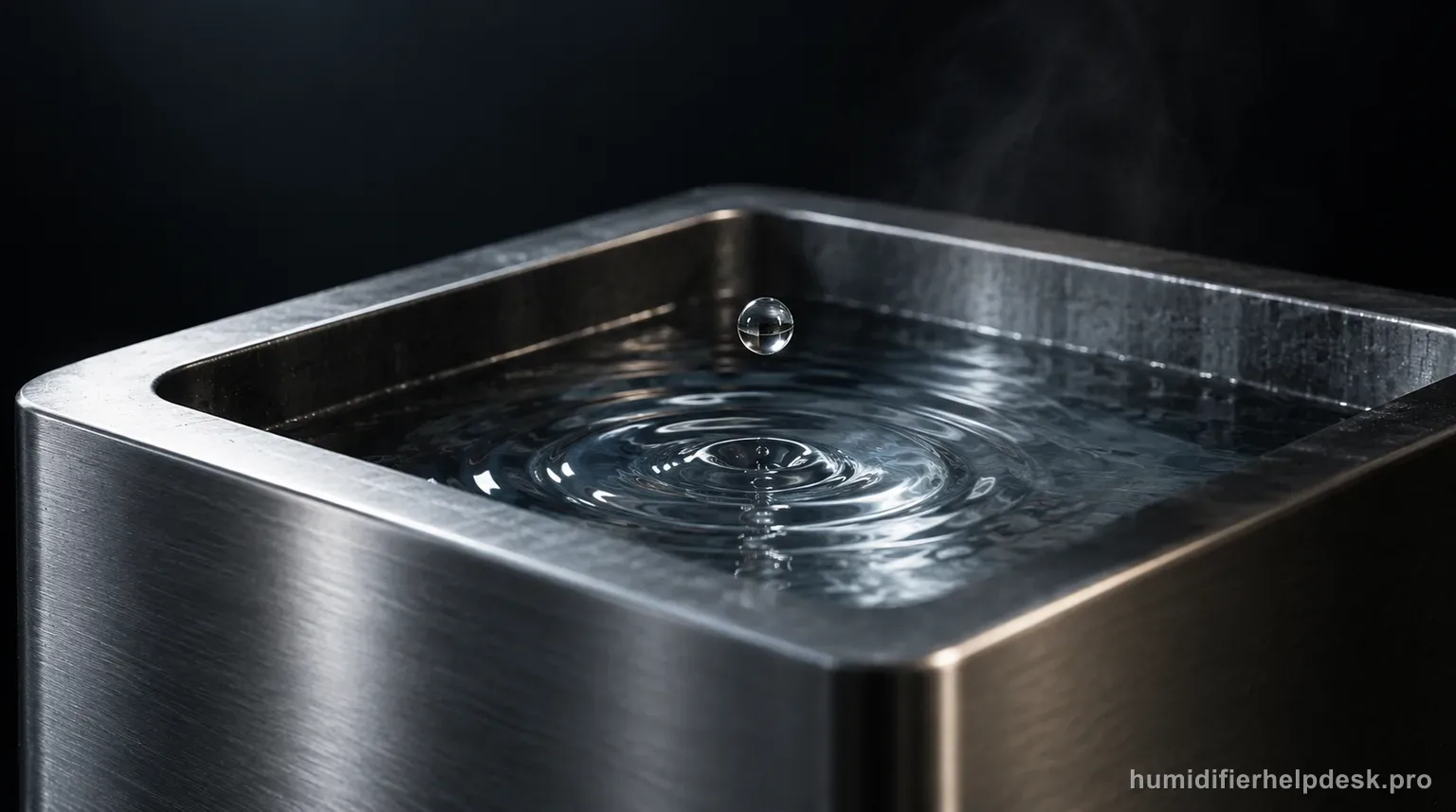
A gentle internal dripping sound can be normal on the Carepod One. Carepod explains that condensation droplets can fall from the stainless inner lid cover back into the tank; the wand can also create water movement while operating.
Does this match what you are seeing?
Owners describe this Carepod One problem in a few different ways. If one of these sounds like yours, this guide covers it:
- Making unusual noise
- Loud humidifier noise
- Strange water sound
- Making noise while running
Check these in order
- Confirm the sound is a gentle intermittent water/drip sound rather than grinding, sparking, or a harsh mechanical noise.
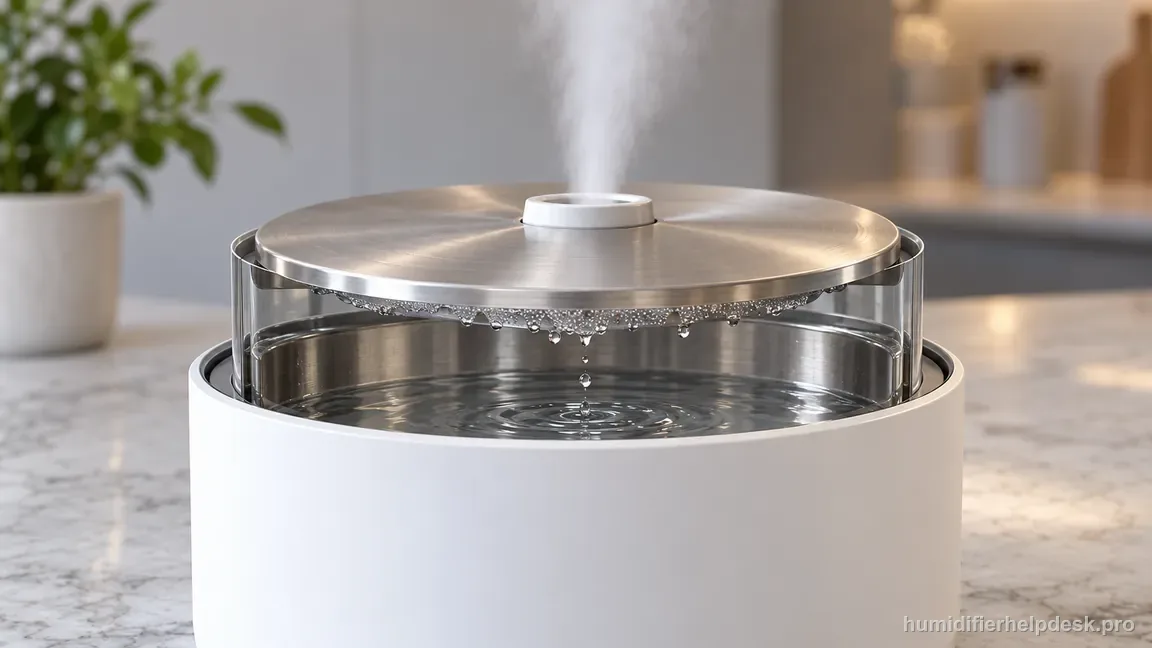
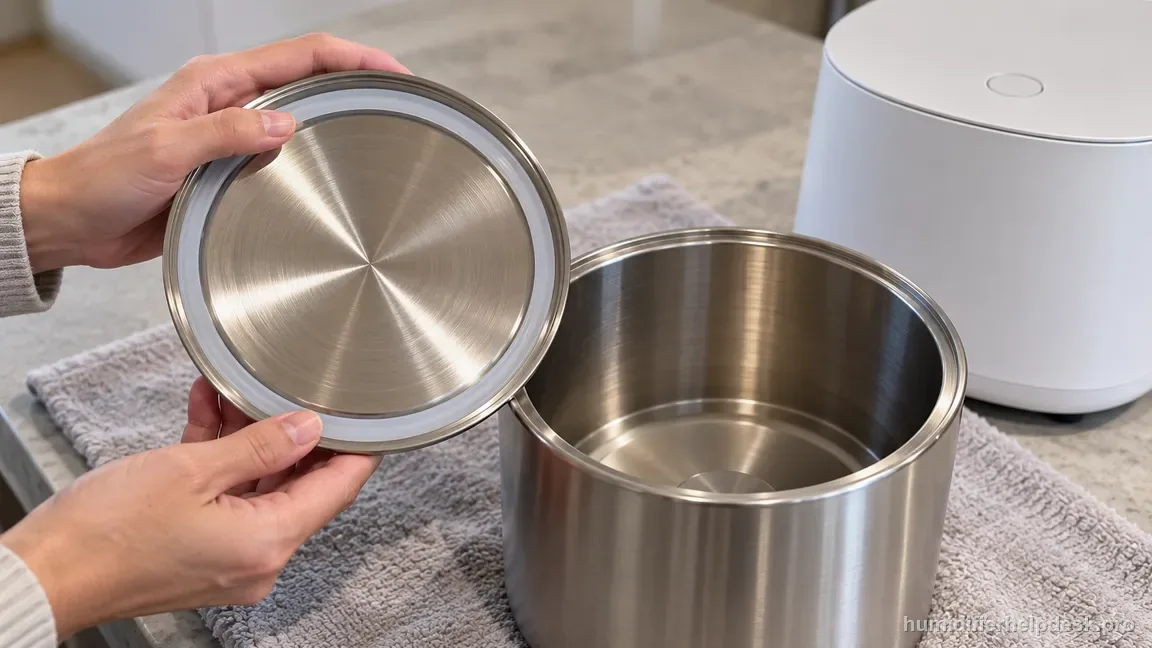
Illustrative: A gentle internal drip with stable mist and a dry exterior can be normal condensation returning to the tank. - Check that the tank is filled no higher than the MAX line and that the inner lid cover is fully seated.
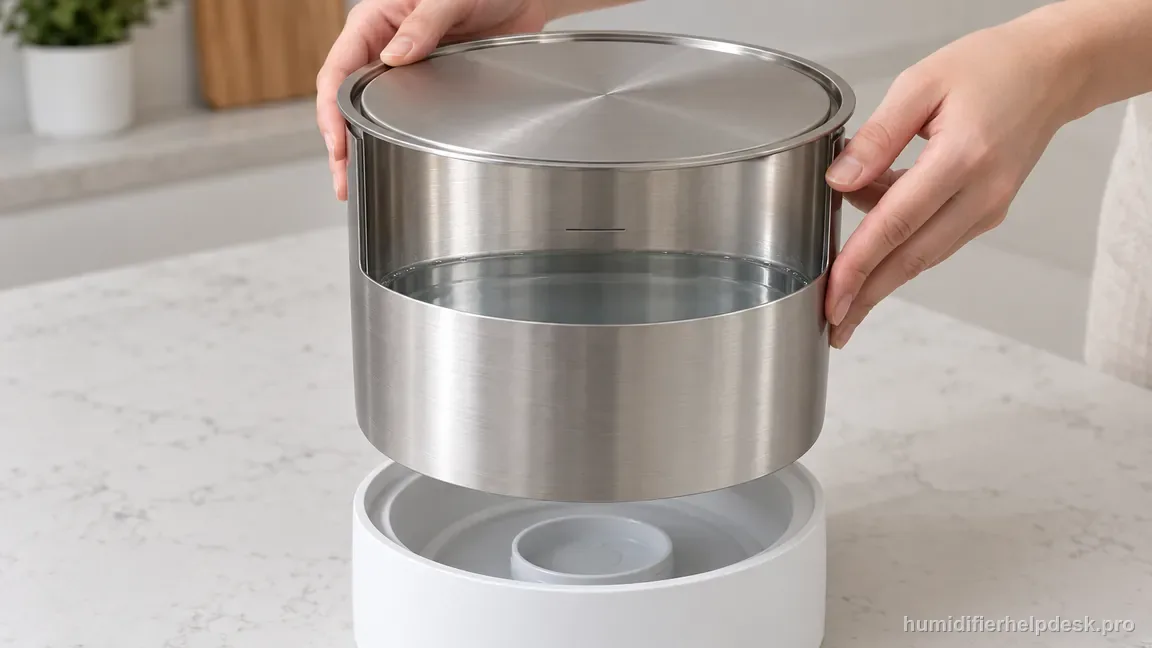
Illustrative: Keep water below the MAX line and fully seat the stainless inner lid cover. - Run Mist Level 1 briefly and compare the sound without changing other variables.
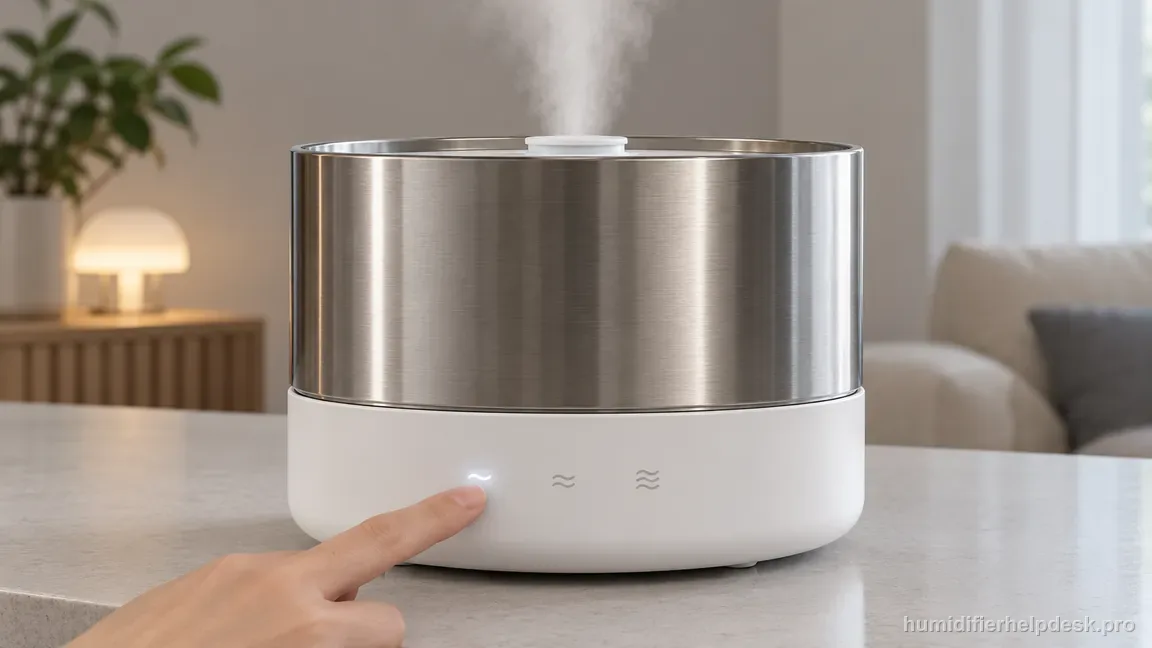
Illustrative: Run Mist Level 1 briefly and compare the sound without changing other variables. - Inspect the surface around and under the unit; a normal internal drip should not be accompanied by escaping liquid water.
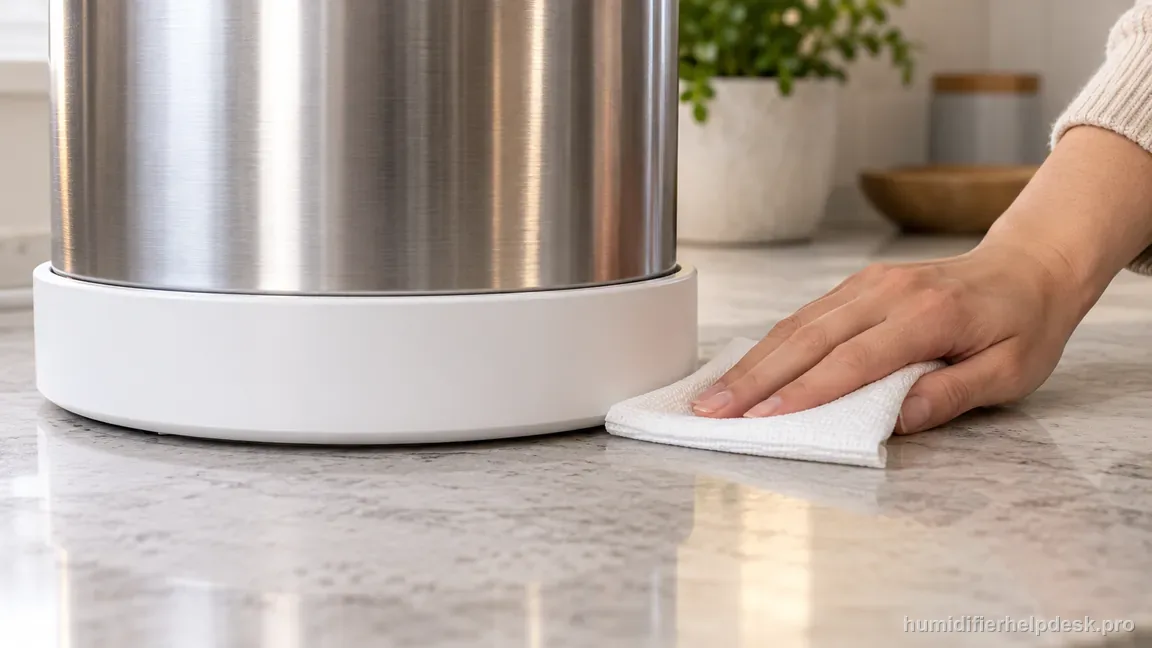
Illustrative: Check around and beneath the humidifier for escaping water.
Diagnostic decision path
A Carepod One can make a gentle water or dripping sound without having a fault. Carepod explains that condensation can form on the stainless inner lid cover and fall back into the tank, and water movement around the operating wand can also be audible. The safe task is not to eliminate every water sound; it is to verify that the sound is gentle, the tank is assembled normally, mist output remains stable, and no liquid is escaping from the unit. Grinding, electrical crackling, burning odor, or water outside the tank belongs to a different troubleshooting path.
- Place the Carepod One on a firm level surface and make sure the tank is not filled above the MAX line.
- Dry the exterior and the surface beneath the humidifier so a leak cannot hide behind the assumption that the sound is normal.
- Seat the stainless inner lid cover fully before listening; a partially assembled water path is not a valid baseline.
- Begin with Mist Level 1 for a short comparison and keep the room quiet enough to identify whether the sound is actually coming from inside the tank.
If: The sound is a soft intermittent drip and the outside of the Carepod One stays dry
What it means: This matches the normal condensation/water-return behavior described by Carepod.
Do next: Continue operating normally and judge the humidifier by mist output, water containment, and room humidity rather than by complete silence.
If: The water sound becomes less noticeable at Mist Level 1
What it means: The amount of water movement or condensation is likely linked to operating intensity rather than a new mechanical defect.
Do next: Use the lowest mist setting that meets the room's humidity need and avoid overfilling the tank.
If: Dripping is accompanied by a pool under the stainless-steel tank
What it means: The sound itself may be harmless, but escaping water is a separate assembly problem.
Do next: Unplug and check tank-lip alignment, the inner lid cover, and silicone seal before running the humidifier again.
If: The sound is grinding, scraping, electrical crackling, or paired with a burning smell
What it means: Those observations do not match Carepod's description of a normal gentle drip.
Do next: Turn the unit off, unplug it, and contact Carepod support rather than opening the powered components or continuing to test.
If: Mist stops or becomes erratic at the same time the sound changes sharply
What it means: The complaint now involves output as well as sound, so treating the noise in isolation can miss the more useful symptom.
Do next: Record the new mist behavior and use the closest output or wand-cleaning path after checking water level and normal assembly.
Carepod One dripping sound: normal or a fault?
Carepod explains that condensation can fall back into the tank and that water movement around the wand can be audible. Judge the sound together with output and water containment.
| What you see | What it means | Next step |
|---|---|---|
| A soft, intermittent drip while the outside of the Carepod One stays dry | Matches the normal condensation and water-return behavior Carepod describes | Keep operating normally and judge by mist output, water containment, and room humidity rather than complete silence |
| The water sound is less noticeable at Mist Level 1 | The sound is likely linked to operating intensity rather than a new defect | Use the lowest mist setting that meets the room’s humidity need and avoid overfilling the tank |
| Dripping together with a pool under the stainless-steel tank | The sound may be harmless, but escaping water is a separate assembly problem | Unplug and check tank-lip alignment, the inner lid cover, and the silicone seal before running it again |
| Grinding, scraping, electrical crackling, or a burning smell | Does not match Carepod’s description of a normal gentle drip | Turn it off, unplug it, and contact Carepod support instead of opening powered components |
| Mist stops or becomes erratic as the sound changes sharply | The complaint now involves output as well as sound | Record the new mist behavior and use the closest output or wand-cleaning path after checking water level and assembly |
Carepod One water sound: before you test
| Condition | Why the guide asks for it |
|---|---|
| Firm, level surface, with the tank not filled above the MAX line | Extra water does not make the test better; filling above the limit can alter the water path and add spill behavior that was not part of the original complaint |
| Exterior and the surface beneath the unit dried first | A leak cannot hide behind the assumption that the sound is normal |
| Stainless inner lid cover fully seated | A partly assembled water path is not a valid baseline |
| Mist Level 1 for a short comparison, in a quiet room | Lets you identify whether the sound is actually coming from inside the tank and whether it changes with intensity |
How to interpret the retest
A light water sound can come from water moving between the Carepod One tank and its base, but the sound should be judged alongside output and leakage. Note whether it happens only after refilling, during normal operation, or while the unit is off. Check that the tank and its parts are installed in the positions shown by Carepod's current guide. Do not infer a failed pump from a few intermittent drops or from sound alone.
Place the unit on a level, dry surface and check whether fresh water collects outside the base. If there is no leak and the unit maintains normal operation, record the sound pattern before taking parts apart. If water appears under the powered base, the sound becomes continuous, or the device stops producing its expected output, switch it off and consult Carepod support. Avoid shaking the filled unit, adding lubricant, or opening the base; those actions can create a leak or obscure the original symptom.
Model-specific context that changes the diagnosis
Normal sound and normal water containment go together
Carepod's explanation applies to a gentle internal drip returning to the tank. It does not make external water normal. Keep the surface dry during the listening test so you can verify both conditions at once.
Use the MAX line as a boundary, not a target to exceed
Extra water does not make the diagnostic test better. Filling above the marked limit can alter the water path and introduce spill behavior that was not part of the original complaint.
Describe the sound precisely if support is needed
A report such as 'soft drip every few seconds while mist stays normal' is more actionable than 'strange noise.' Also note whether the sound changes with Mist Level 1 and whether any water appears outside the tank.
Common mistakes that make this harder to diagnose
- Treating every internal water sound as proof that the pump, wand, or tank is broken.
- Ignoring external water because the manufacturer's normal-drip explanation sounded similar to the complaint.
- Removing water-path parts while the unit is running in an attempt to locate the noise.
- Continuing to operate through grinding, electrical crackling, overheating, or a burning odor.
No repair is required when the sound remains a gentle internal drip, the Carepod One produces normal mist, the stainless-steel tank and lid are assembled correctly, and the exterior stays dry. Treat a new external leak, harsh mechanical noise, electrical sound, or burning odor as a separate condition rather than stretching the normal-drip explanation. If the sound falls outside Carepod's documented behavior and persists after correct fill and assembly, contact the manufacturer without opening the powered base or wand electronics.
Questions people ask about this exact symptom
Is a dripping sound normal on the Carepod One?
A gentle internal dripping sound can be normal. Carepod says condensation droplets can form on the stainless inner lid cover and fall back into the tank. Confirm that the sound is soft, mist output is normal, and the exterior stays dry. A puddle under the tank, grinding, electrical crackling, or a burning odor does not fit that normal description and should be handled as a separate problem.
Can I reduce the Carepod One water sound?
Start with a normal fill no higher than the MAX line and make sure the inner lid cover is seated. A short comparison on Mist Level 1 can show whether operating intensity affects the sound. Do not remove parts or underfill the tank merely to make the humidifier silent. If the sound is gentle and contained inside the tank, Carepod's support guidance indicates that the condensation-return behavior itself is expected.
When is a Carepod One dripping noise a reason to stop using it?
Stop when the observation is no longer just a gentle contained water sound. Unplug the Carepod One if water is escaping toward electrical areas, or if you hear grinding or electrical crackling, notice overheating, smell burning, or see damage. A soft internal drip with a dry exterior is different. Persistent abnormal noise after correct fill and assembly should be reported to Carepod support rather than investigated by opening powered components.
Why this path is model-specific
Carepod support describes a gentle dripping sound as normal condensation from the stainless inner lid cover falling back into the tank. Its support guidance also distinguishes this from water escaping around the tank assembly.
For the Carepod One, the machine type matters: it is ultrasonic. Visible mist is part of normal output when mist production is active, so a true no-mist complaint deserves model-specific troubleshooting.
Compare this symptom across verified models
If you are still deciding whether this behavior is normal or model-specific, use the symptom hub to compare only manufacturer-linked guides. Keep the Carepod One instructions above as the controlling path for this machine.
If the problem is still there
If the checks above do not change the symptom, use the manufacturer support path for this exact model. We intentionally stop before undocumented resets, sensor bypasses, internal mains work, or parts replacement that the consumer manual does not authorize.
What we do not recommend
Do not defeat a float, water-level sensor, overheat protection, interlock, or other safety feature. Do not open mains-powered sections for live testing. If the unit smells burned, becomes abnormally hot, smokes, sparks, has water near electrical parts, or repeatedly trips a circuit, stop using it and keep clear. Unplug it only if the plug, outlet, and surrounding area are dry and safe to reach; otherwise do not touch wet equipment and contact manufacturer support for next steps.
Primary source for this diagnosis
Source checked during the September 5, 2026 editorial review. Manufacturer documents can change; a material re-review updates this guide’s reviewed date rather than stamping unrelated pages.